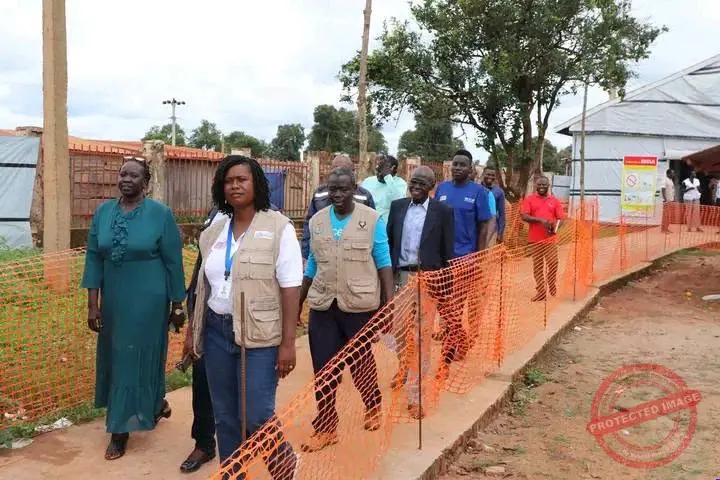
A high-level delegation from South Sudan's Ministry of Health, the National Public Health Institute, and the World Health Organization (WHO) has visited Western Equatoria State to assess its preparedness for potential cases of Bundibugyo virus disease. The team met with state authorities, including Acting Caretaker Governor Badagbu Daniel Rimbasa, to discuss the state's readiness to detect and respond to cases. The visit aims to evaluate the state's capacity to prevent and control the spread of the disease.
The delegation visited the Nabiapai Point of Entry and health facilities in Yambio to assess the state's preparedness. They inspected Bundibugyo virus disease holding areas at Nabiapai Primary Health Care Unit and Yambio State Hospital, as well as a newly established 28-bed isolation unit. The team evaluated the state's infrastructure and capacity to respond to potential cases, highlighting areas for improvement.
The visit comes as an outbreak of Bundibugyo virus disease continues in neighboring Democratic Republic of Congo, including areas near the South Sudan border. According to the Office of the Governor of Western Equatoria State, the WHO and its partners are supporting the state to strengthen disease screening, surveillance, laboratory testing, patient care, infection prevention and control, and community engagement.
In a separate meeting in Juba, WHO Officer-in-Charge Dr. Moses Ongom met with Governor Rimbasa to discuss preparedness, WHO support, and gaps in the state's health response. The discussions focused on strengthening surveillance, timely reporting of suspected cases, preparedness at health facilities, and providing communities with reliable health information.
Western Equatoria borders the Democratic Republic of Congo, with communities on both sides maintaining links through travel, trade, and family ties. Health authorities emphasize that the movement of people across the border makes disease surveillance and preparedness crucial. The state's geography and population dynamics increase the risk of disease transmission.
The preparedness activities are being supported by the European Union Civil Protection and Humanitarian Aid Operations and the South Sudan Humanitarian Fund through WHO's Bundibugyo virus disease readiness operations. The support aims to enhance the state's capacity to prevent and respond to potential cases, reducing the risk of disease transmission.
The assessment and preparedness efforts demonstrate the commitment of health partners to preventing and controlling the spread of Bundibugyo virus disease in Western Equatoria State. The collaboration between the state government, WHO, and other health partners is crucial in strengthening the state's health response and protecting communities from the disease.
Key points
- Health partners assess Western Equatoria's preparedness for Bundibugyo virus disease amid ongoing outbreak in neighboring Democratic Republic of Congo.
- The state government, WHO, and other health partners collaborate to strengthen disease screening, surveillance, and response.
- The preparedness activities are supported by the European Union Civil Protection and Humanitarian Aid Operations and the South Sudan Humanitarian Fund.