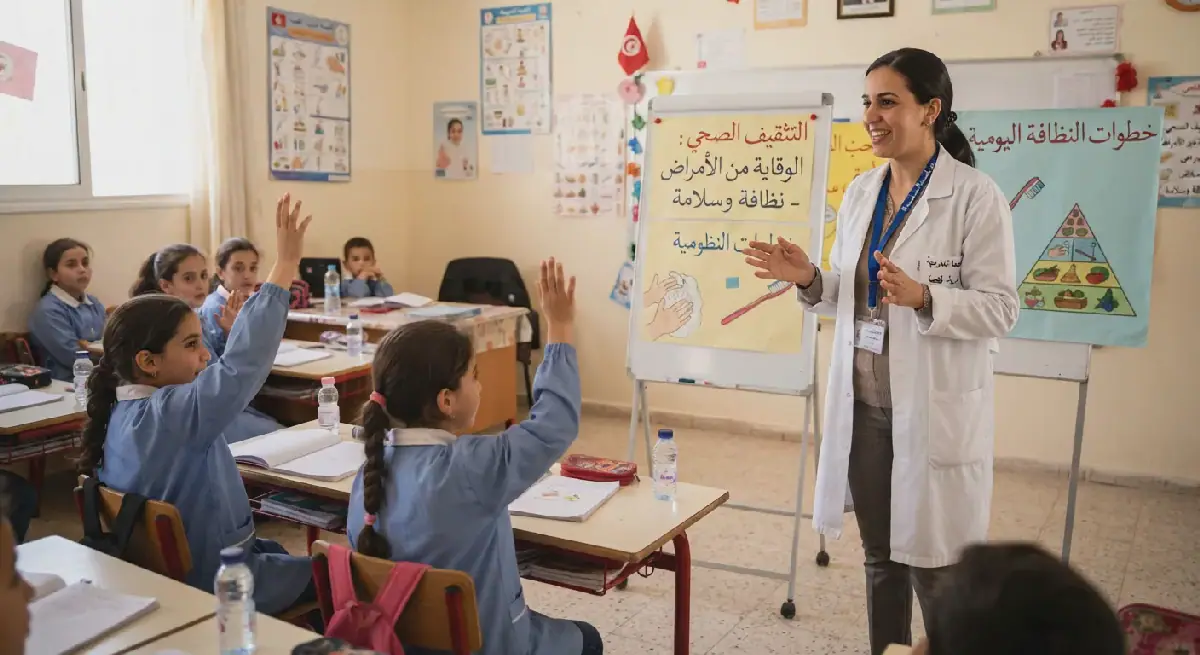
In Qafsa, Tunisia, school health teams have initiated field interventions to enhance health education in school environments. This effort aims to educate students about maintaining good physical and mental health. By promoting healthy behaviors, these teams hope to contribute to the development of a well-informed and healthy generation. The interventions focus on various aspects of health, including prevention and awareness.
The health education program in Qafsa's schools focuses on several key areas, including prevention of substance abuse and addiction, rabies, oral hygiene, lice infestation, infectious diseases, breast cancer, handwashing, and personal hygiene. By addressing these critical health issues, the school health teams aim to equip students with the knowledge and skills necessary to make informed decisions about their health.
As part of the ongoing efforts to improve health education, the Regional Health Department in Qafsa, in collaboration with the School of Nursing Sciences, organized a training session for school health teams. The session, which took place under the supervision of the Regional Health Administration, covered essential topics such as school and university vaccinations, the importance of immunization, and basic principles of biological safety.
The training session also focused on preventing and controlling infections, including Ebola and viral hemorrhagic fevers. By enhancing the knowledge and skills of school health teams, the Regional Health Department aims to strengthen the health education program in Qafsa's schools and promote a culture of health and well-being among students.
The field interventions by school health teams in Qafsa are part of a broader effort to promote health education and awareness in the region. By working closely with schools and local communities, these teams aim to create a supportive environment that encourages healthy behaviors and promotes overall well-being.
The health education program in Qafsa's schools is aligned with the national strategy to improve health outcomes and promote healthy behaviors among young people. By investing in health education, the Tunisian government aims to empower students with the knowledge and skills necessary to make informed decisions about their health and well-being.
The success of the health education program in Qafsa's schools will depend on the continued collaboration and support of local stakeholders, including parents, teachers, and community leaders. By working together, these stakeholders can help create a healthy and supportive environment that promotes the well-being of all students.
Key points
- School health teams in Qafsa, Tunisia, are conducting field interventions to promote health education among students, focusing on prevention and awareness of various health issues.