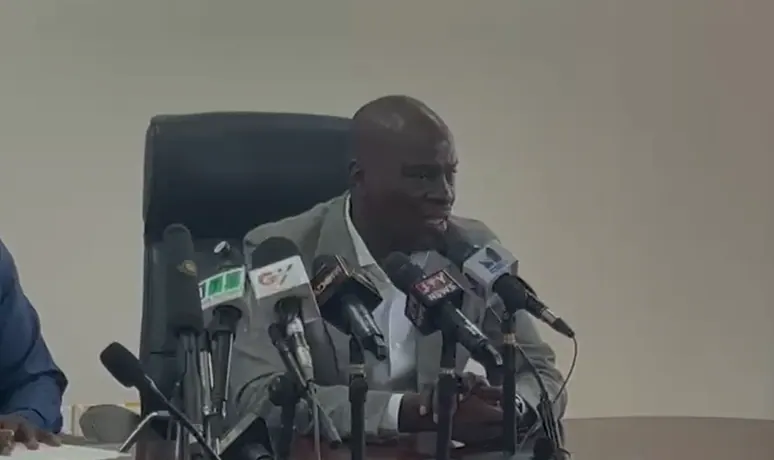
Education Minister Haruna Iddrisu has outlined a government roadmap to address the concerns of striking teacher unions in Ghana, while appealing to them to suspend their nationwide industrial action and return to the classroom. The roadmap includes fresh negotiations on the Collective Agreement, a validation process for the 20% Deprived Area Allowance, and a deadline for the Ghana Education Service to submit data on promoted teachers for processing of their new salaries.
The Fair Wages and Salaries Commission is expected to meet the teacher unions on September 29, 2026, to continue negotiations on their Collective Agreement and conditions of service. This is one of the major issues behind the strike, with the unions demanding the conclusion of negotiations on a new agreement following the expiration of the previous one. The Collective Agreement has been a point of contention between the government and the teacher unions.
On the 20% rural deprived allowance, Mr. Iddrisu said the government had constituted a validation committee chaired by the Ministry of Employment and Labour Relations. The committee will validate the data required for the implementation of the allowance and develop a roadmap with the participation of the teacher unions. The government remains committed to beginning implementation in January 2027, subject to completion of the validation process.
The issue of teachers who have been promoted but are yet to be placed on the appropriate salary grades is also being addressed. The Director-General of the Ghana Education Service has been tasked to submit the outstanding data to the Controller and Accountant-General’s Department by October 5, 2026. This will enable the Controller and Accountant-General to process the salaries of affected teachers on their new grades.
Mr. Iddrisu said data on up to 29,000 promoted teachers had so far been received for the arrears. However, September salaries had already been processed, meaning the new salary grades could not be reflected in that month’s payroll. The government’s commitment is to action this for October, and if there is any supplementary arising out of it, it will be honoured.
The government’s proposals come after the three major teacher unions — the Ghana National Association of Teachers, National Association of Graduate Teachers, and Pre-Tertiary Teachers Association of Ghana — rejected an earlier appeal to return to the classroom. The unions have demanded documented commitments on the implementation of the Deprived Area Allowance rather than verbal assurances.
With FWSC negotiations scheduled for September 29 and the GES deadline set for October 5, the government’s proposed timelines will now be tested against the unions’ demand for concrete evidence of implementation. The nationwide strike, which began on September 25, 2026, has disrupted teaching and learning across Ghana and comes shortly after the country returned to the September-to-July academic calendar.
Key points
- The roadmap presented by Haruna Iddrisu includes fresh negotiations on the Collective Agreement and a validation process for the 20% Deprived Area Allowance.
- The government has constituted a validation committee to validate the data required for the implementation of the 20% rural deprived allowance.
- The Director-General of the Ghana Education Service has been tasked to submit the outstanding data on promoted teachers to the Controller and Accountant-General’s Department by October 5, 2026.