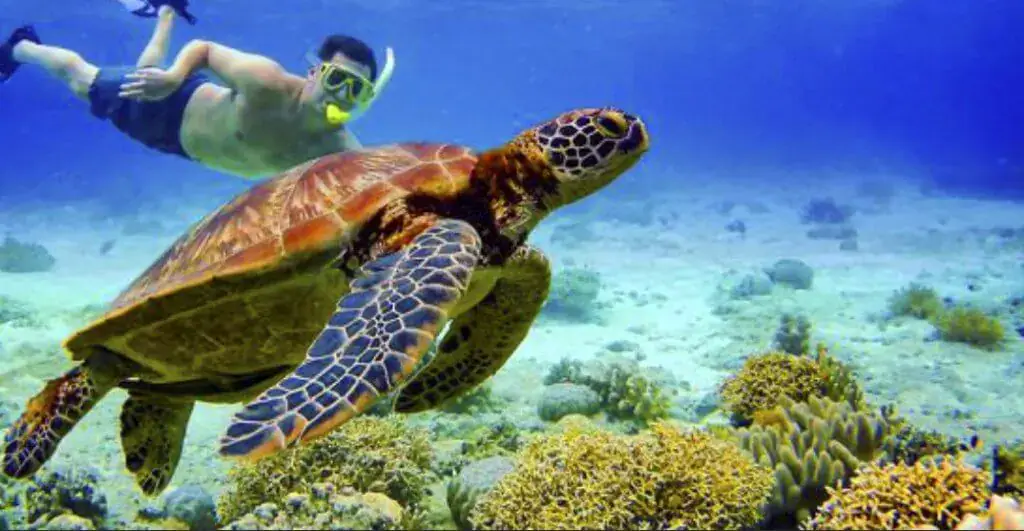
The tranquil scene of sea turtles gliding through the turquoise waters of Mauritius' lagoons is being disrupted by tourists and tour operators. At Bain-Bœuf, a popular spot, visitors are swimming too close to the turtles, surrounding them, and preventing them from feeding and breathing. This harassment is not only stressful for the turtles but also undermines conservation efforts.
Conservationists and concerned citizens are speaking out against the harassment of sea turtles. Alain Malherbe, a vocal advocate for turtle protection, has documented instances of harassment through photos and videos. On November 12, he filmed tourists swimming near turtles at Bain-Bœuf, prompting a reaction from the junior minister, Fabrice David. However, instead of addressing the issue, David questioned the authenticity of Malherbe's video, claiming it was fake.
The dispute over the video's authenticity highlights a larger issue: the lack of effective enforcement of existing laws protecting sea turtles. The Fisheries Act of 2023 clearly prohibits recreational swimming with turtles, feeding them, and harassing them in any way. Offenders risk fines of up to Rs 25 million and prison sentences of up to two years. Despite this, tour operators continue to sell tickets for turtle-watching excursions, and the authorities seem slow to respond.
The contrast between the treatment of sea turtles and Jackie, a visiting seal, is striking. When Jackie appeared on Mauritian beaches, the authorities quickly responded, providing medical care, setting up a security perimeter, and mobilizing the National Coast Guard. Similarly, when whales are spotted, the public outcry is swift, and the authorities eventually take action. However, sea turtles seem to receive less attention and protection.
The harassment of sea turtles is not only a conservation issue but also a reflection of a broader problem: the commercialization of wildlife experiences. Tour operators are profiting from selling tickets to interact with turtles, while the authorities fail to enforce regulations. This has led to a situation where the tranquility of the turtles is being sold for a price, rather than being protected and respected.
To address this issue, the Tourism Authority and conservation authorities must work together to enforce existing laws and regulations. This includes monitoring turtle habitats, issuing fines and penalties to offenders, and educating tourists and tour operators about the importance of respecting wildlife. Additionally, the authorities must take a proactive approach to preventing harassment, rather than reacting to public outcry.
Ultimately, the protection of sea turtles in Mauritius requires a shift in attitudes and behaviors. Tourists and tour operators must recognize the importance of respecting wildlife and preserving the natural beauty of the lagoons. By working together, it is possible to create a culture of conservation and respect for Mauritius' unique marine life, ensuring that sea turtles and other species thrive for generations to come.
Key points
- The Mauritian government must take action to enforce existing laws protecting sea turtles and prevent their harassment by tourists and tour operators.