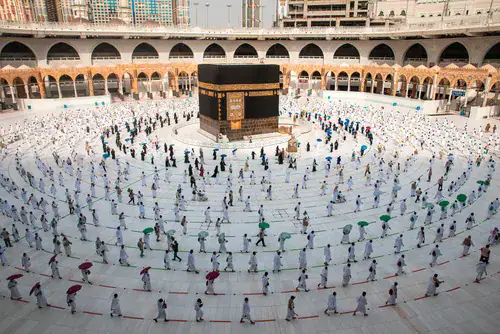
The Ministry of Religious Affairs in Tunisia has officially announced that the cost of Hajj for the 2027 season will be 21,330 dinars per pilgrim. This represents a 1.91% increase from the 2026 season, which cost 20,930 dinars. The rising costs are largely attributed to the increase in air transport expenses. This development highlights the ongoing budgetary pressures faced by households in Tunisia.
The cost of Hajj has been steadily increasing over the years. In 2025, the pilgrimage cost 20,700 dinars. Over two years, the total cost has risen by more than 3%, surpassing the critical threshold of 21,000 dinars. The structure of the expenses consists of two main components: accommodation and services on site, and air transport. The accommodation and services, provided by the Société nationale des services et des résidences (SNSR), have increased to 17,200 dinars, up from 17,000 dinars last year.
The air transport component, which is co-insured by Tunisair and Saudi Airlines, has seen a significant increase. The cost of the airplane ticket has risen to 4,130 dinars, up from 3,930 dinars in 2026. This represents a 5.09% increase, making air transport the major contributor to the rising costs of Hajj. Despite attempts by authorities to negotiate a cap on air transport tariffs, the impact of international petroleum market tensions and the rising cost of kerosene have driven up prices.
The Ministry of Religious Affairs' announcement was made on November 2, 2026, by Talel Bahoury. The increasing costs of Hajj highlight the financial challenges faced by Tunisian pilgrims. Many view Hajj as a significant spiritual commitment, but the rising expenses make it increasingly difficult for individuals to afford the pilgrimage.
The Hajj pilgrimage is a significant event for thousands of Tunisians. Beyond the spiritual aspect, the financial reality is a major consideration. The costs associated with Hajj, including accommodation, services, and air transport, continue to rise, placing a substantial burden on households.
In an effort to understand the changes in the pilgrimage expenses, it is essential to examine the structure of the costs. The two primary components of the expenses are accommodation and air transport. While the cost of accommodation has seen a moderate increase, the air transport costs have risen significantly.
The ongoing increases in Hajj costs have significant implications for Tunisian pilgrims. As the costs continue to rise, many individuals may find it challenging to participate in the pilgrimage. The Ministry of Religious Affairs and other relevant authorities will need to consider the impact of these rising costs on prospective pilgrims.
Key points
- The cost of Hajj 2027 in Tunisia is 21,330 dinars per pilgrim.
- The rising costs are largely attributed to the increase in air transport expenses.
- The cost of Hajj has increased by more than 3% over the past two years.