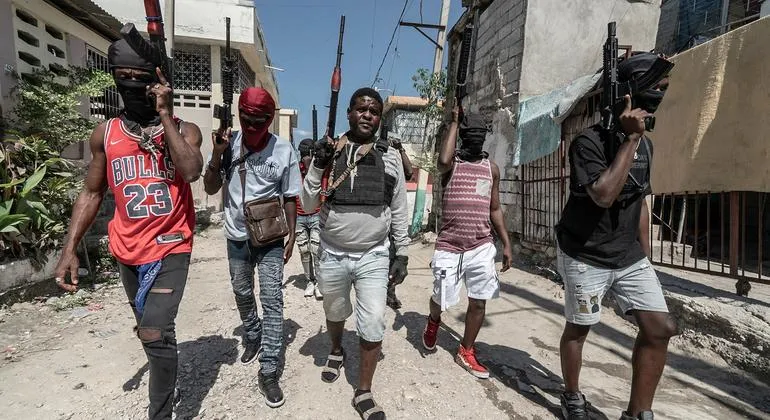
The situation in Haiti continues to deteriorate as gang violence escalates, with over 5,700 people killed or injured since the beginning of the year. The gangs have expanded their control to new territories, and their recent attacks and progression in the Sud-Est department demonstrate a strategy to conquer new areas and control essential transportation routes. According to Volker Türk, the UN High Commissioner for Human Rights, the gangs are adapting and expanding, and a comprehensive response is needed to address the root causes of the crisis.
The UN has recorded at least 5,700 people killed or injured by gangs or during security operations, as well as over 230 kidnappings and 1,000 rapes of women and girls. These numbers are likely underestimates. More than half of the victims were recorded during security operations, often due to stray bullets and explosive drones. The summary executions attributed to specialized police units have decreased by almost half compared to 2025 but still persist, while self-defense groups have killed or injured around 280 people.
The crisis in Haiti is not only a security issue but also has deep-rooted political, economic, and social causes. Volker Türk emphasized that the violence is a result of impunity and networks of interests that go beyond Haiti's borders. The situation has paralyzed the economy, access to schools, hospitals, and essential services. Over half of the population suffers from acute food insecurity, 40% lack access to basic healthcare, and nearly 1.5 million people have been displaced.
The prisons in Haiti are operating at over three times their capacity, with at least 125 deaths recorded since the beginning of the year. Children are particularly vulnerable, making up 30-50% of gang members, and their recruitment and exploitation have almost tripled in 2025. William O'Neill, a UN expert, proposes creating a "youth corps" that would offer young Haitians, including former gang members and victims, training, jobs, and a salary in various sectors such as agriculture, environment, and technology.
Volker Türk calls for a response that goes beyond security measures, including expanding sanctions against actors who finance and support criminal networks and strengthening their scope through justice mechanisms in Haiti. He also urges states to enforce the arms embargo and disrupt trafficking at its source. The UN expert emphasizes the importance of giving young people alternatives to gangs, including education, job opportunities, and social support.
The situation in Haiti requires a comprehensive and sustained response from the international community. Volker Türk stresses that free and fair elections are essential to restoring constitutional order, but the security situation makes it challenging to hold a credible vote by the end of the year. The UN expert also highlights the need to address the root causes of the crisis, including poverty, inequality, corruption, and impunity.
Despite the violence, there are still signs of hope in Haiti. Children continue to attend school, and the international community can contribute to creating a more secure and stable environment. The UN's William O'Neill emphasizes the urgency of providing young people with alternatives to gangs, and Volker Türk stresses that the international community must work together to support a comprehensive response to the crisis.
Key points
- The UN has recorded over 5,700 people killed or injured in Haiti since the beginning of the year.
- The crisis in Haiti has deep-rooted political, economic, and social causes that need to be addressed.
- The UN proposes creating a "youth corps" to offer young Haitians training, jobs, and a salary as an alternative to gang membership.