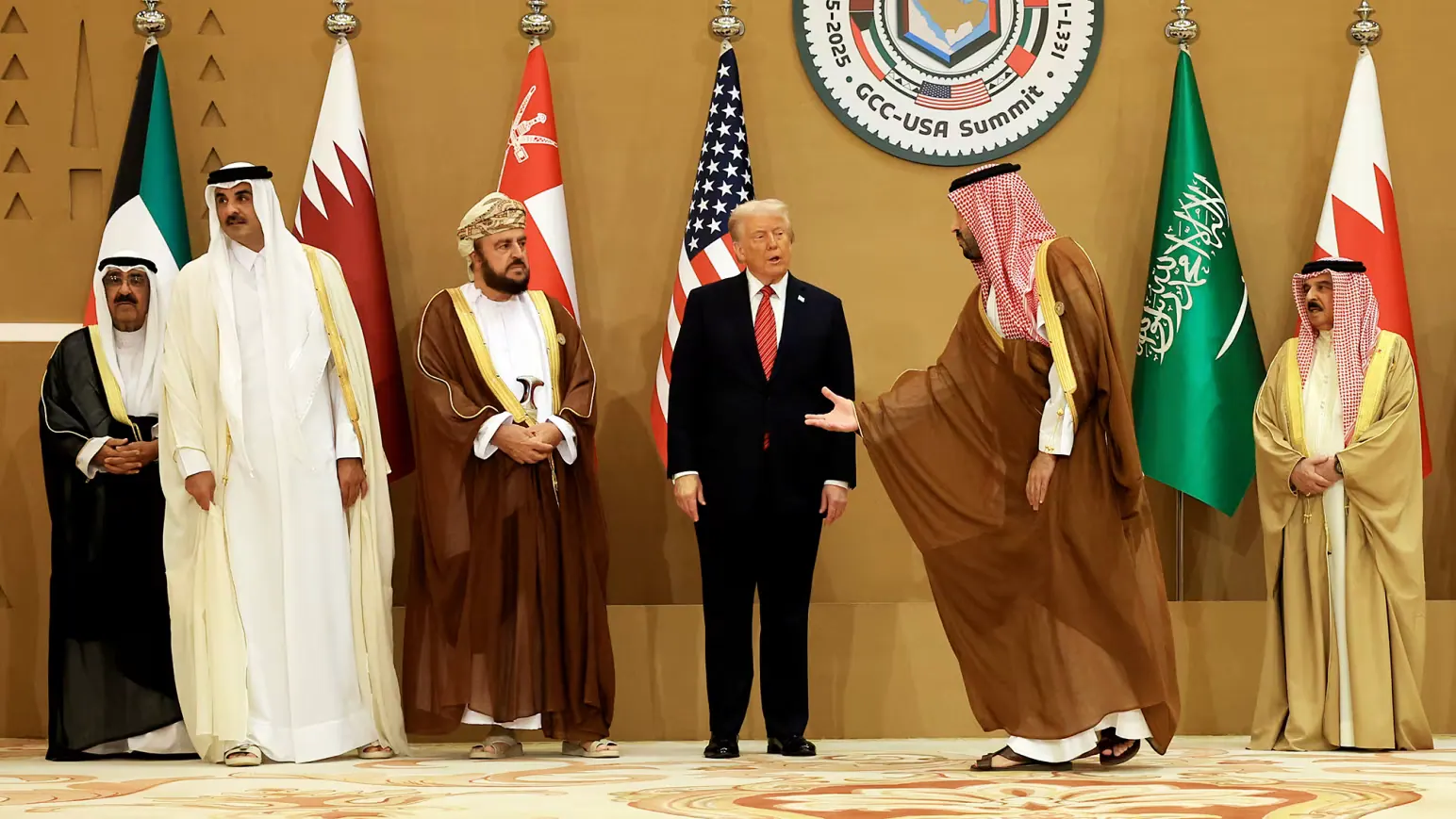
US President Donald Trump's Gulf Arab allies are set to meet him in New York on Tuesday as he weighs whether to escalate tensions with Iran. The Gulf leaders are concerned about being drawn deeper into the war as Washington seeks a way out. In early August, Trump said he called off a major attack on Iran at the behest of Saudi Arabia, the United Arab Emirates, and Qatar. Their leaders believed a deal with Tehran was within reach, but no such deal has emerged, and oil prices remain high.
The US president told Axios on Thursday that he faced a "big decision" on the war and wanted to hear directly from Gulf leaders. Their challenge is to give him a way forward that protects them from further attacks without drawing them deeper into the war. According to Danny Citrinowicz, an Iran analyst at Israel's Institute for National Security Studies, the meeting could be one of the most important diplomatic meetings of this phase of the conflict. The central question for Washington will be how Gulf leaders view the choice between renewed escalation and a diplomatic off-ramp.
A coordinated appeal by Gulf leaders helped persuade Trump to hold fire last month. However, the war has widened, and Iran's proxies target Saudi energy infrastructure from Yemen and Iraq, raising the specter of a global energy shock. Saudi Arabia faces what may be its most far-reaching security threat since the 1991 Gulf War. Trump shows little appetite for intervening directly on its behalf, and Washington discusses a longer-term reduction in its military presence in the Gulf.
The US-led security bargain took shape after the 1991 Gulf War, with Gulf states hosting American forces and buying US weapons, counting on Washington to help deter threats. However, US missile stockpiles are severely depleted, and another escalation in an already unpopular war could hurt Republican candidates in midterm elections. If the US escalates militarily with Iran, Gulf states could once again bear the brunt of Tehran's retaliation, which they have little appetite for.
Riyadh already faces a two-front assault, while Qatar, Bahrain, and Kuwait continue to face major disruptions to trade due to the closure of the Strait of Hormuz. The UAE has stepped up engagement with Iran, with the two sides agreeing on the need to "turn the page," according to Anwar Gargash, diplomatic adviser to the UAE president. However, Gargash has warned that trust could take decades to rebuild and that dialogue must be paired with deterrence.
Gulf leaders will only be able to persuade Trump if they speak with "one united voice" and bring him "very, very specific asks," according to Bader Al-Saif, an assistant professor of history at Kuwait University. Beyond Trump's next move on Iran, Gulf leaders face a longer-term fear: a diminished US military presence in the region. Senior Pentagon officials have privately made clear they want to scale back the US military's troop presence in several Gulf countries.
For Gulf governments, even discussing a US military drawdown while attacks spread across the region risks handing Iran a victory and leaving them more exposed. The Gulf Cooperation Council is trying very hard to project a united front against Iran. According to Bader Al-Saif, the war is testing something larger than the future of US bases – it's a test case for a shift in the US relationship with the Gulf. The 1991 Gulf War made the region a proving ground for American dominance, but now the Gulf is a test case for a different type of relationship.
Key points
- Gulf leaders meet Trump amid fears of war escalation and reduced US protection.
- US missile stockpiles are severely depleted, making further escalation challenging.
- Gulf states face major disruptions to trade due to the closure of the Strait of Hormuz.