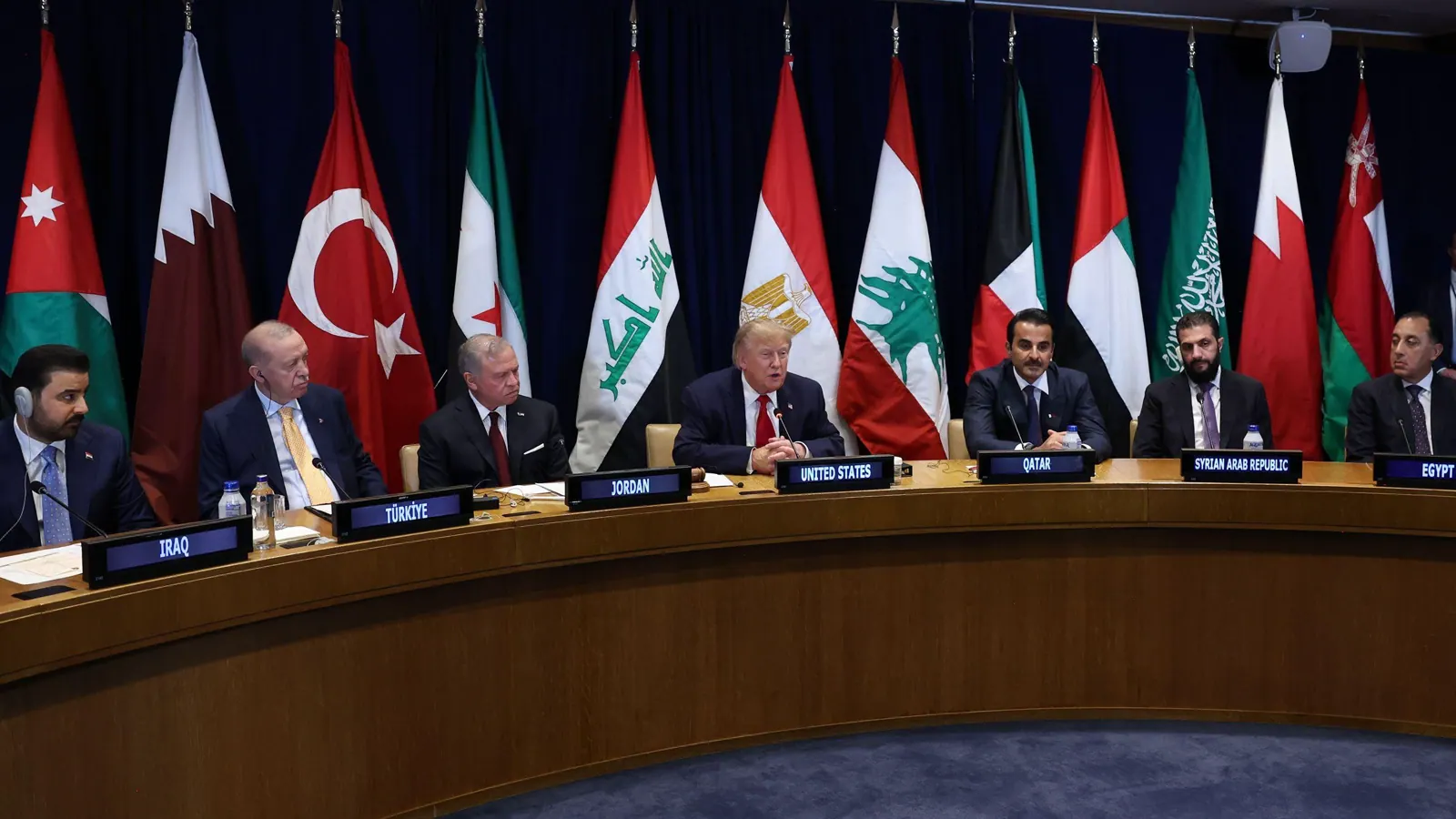
The relationship between Gulf leaders and the US has become increasingly strained as tensions with Iran escalate. During a recent meeting with US President Donald Trump at the UN General Assembly, Gulf leaders were expecting reassurances about US commitment to their security. However, Trump's comments about the possibility of "obliterating" Iran only served to heighten concerns about the reliability of US protection. This has led to a growing sense of unease among Gulf leaders about their ability to depend on US support.
The article by Ruth Michaelson in The Observer notes that the US has historically been a key ally for Gulf countries, providing a security umbrella that has protected them from Iranian aggression. However, with the ongoing conflict between the US and Iran, this security umbrella appears to be weakening. The article cites estimates that suggest the conflict has led to a significant shift in the balance of power in the region, with Gulf countries now seeking alternative alliances with countries like China and Russia.
The loss of faith in US protection has significant implications for the region. With the US reconsidering its military presence in the Gulf, Gulf leaders are now seeking new ways to defend themselves. This has led to a renewed focus on building domestic military capabilities and seeking alternative security arrangements. However, as the article notes, there is no clear alternative to US dominance in the region, and Gulf leaders are facing a difficult reality.
The article also notes that the UK's debate about its relationship with the EU has implications for the region. A recent article in The Daily Telegraph by Roger Bootle argues that returning to the EU would be a costly mistake for the UK. Bootle suggests that the UK's economic weakness is not solely due to Brexit, but rather a result of a range of factors, including domestic policy decisions.
The article by Bootle also highlights the challenges of re-establishing a close relationship with the EU. He notes that the UK would have to accept EU regulations and increase its contributions to the EU budget, which could have significant economic implications. Furthermore, the UK would have to navigate complex issues such as the single market and customs union.
In a separate article, Sanjay Lobo, founder of the OnHand app, argues that while technology has the potential to bring people together, it cannot replace human connection. Lobo notes that his app, which connects volunteers with vulnerable individuals, has highlighted the importance of human interaction in building relationships and fostering a sense of community.
Lobo's comments are echoed by many experts who argue that technology has the potential to both unite and isolate people. As the world becomes increasingly reliant on technology, there is a growing recognition of the need to balance technological innovation with human connection. This is particularly important in the context of the Gulf region, where social relationships and community ties are highly valued.
Key points
- Gulf leaders are questioning US commitment to their security amid rising Iran tensions
- The UK's debate about its relationship with the EU has significant implications for the region
- Technology has the potential to both unite and isolate people, highlighting the need for human connection in building relationships and fostering a sense of community