A 38-year-old German visitor and his partner were rescued after spending the night stranded near the Boss 400 shipwreck along the Cape Town coastline. The pair had been hiking from Llandudno towards Hout Bay when the German visitor began struggling to walk shortly after passing the Boss 400 wreck. They had been using an online navigation application which did not accurately reflect the current condition of the trail.
According to Wilderness Search and Rescue (WSAR) spokesperson David Nel, the hikers had been facing difficult trail conditions, including overgrown, difficult-to-navigate and hazardous sections. After injuring his ankle, the exhausted hikers decided to turn back towards Llandudno. However, while making their way back, they reached a particularly challenging section of the trail and called for assistance late on Sunday afternoon.
WSAR teams, including Western Cape Government Health and Wellness EMS paramedics and SANParks Table Mountain National Park SEAM team and rangers, were deployed to the scene. With the terrain proving difficult and treacherous, combined with strong winds and fading daylight, Nel said rescuers decided it was safer to remain with the hikers overnight rather than attempt a descent in deteriorating conditions.
Specialist WSAR trail runners were also tasked with carrying tents, sleeping bags and other essential equipment up the trail to the stranded hikers. Shortly after 8am on Monday, Western Cape Government Health and Wellness EMS and Air Mercy Service attempted to extract the hikers by helicopter. However, strong winds made the operation unsafe, and the planned helicopter extraction had to be abandoned.
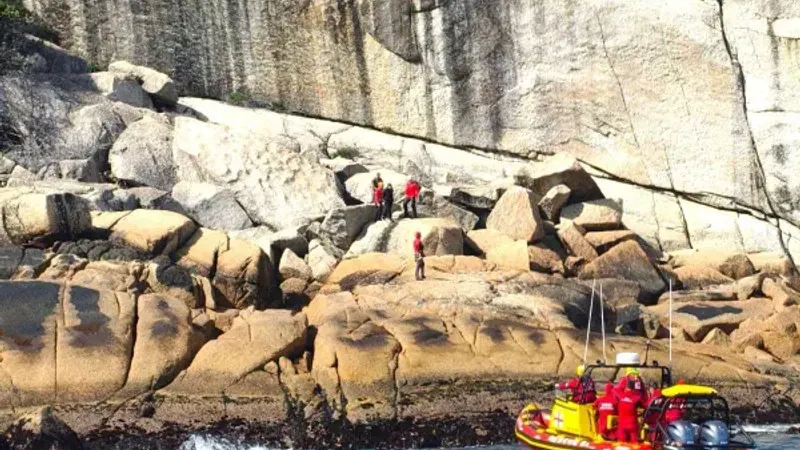
Rescuers then changed their approach and deployed additional WSAR team members to assist with a technical descent. The injured hiker was carefully lowered approximately 60 metres down granite slabs towards the coastline, where National Sea Rescue Institute (NSRI) teams were waiting with rescue boats. This approach ultimately led to a successful rescue.
NSRI rescuers then used a small inflatable canoe to transport the two hikers, one at a time, to the waiting rescue boats. The hikers were subsequently taken safely ashore in Hout Bay. The rescue operation was completed shortly after noon on Monday, with all rescuers safely off the trail. The operation involved cooperation between emergency services and rescue organisations.
Nel warned hikers about the condition of the trail in the area, stating that it was in particularly treacherous condition, with areas that are overgrown and virtually impassable. He also advised hikers to avoid this route due to reported incidents of crime in the area. The rescue operation demonstrated the importance of collaboration between emergency services and rescue organisations.
Key points
- The rescue operation involved cooperation between WSAR, Western Cape Government Health and Wellness EMS, SANParks Table Mountain National Park, and NSRI.
- The hikers were stranded due to difficult trail conditions and an ankle injury.
- The planned helicopter extraction was abandoned due to strong winds.