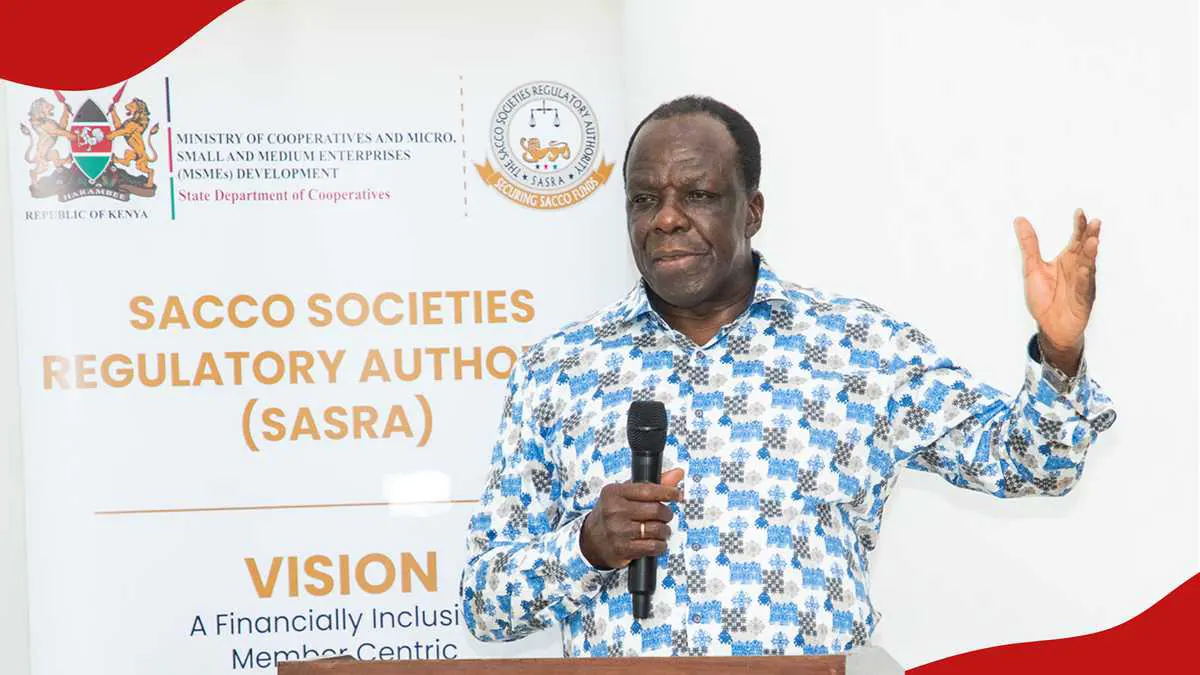
The Sacco Societies Regulatory Authority (SASRA) has disclosed that thousands of SACCO members across Kenya are staring at potential financial losses after employer institutions failed to remit KSh 3.92 billion in deductions made from their salaries in 2025. This amount climbed from KSh 3.49 billion in 2024, and the number of affected members rose sharply from 55,602 to 104,331 across 89 regulated SACCOs.
County governments and assemblies accounted for KSh 1.88 billion, or 48.09% of all unremitted funds, an increase from KSh 1.61 billion recorded the previous year. SASRA described the pattern as particularly alarming, noting that cooperative functions are constitutionally devolved to county governments, which should instead be at the forefront of compliance.
The regulator was unequivocal about where the deducted funds had likely gone, stating that diversion to other purposes was the only plausible explanation. Other significant defaulters included public universities and tertiary colleges at KSh 725.91 million (18.52%), state corporations and parastatals at KSh 480.55 million (12.26%), private sector companies at KSh 345.27 million (8.81%), constitutional bodies at KSh 204.74 million (5.22%), and national government ministries at KSh 157.99 million (4.03%).
Of the KSh 3.92 billion total, KSh 3.04 billion related to unremitted loan repayments, while KSh 879.72 million covered back-office savings deposits, known as BOSA deductions. The loan repayment gap has pushed credit facilities at affected SACCOs into default or impairment, directly worsening the sector's non-performing loan figures.
Deposit-taking SACCOs bore the heaviest burden, with KSh 3.38 billion, representing 86.16% of all unremitted funds, owed to that segment alone. For individual members, the consequences are twofold. Those whose BOSA deductions were withheld find their borrowing capacity diminished, since loan eligibility is tied to accumulated savings.
Those whose loan repayment deductions were retained by employers face disputes with their SACCOs over credit obligations they believe they have already discharged through their payslips. SASRA urged all regulated SACCOs to maintain thorough documentation on deduction claims, warning that incomplete records had already cost some SACCOs court cases against defaulting employers.
SASRA published a list of 176 deposit-taking SACCOs licensed to accept deposits from Kenyans during the 2026 financial year. The regulator committed to pursuing policy reforms aimed at closing the loopholes that allow government institutions to redirect employee deductions to unintended purposes.
Key points
- County governments and assemblies are the biggest defaulters, owing KSh 1.88 billion to regulated SACCOs.
- The number of affected SACCO members nearly doubled in a single year, raising alarm over loan defaults and eroded savings.
- SASRA is pursuing policy reforms to prevent the diversion of employee deductions to unintended purposes.