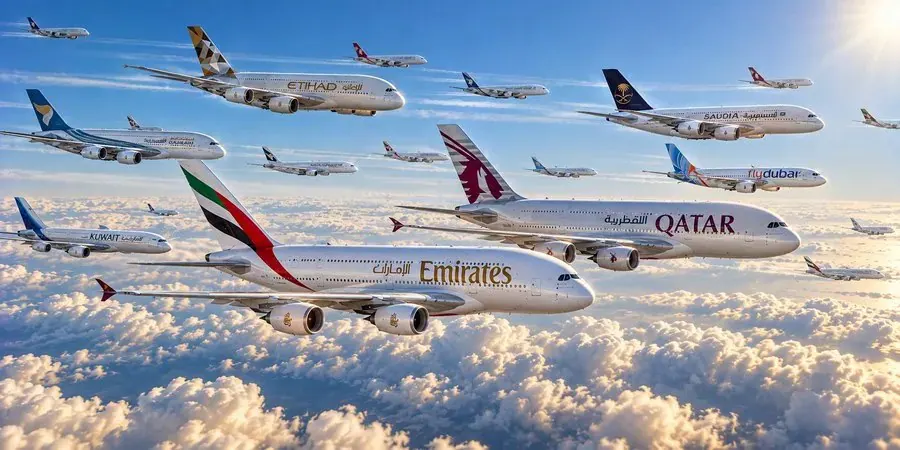
Africa's aviation landscape is poised for significant growth as major Gulf carriers, Emirates and Qatar Airways, expand their operations, enhancing connectivity between African cities and Asian markets. This development is set to have far-reaching implications for African economies, going beyond mere seat count increases. The expansion, slated for 2026 and 2027, involves substantial investments in infrastructure that facilitates the movement of people, goods, and capital between Africa and Asia.
The expansion is not limited to adding flights; it aims to strengthen the connective tissue of Asia-Africa commerce. By increasing frequencies, Gulf carriers are reducing journey times, enhancing schedule flexibility, and lowering the effective cost of doing business across these corridors. This improvement in air access is expected to positively impact trade missions, foreign direct investment pipelines, and tourism receipts. Analysts view Dubai and Doha as strategic assets for African economies, enabling commerce between Asia and Africa.
Emirates is upgrading its Africa services with widebody aircraft, including the addition of three weekly services to Accra for its 2026/27 winter season. This move will bring West Africa's primary financial hub closer to Emirates' dense connection bank in Dubai. The airline will also deploy Airbus A350 widebody aircraft to Nairobi from late October 2026 and to Mauritius in November 2026. These upgrades signal a deliberate push for premium yield on high-growth East and Southern African corridors.
The partnership between Emirates and flydubai is amplifying reach across the continent, connecting more than 214 unique destinations across over 100 countries and generating over 4,600 connection opportunities through Dubai alone. On the Asian side, Emirates will increase its services to Hanoi, Ho Chi Minh City, and Tokyo Narita, each moving to two daily departures. One Dubai–Delhi service will be upgraded to an Airbus A380, reinforcing Dubai's role as a one-stop bridge between Asian manufacturing and commercial centres and African gateway cities.
For business travellers, the increased schedule density matters significantly. More daily options mean tighter connections and fewer wasted days in transit. Gulf hub economics depend on scale, frequency, and cross-feed between mainline and hybrid carriers, making it challenging for point-to-point rivals to replicate this quickly. Qatar Airways is also raising the stakes on African frequencies, with plans to operate more than 186 weekly flights across Africa, Asia-Pacific, Europe, the Americas, and the Middle East during the 2026/27 winter season.
Qatar Airways' network will reach more than 170 destinations and nearly 1,800 weekly flights by December 2026. The airline has concrete Africa-specific additions, including the resumption of daily flights to Zanzibar from 25 October 2026. Additionally, Seychelles services will rise from four to seven weekly departures from 1 March 2027. Johannesburg will also see increased services, further enhancing Qatar's presence in Africa.
The expansion by Gulf carriers is set to reshape Asia-Africa business travel, providing more options and flexibility for travellers. With increased frequencies and upgraded aircraft, Emirates and Qatar Airways are positioning themselves as key players in facilitating commerce between Africa and Asia. This growth in air connectivity is expected to have a positive impact on African economies, driving growth and investment across the continent.
Key points
- Gulf carriers are expanding capacity on routes linking African cities to Asian markets.
- The expansion aims to strengthen Asia-Africa commerce by reducing journey times and increasing schedule flexibility.
- The growth in air connectivity is expected to drive growth and investment across African economies.