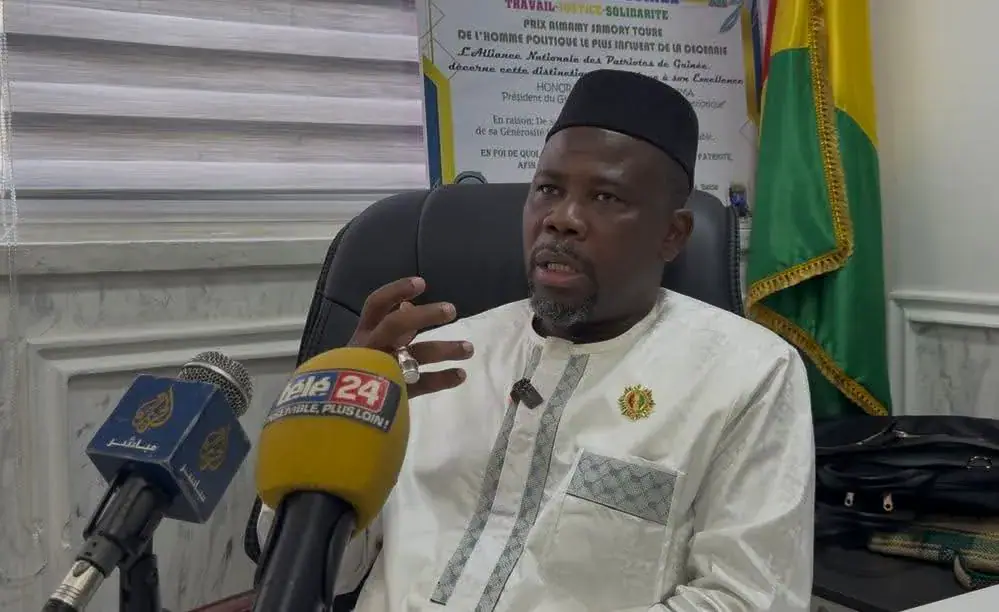
Guinean deputy Abdoulaye Kourouma has come out in support of President Mamadi Doumbouya's decision to ban artisanal gold mining in the country. Kourouma, who is also the president of the Rassemblement pour la renaissance et le développement (RRD), believes that the measure is a matter of national sovereignty and is not targeted at any particular foreign community. He made these comments in light of the recent departure of Burkinabè artisanal gold miners from Guinea.
Kourouma highlighted the historical ties of solidarity between Guinea and its neighboring countries, particularly during the period of regional and international sanctions imposed on Mali, Burkina Faso, and Niger. He recalled that Guinea was the only country that defied the international community by maintaining its relations with these countries, despite the sanctions. According to Kourouma, President Doumbouya's decision to ban artisanal gold mining is not a measure against any specific nationality, but rather a move to regulate a sector that has gotten out of control.
The Guinean deputy emphasized that the ban on artisanal gold mining affects not only foreigners but also Guineans, with several administrators and prefects being sanctioned or imprisoned as part of the government's efforts to clean up the sector. He argued that this demonstrates that the measure is not targeted at any particular nationality, but rather at bringing order to the sector. Kourouma also pointed out that the decision has been misunderstood, leading to unnecessary tensions with neighboring countries.
Kourouma praised President Doumbouya for his pan-Africanist stance, citing his efforts to support Mali, Burkina Faso, and Niger during their time of need. He recalled that Guinea provided a vital lifeline to these countries, allowing them to maintain their air and land connections with the rest of the world. According to Kourouma, this history of solidarity should be taken into account when evaluating the current tensions over the ban on artisanal gold mining.
The deputy also emphasized that Guinea is a welcoming country that offers opportunities to Africans from other countries, provided they respect the laws and regulations. He dismissed suggestions that the government is hostile to foreigners, saying that Guinea's doors are open to all who want to contribute to the country's development. Kourouma urged the government to communicate more effectively about its motivations for banning artisanal gold mining, in order to avoid misunderstandings with neighboring countries.
According to Kourouma, the ban on artisanal gold mining is part of a broader effort to regulate the sector and address issues of security, environmental protection, and organization. He noted that this is not a unique initiative, as many countries are taking similar steps to regulate artisanal gold mining. Kourouma expressed his confidence that the government will find a way to balance the needs of different stakeholders, including local communities, foreign workers, and the environment.
Kourouma concluded by emphasizing the importance of understanding and cooperation between Guinea and its neighboring countries. He urged all parties to work together to find solutions that benefit everyone, rather than resorting to inflammatory rhetoric or accusations. The deputy expressed his hope that the current tensions will subside, and that Guinea and its neighbors will continue to enjoy good relations.
Key points
- The Guinean government's decision to ban artisanal gold mining is aimed at regulating the sector and addressing issues of security, environmental protection, and organization.
- The ban affects not only foreigners but also Guineans, with several administrators and prefects being sanctioned or imprisoned as part of the government's efforts to clean up the sector.
- Guinean deputy Abdoulaye Kourouma supports the government's decision, citing national sovereignty and the need for order in the sector.