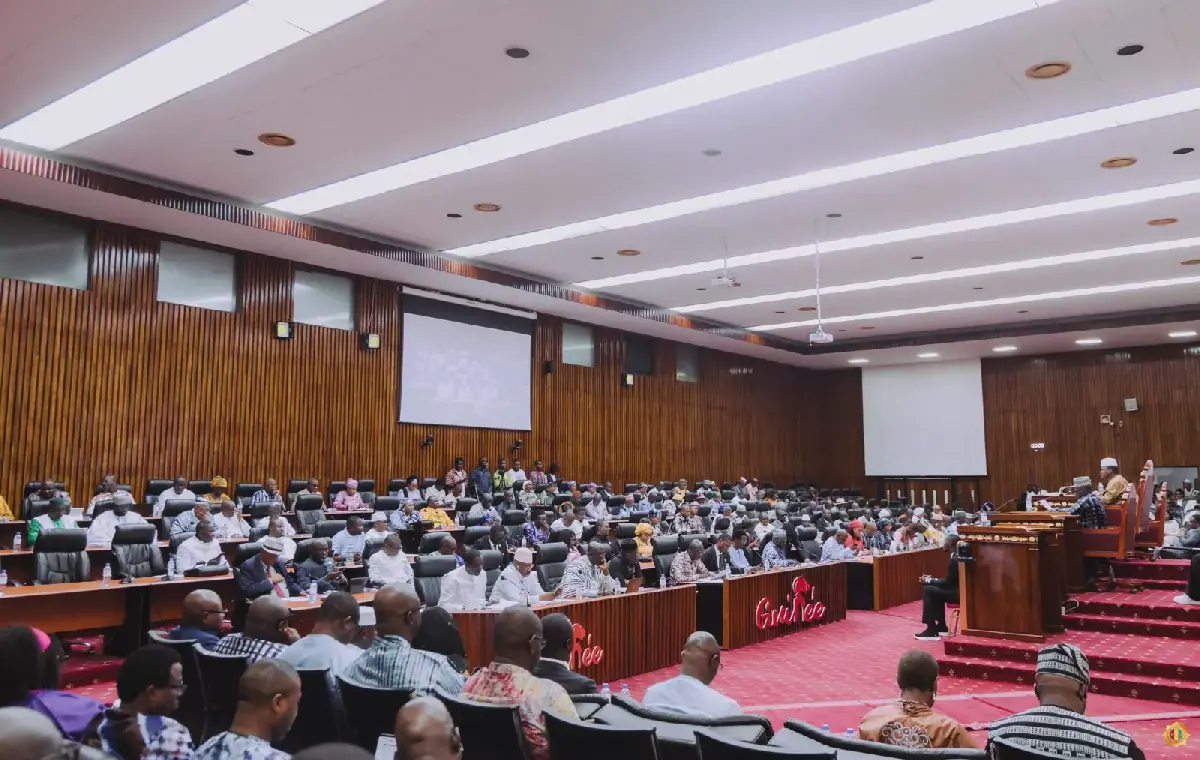
The Guinean National Assembly adopted the expenditure portion of the finance law on November 7, with several major budget amendments approved. These adjustments aim to support the productive sector, improve public administration efficiency, and boost strategic investments. The amendments were made in accordance with financial regulations and aim to strike a balance between financial sustainability and socio-economic development.
The budget amendments prioritize infrastructure development, particularly in the education sector. The University of Gamal Abdel Nasser in Conakry will receive 40 billion GNF, a partial payment towards a total of 95 billion GNF in validated accounts. The University of General Lansana Conté in Sonfonia will receive an additional 24.3 billion GNF to complete its renovation and extension, totaling 85 billion GNF.
The amendments also focus on stimulating economic competitiveness and structuring the national economy. Allocations include 15 billion GNF for constructing regional small and medium enterprise support centers, 6 billion GNF for the industrial development fund, and 3 billion GNF for developing the first industrial zone. Additionally, 2 billion GNF will be allocated to the Integrated Assistance Agency, and 4 billion GNF to the Guinean Copyright Bureau.
The mining sector and state control will receive targeted investments, including 5 billion GNF for strengthening mining activity control and monitoring, and 3.5 billion GNF for the National Quality Control Office. The fight against gold fraud and precious metal evaluation will also receive 0.1 billion GNF each.
The amendments also prioritize public administration, security, and essential services. Allocations include 15 billion GNF for public service recruitment exams, 20 billion GNF for the Ministry of Telecommunications' headquarters construction and extension, and 12 billion GNF for the Supreme Court to acquire service vehicles.
The Guinean government aims to balance ambitious development goals with budgetary discipline. The Finance Commission demonstrates its commitment to finding an equilibrium between meeting expectations and maintaining financial sustainability. These adjustments aim to equip the state with the means to ensure better financial sustainability while guaranteeing that every franc spent contributes to the country's socio-economic development.
The adoption of these budget amendments reflects the government's efforts to drive economic growth, improve public services, and modernize public action. The implementation of these allocations will be crucial in achieving these objectives and improving the lives of Guinean citizens.
Key points
- The Guinean National Assembly adopted budget amendments to support economic growth and public services.
- The amendments prioritize infrastructure development, particularly in the education sector.
- The government aims to balance ambitious development goals with budgetary discipline.