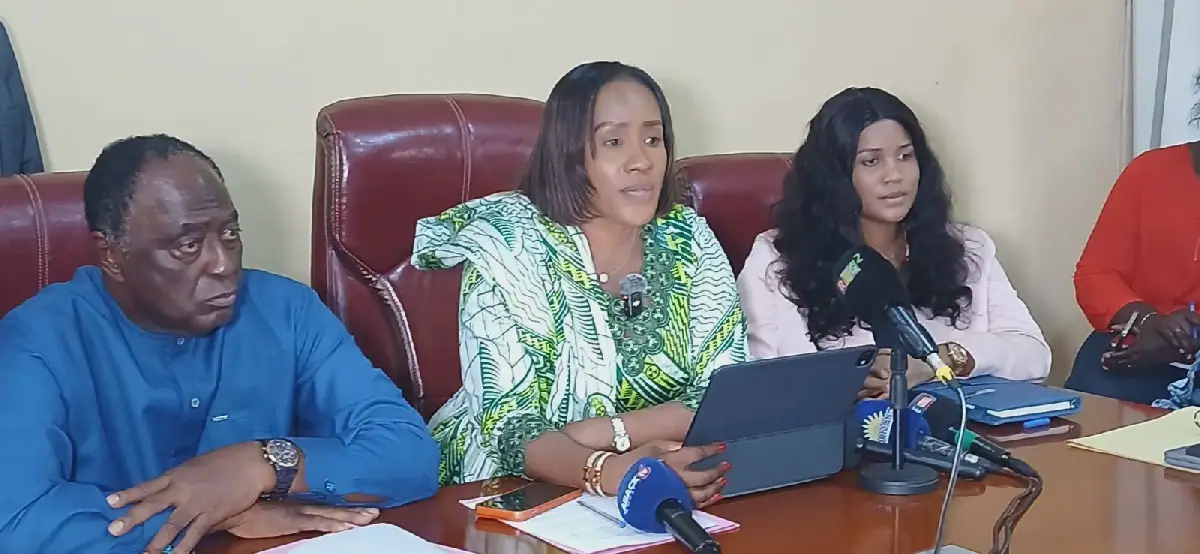
Guinean Labor Minister Ramatoulaye Camara met with leaders of Guinean trade unions at the Bourse du Travail in Conakry on November 10, 2026. This first meeting with social partners allowed Camara to reaffirm her commitment to making social dialogue a permanent aspect of her work. She presented the main areas of focus for her department, including promoting youth and women's employment, effective application of the Labor Code, and improving working conditions.
The union representatives, led by the vice-president, welcomed Camara's approach and highlighted key challenges facing the labor department. These challenges include promoting youth and women's employment, enforcing collective agreements, and extending social protection to informal sector workers. The unions also emphasized the need for their involvement in the Simandou 2040 program, a major development project aimed at exploiting the country's mineral resources while creating decent jobs and promoting national workforce qualification.
In response to union concerns, Camara acknowledged the importance of social dialogue and pledged to maintain close collaboration with union organizations, even in cases of disagreement. She made three commitments: regular exchanges, sincere discussions, and effective follow-up on commitments made. Camara stressed that social dialogue is judged by the answers it provides to workers and emphasized the importance of maintaining permanent exchanges to prevent misunderstandings and find concerted solutions to labor difficulties.
Camara outlined five priority areas for her department, including employment and professional insertion of young people, extension of social protection to informal sector workers, and reinforcement of labor legislation application. She also emphasized the need to prevent social conflicts through dialogue, mediation, and negotiation, as well as promoting women's and young people's participation in representation and decision-making bodies.
The minister also highlighted her department's efforts to promote decent work and improve working conditions. She welcomed the publication of a decree on occupational diseases compensable in the public and private sectors, presenting it as an important step forward for the well-being of Guinean workers. Camara assured that her door remains open to all trade unions, in a spirit of impartiality and respect for each other's responsibilities.
The meeting concluded with both parties expressing their willingness to consolidate their relations around consultation, trust, and the search for concrete solutions to labor concerns. Camara's approach has been welcomed by union leaders, who see it as a positive step towards improving labor relations and addressing the challenges facing Guinean workers.
The Guinean government has faced pressure to address labor concerns and promote social dialogue. The Simandou 2040 program, in particular, has raised expectations among workers and unions, who hope to benefit from the opportunities it offers. Camara's commitment to social dialogue and her focus on priority areas such as employment, social protection, and labor legislation application are seen as crucial steps towards addressing these concerns and promoting sustainable development in Guinea.
Key points
- The Guinean minister has committed to regular social dialogue with trade unions and outlined priorities for her department, including promoting youth and women's employment and improving working conditions.