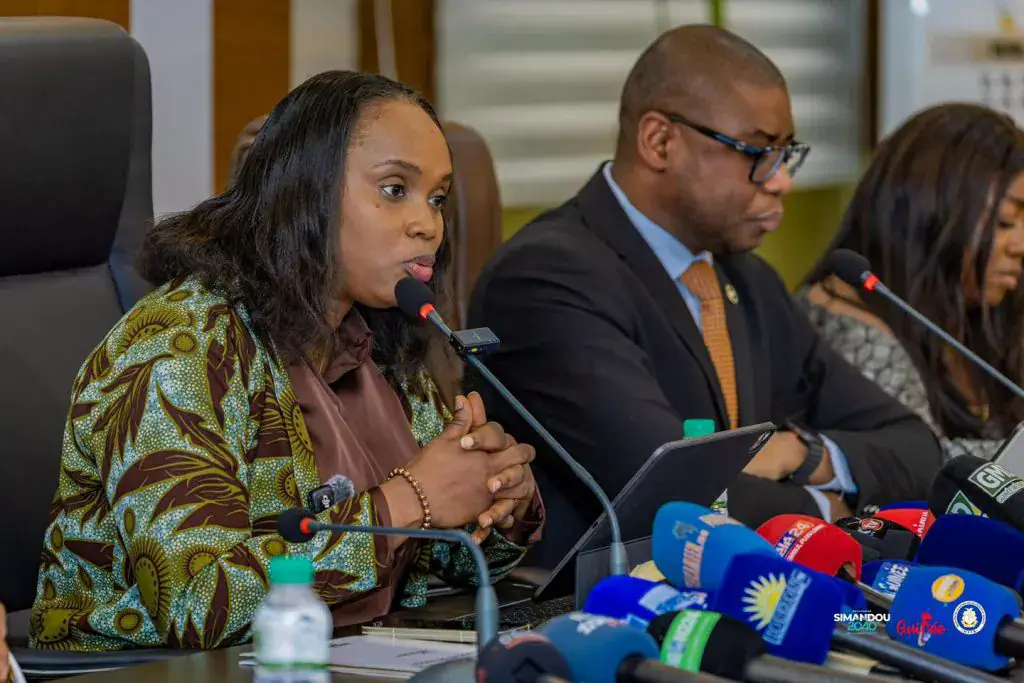
The Guinean government has outlined its strategy to increase state revenue through modernization of tax and customs administrations, formalization of the informal sector, and anti-fraud measures. Finance Minister Mariama Ciré Sylla presented the plan, part of the 2026-2029 Economic and Financial Program, approved by the International Monetary Fund (IMF). The program aims to boost domestic revenue through efficient collection and expansion of the taxpayer base.
The government will continue reforms to modernize tax and customs administrations, with a focus on digitalization. New devices will be introduced to enhance services, including standardized electronic invoicing and risk-based tax control. At customs, authorities plan to upgrade evaluation systems and modernize border control equipment, including intelligent scanners and artificial intelligence.
To address the significant informal sector in Guinea's economy, the government will revitalize Centres de gestion agréés (CGA), which support small and medium-sized enterprises in transitioning to the formal sector. The goal is to integrate more economic actors into the tax system, rather than increasing pressure on already formalized businesses.
Combating tax fraud is another key aspect of the strategy, with a focus on digital tools to reduce revenue losses. The government will assess tax exemptions to distinguish between those contributing to economic development and those depriving the state of resources without significant returns.
The strategy aims to increase domestic revenue through efficient collection, expanding the taxpayer base, and reducing losses, rather than relying on tax rate hikes. The government seeks to attract investments, create jobs, and support local industries through targeted exemptions.
Minister Sylla emphasized the importance of rationalizing tax exemptions, evaluating their impact on the economy, and eliminating those that do not provide significant benefits. The government will prioritize exemptions that promote economic growth, job creation, and industry development.
The 2026-2029 Economic and Financial Program, approved by the IMF, provides a framework for Guinea's economic development, focusing on sustainable growth, job creation, and poverty reduction. The program's success will depend on effective implementation of the revenue enhancement strategy and other economic reforms.
Key points
- The Guinean government aims to boost domestic revenue through modernization of tax and customs systems, formalization of the informal sector, and anti-fraud measures.
- The strategy prioritizes expanding the taxpayer base and reducing losses over increasing tax rates.
- The government will assess tax exemptions to eliminate those that do not contribute to economic development.