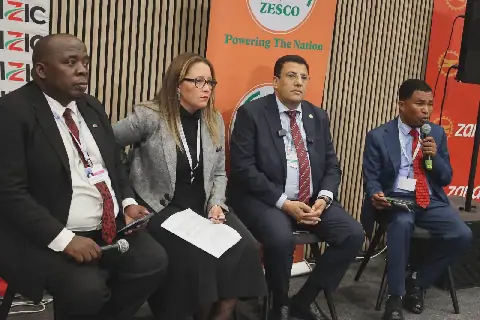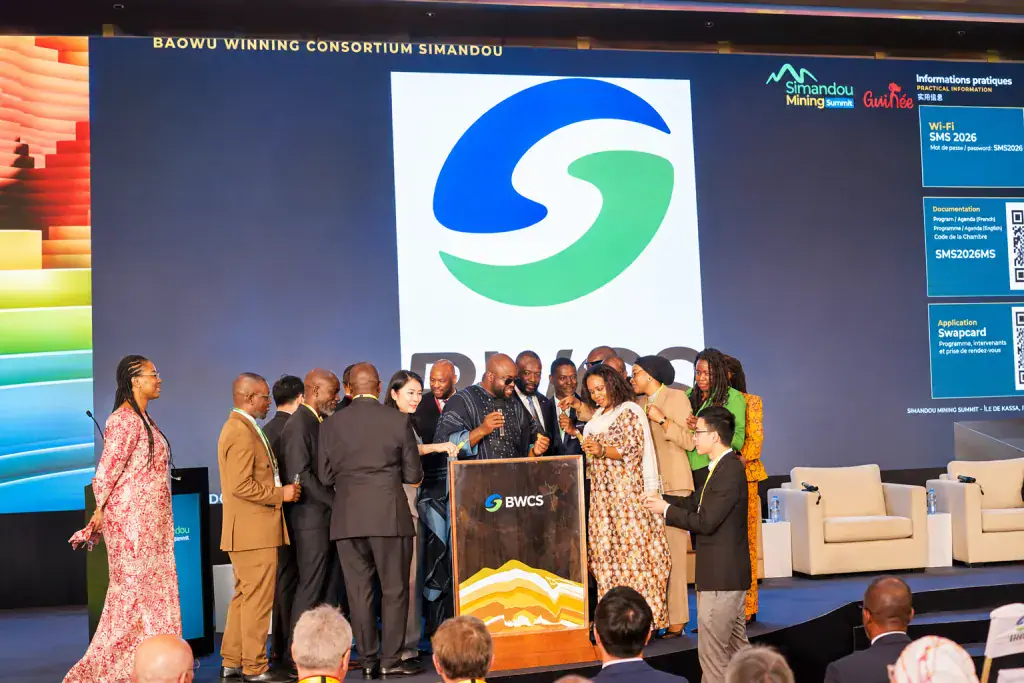
The Guinean government is capitalizing on the economic momentum created by the Simandou project to drive diversification and attract private investment. At a panel discussion during the Simandou Mining Summit in Conakry, Minister of Economy, Finance, and Budget Mariama Ciré Sylla, and Presidential Advisor Diakaby outlined priority sectors and reforms to improve the business climate. With the World Bank forecasting 8.8% growth in 2026 and 11% in 2027, Guinea aims to transform this economic performance into sustainable and inclusive prosperity.
Minister Sylla emphasized that the government's ambition goes beyond macroeconomic performance, citing the need to develop infrastructure, diversify the economy, and improve the investment climate. She highlighted energy, transportation, logistics, and industrial zones as key areas for investment, stressing that without energy, Guinea's industrialization agenda cannot move forward. The minister also underscored the importance of reducing production costs and enhancing competitiveness.
The government's strategy focuses on three main areas: energy, agriculture, and industrialization. Minister Sylla explained that Guinea aims to move from extraction to transformation, developing local processing of mining and agricultural resources. The Simandou 2040 program requires over $200 billion in investment, with a significant portion expected from the private sector. To attract investors, the government is pursuing reforms to stabilize the macroeconomic framework, enhance investor visibility, and simplify administrative procedures.
Presidential Advisor Diakaby presented the strategy for 2040, emphasizing that Simandou 2040 is not just a series of projects but a coherent set of investments to boost productivity and competitiveness. Citing examples from Chile, Botswana, and the UAE, she identified energy, agriculture, and industrialization as priority sectors for investors. Diakaby stressed the need for sufficient, consistent, and sustainable energy production to ensure long-term competitiveness.
Diakaby highlighted agriculture as a significant opportunity, with vast arable land, a domestic market, and sub-regional outlets. She also emphasized the potential for industrial development around railway and mining corridors, such as the Transguinean. Several industrial park projects are planned to encourage enterprise establishment and local resource processing.
The ongoing revision of the Investment Code aims to simplify procedures and orient incentives towards strategic sectors. Diakaby explained that the reform must address three key requirements: clarity and predictability of rules, targeted incentives for strategic sectors, and streamlined administrative processes. The success of Simandou 2040 depends on the Guinean administration's ability to effectively host and support announced investments.
While Diakaby did not provide a specific timeline for the new Investment Code, she assured that the government is working to create a conducive framework for investments. The government's efforts aim to create a favorable business environment, ensuring that investors can contribute to Guinea's economic growth and development.
Key points
- The Guinean government has identified energy, agriculture, and industrialization as priority sectors for investment.
- The Simandou 2040 program requires over $200 billion in investment, with a significant portion expected from the private sector.
- The government is pursuing reforms to stabilize the macroeconomic framework, enhance investor visibility, and simplify administrative procedures.