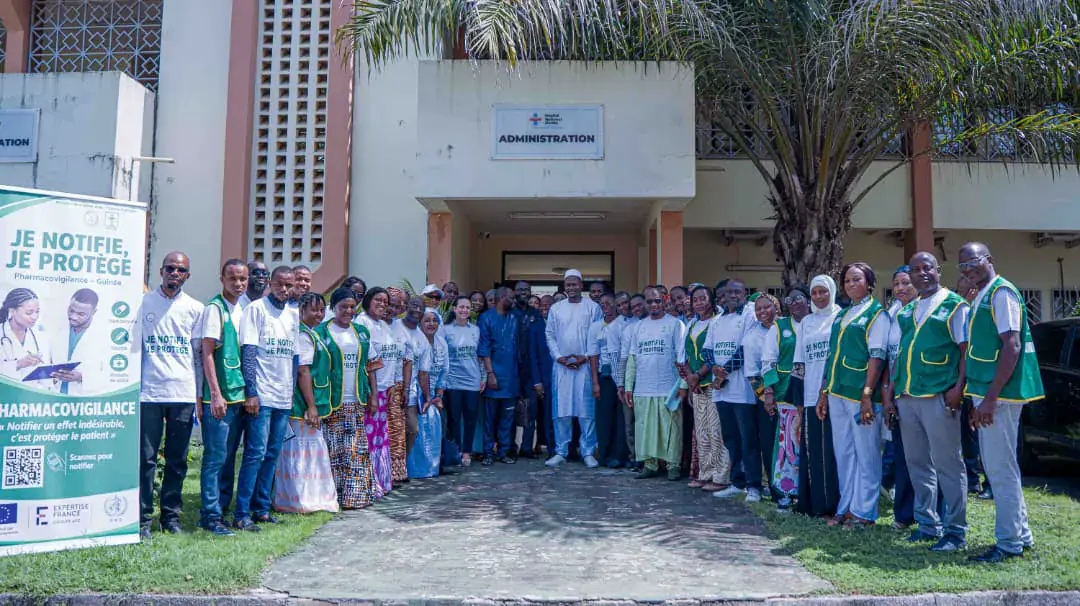
The Guinean Ministry of Health and Public Hygiene celebrated the National Pharmacovigilance Day on November 12, 2026, at the Donka University Hospital. The event, held under the theme "Safe Medicines, Vaccines, and Health Products for Safe Care for Life," aimed to reinforce the surveillance of medications, vaccines, and other health products. This year's celebration coincides with the World Patient Safety Day and the international MedSafetyWeek campaign of the World Health Organization.
The Guinean health sector has made significant strides in pharmacovigilance, having recently won the African Cup of Pharmacovigilance. Dr. Mory Keita, Secretary General of the Ministry of Health, emphasized that this achievement serves as a new beginning, urging stakeholders to transform this success into sustainable excellence. The ministry's efforts focus on systematic notification of adverse effects related to medications, vaccines, and health products, a crucial mechanism for detecting risks and taking preventive measures.
Pharmacovigilance is a strategic instrument for regulating and protecting public health, according to Dr. Mamadi Mariame Camara, Director General of the National Directorate of Pharmacy and Medicines. The notification of adverse effects is not only an administrative or regulatory obligation but also a moral and ethical one. The ministry encourages healthcare professionals to report all adverse effects, including minor ones, medication errors, and incidents related to medical devices.
To facilitate reporting and strengthen information gathering, the National Directorate of Pharmacy and Medicines is diversifying notification methods, including a national declaration form, the ODK Collect application, and the VigiFlow platform. A green number is also being set up to enable easy reporting. Additionally, the directorate plans to organize monthly webinars to enhance stakeholders' competencies and hold periodic coordination meetings.
The National Directorate of Pharmacy and Medicines will also reinforce the visibility of the national network through awareness-raising materials and identification of focal points in healthcare facilities. Starting from 2027, hospital structures will be required to submit quarterly pharmacovigilance reports, which will track the number of notifications, proportion of serious cases, transmission delays, and actions taken.
Despite the technical tools in place, the main challenge remains mobilizing all stakeholders, including healthcare professionals, public and private establishments, and manufacturers. The ministry aims to make pharmacovigilance an indicator of care quality and has set specific objectives for 2027, including equipping all national and regional hospitals with a focal point and ensuring the investigation of all serious post-vaccination adverse reactions.
The Guinean government has received technical support from the World Health Organization and financial and scientific backing from the European Union and Expertise France through the PASSGUI program. The goal is to consolidate the gains of the national system and make notification a professional and collective reflex, as reflected in the theme's motto: "I notify, I protect."
Key points
- The Guinean Ministry of Health and Public Hygiene is strengthening pharmacovigilance efforts to enhance medication safety.