The IMF has approved a new economic and financial program for Guinea, providing the country with 310.59 million special drawing rights (SDRs), equivalent to $2.425 billion. This program, supported by the Extended Credit Facility (ECF) and the Extended Fund Facility (EFF), aims to support Guinea's economic and financial reforms. The program was approved on November 23, 2026, and marks a significant milestone in the country's economic development.
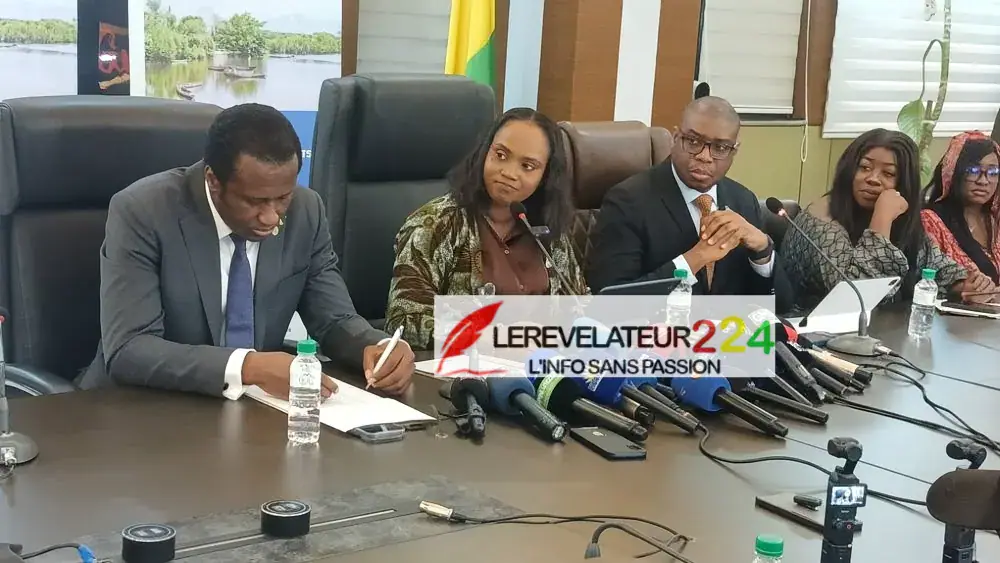
The program is designed to support Guinea's economic growth and development, particularly in the lead-up to the large-scale exploitation of the Simandou mining project. According to Guinea's Minister of Economy, Finance, and Budget, Mariama Ciré Sylla, the program is not just about financial support but also about accompanying the country's economic ambitions. The minister highlighted that Guinea has implemented significant reforms in recent years, including efforts to strengthen public resource mobilization and improve economic management.
The reforms have already yielded positive results, with internal revenue doubling over the past three to four years and increasing by nearly 50% between 2024 and 2025. The minister emphasized that the program with the IMF will enable Guinea to consolidate its public finance management mechanisms, improve tax and customs revenue mobilization, and ensure debt sustainability. This will help the country to avoid the pitfalls of many natural resource-rich countries that have failed to translate their mineral wealth into economic and social development.
Guinea's economic growth is expected to reach 8.6% in 2026, following a 7.1% growth in 2025. However, the minister stressed that the challenge lies in transforming this growth into concrete benefits for citizens. The program with the IMF is expected to help Guinea to achieve an inclusive and shared growth that creates jobs and generates wealth for the population. The minister emphasized that the country must prepare itself to manage the challenges and opportunities arising from the exploitation of the Simandou mining project.
The Simandou project is expected to open a new chapter in Guinea's economic prospects, but it requires strong institutions, rigorous public resource management, and an effective investment policy. The minister highlighted that Guinea has always been a country with potential, but it must now enter a new era of economic development. The program with the IMF will provide the country with the necessary tools to ensure that it can collect revenue optimally and manage it effectively to produce results for the population.
The Guinean government has implemented several key reforms, including the transition to a program-based budget from 2027. This reform aims to prioritize results over the allocation of financial resources. The minister also highlighted the digitalization of tax and customs administrations, which has contributed to the increase in internal revenue. Additionally, the government has operationalized a digital platform, Telimo, to streamline public procurement procedures.
The IMF program will provide Guinea with a critical tool to support its economic ambitions and ensure that the country can manage its resources effectively. The program is expected to help Guinea to achieve its development goals and create a more inclusive and sustainable economy. With the IMF's support, Guinea is poised to take a significant step forward in its economic development and create a brighter future for its citizens.
Key points
- The IMF has approved a $2.425 billion economic and financial program for Guinea to support the country's economic growth and development.
- The program aims to help Guinea achieve an inclusive and shared growth that creates jobs and generates wealth for the population.
- The Guinean government has implemented several key reforms, including the transition to a program-based budget and the digitalization of tax and customs administrations.