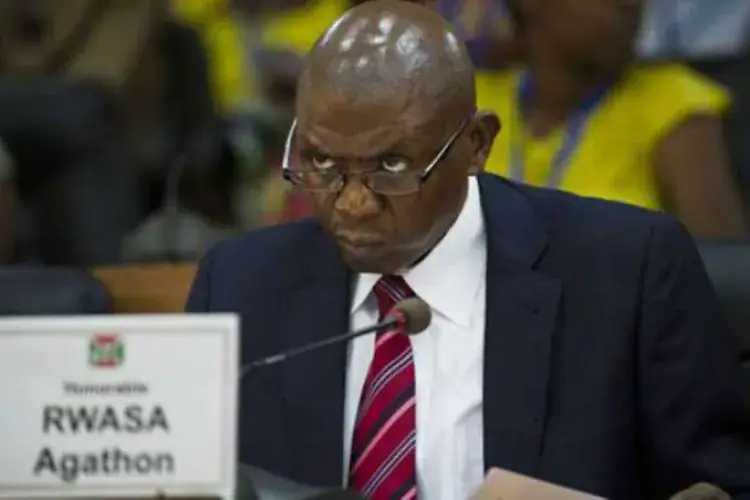
The National Electoral Commission (CENI) of Burundi has announced that seven candidates have been approved to run for the presidency in next year's elections, while three others, including Agathon Rwasa, have been disqualified. Rwasa, a former leader of the CNL party, was considered a strong contender against incumbent President Evariste Ndayishimiye. CENI cited failure to meet eligibility criteria as the reason for disqualifying Rwasa and two others.
According to CENI, candidates must submit a certificate proving they have not been a member of any political party for at least two years prior to the election. Rwasa submitted a certificate stating he was no longer a party leader, but CENI argued that this did not meet the requirements. The commission's decision has sparked controversy, with Rwasa's supporters questioning the legitimacy of the electoral process.
The approved candidates include President Evariste Ndayishimiye of the ruling CNDD-FDD party, as well as representatives from other parties such as CNL, UPRONA, APDR, and FPI. Two independent candidates, Dieudonné Nahimana and Patiri Abel Nduwimana, were also approved. The disqualified candidates, in addition to Rwasa, are Aloys Kamenyero and Valentin Kavakure.
Rwasa's disqualification has raised concerns about the fairness of the electoral process, with some arguing that it is an attempt to silence a key opposition figure. The CNL party has not officially announced Rwasa's removal as leader, adding to the confusion surrounding his eligibility. The party's current leaders have not commented on the matter.
The presidential election is set to take place next year, with the incumbent President Evariste Ndayishimiye seeking re-election. The opposition has raised concerns about the government's increasing authoritarianism and human rights abuses. Rwasa's disqualification has further complicated the electoral landscape, with some questioning the legitimacy of the process.
The CENI's decision has sparked widespread debate, with many calling for greater transparency and accountability in the electoral process. The commission has defended its decision, citing the need to ensure that candidates meet the eligibility criteria. The controversy surrounding Rwasa's disqualification is likely to continue in the coming weeks.
The Burundian government has faced criticism from international observers and human rights groups over its handling of the electoral process. The disqualification of Rwasa and two other candidates has raised concerns about the government's commitment to democratic principles. The international community is closely watching the developments in Burundi, with many urging the government to ensure a free and fair election.
Key points
- Agathon Rwasa's disqualification from the presidential race has sparked controversy and raised concerns about the fairness of the electoral process.
Reporting sources
- Burundi: Agathon Rwasa ari mu bakandida batatu bangiwe kwiyamamariza... · Isango star Radio