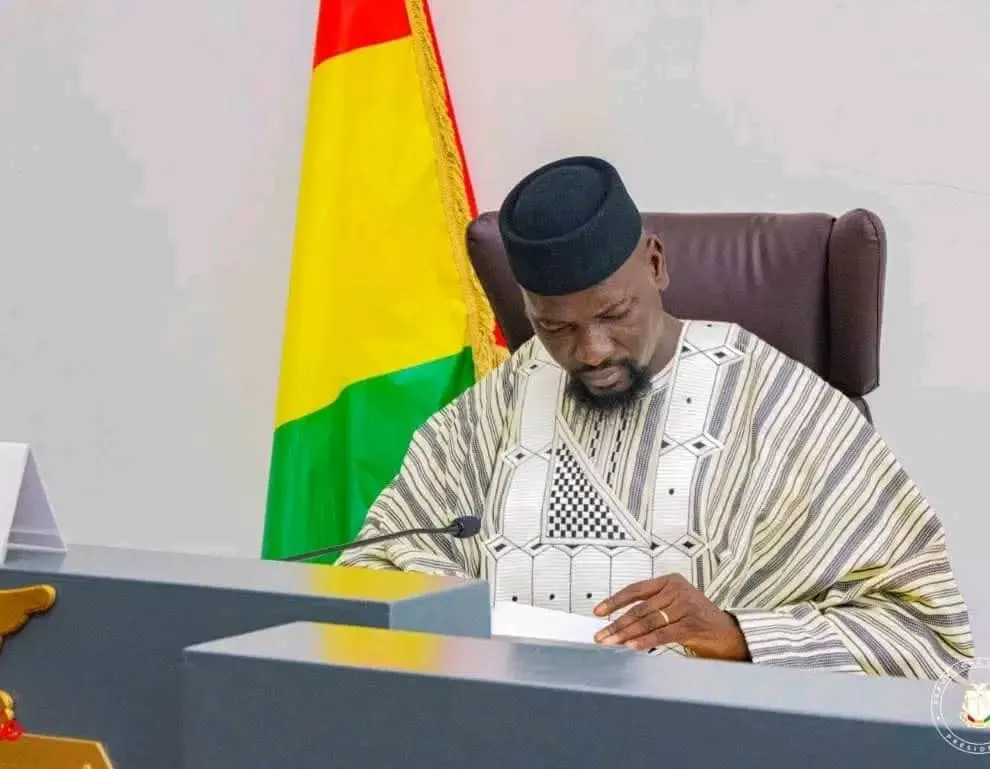
On October 6, 2026, President Mamadi Doumbouya of Guinea issued a series of decrees that outline the specific roles and responsibilities of the country's ministries and general secretariats. These presidential acts, made public late on the same day, aim to clarify the framework and common responsibilities of all ministerial departments within the government. The decrees are a significant step towards organizing the government's structure and enhancing its operational efficiency.
According to the decrees, each ministry is primarily responsible for conceiving, elaborating, implementing, and monitoring government policies within its respective domain of competence. This clear delineation of duties is expected to improve coordination and effectiveness across different government departments. The general mission of ministerial departments is centered around policy development and implementation, reflecting a structured approach to governance.
The decrees also specify common attributions that apply to all ministries and secretariats. One key area is regulation, where ministries are tasked with drafting legislative and regulatory texts relevant to their domains and ensuring their application. This regulatory role is crucial for maintaining order and consistency in policy implementation across different sectors.
In addition to regulation, the ministries are responsible for planning and monitoring strategies, plans, programs, and development projects within their areas of expertise. This includes evaluating the impact and effectiveness of these initiatives. Furthermore, ministries are required to exercise institutional oversight over public organisms, administrative public establishments, and public companies under their authority.
The decrees also emphasize the importance of inclusion and transversality. Ministries must integrate environmental, social, ethical, gender, and equity dimensions into their actions and projects. This approach aims to ensure that government initiatives are comprehensive and considerate of various societal factors. Moreover, ministries are tasked with representing their sectors in national and international forums.
Representation and diplomacy are critical components of the ministries' roles, as they are expected to participate in national, sub-regional, regional, and international meetings related to their areas of activity. This includes negotiating international agreements, conventions, and treaties, as well as ensuring their implementation. The organization of and participation in meetings on sector-specific issues are also key responsibilities.
Finally, the decrees highlight the importance of budget management, with each ministry required to elaborate its annual budget. This step is essential for financial planning and accountability within the government. By defining these roles and responsibilities, President Doumbouya's decrees aim to enhance governance and efficiency in Guinea's government.
Key points
- President Mamadi Doumbouya issues decrees defining the roles of Guinea's ministries and secretariats.
- The decrees outline specific responsibilities, including regulation, planning, and representation.
- The reforms aim to improve governance and efficiency in Guinea's government structure.