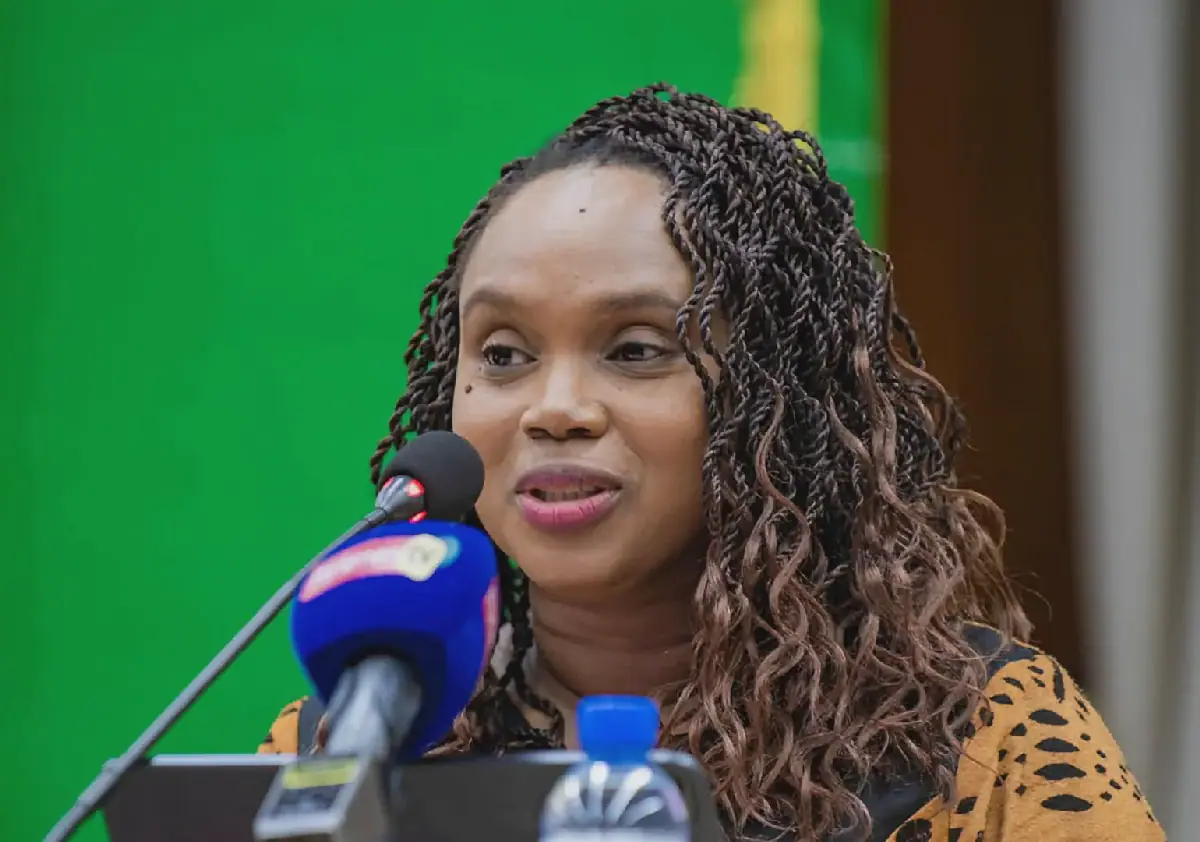
Guinea's Minister of Economy, Finance, and Budget, Mariama Ciré Sylla, has announced that the government has paid over 6,500 billion francs guinéens in arrears and debts this year. This move is part of the government's efforts to settle domestic debts by December 31, 2026. The minister made this announcement during a presentation of the 2026 revised finance bill to the National Assembly.
The revised finance bill aims to reorient the country's economic priorities, particularly with the upcoming exploitation of Simandou's iron ore. The bill projects a 7.5% increase in budget revenues to 60,064 billion francs guinéens and a 5.8% rise in expenditures to approximately 67,925 billion francs guinéens. The government's goal is to better mobilize national resources, especially from mining activities, and ensure that economic benefits reach the population.
Minister Sylla emphasized that the revised finance bill is a strategic reorientation, not just a simple adjustment. The government aims to focus on completed and ongoing projects, with a withdrawal of insufficiently prepared projects. This decision is intended to reduce unfinished projects, cost overruns, and immobilized public resources. The minister justified this move as a choice of sincerity, not a renunciation.
The government has also announced increased funding for social sectors and territorial development. In the health sector, plans include operationalizing 455 health centers and 2,514 health posts, as well as strengthening equipment at Donka Hospital. In education, the recent recruitment of 4,500 teachers and improved living conditions for education officials are part of the efforts.
Local authorities will also benefit from budget adjustments, with a nearly 50% increase in operating credits for sub-prefectures and a 110% increase in transfers to rural communes. The program to build 1,600 water points in inland areas is another announced measure. The minister highlighted the need to strengthen control and transparency mechanisms in public resource management.
To improve public resource management, the minister announced the updating of the price catalog in collaboration with the National Institute of Statistics and the Administration and Control of Major Projects. The dematerialization of public markets through the Télémo platform, the pooling of state purchases, and the modernization of the payment chain are also part of the announced reforms.
The government plans to migrate to a program budget starting in 2027, allowing for the evaluation of public spending based on achieved objectives and results. The minister concluded by emphasizing the need to mobilize more resources, spend better, and act faster, ensuring that every public franc translates into concrete progress for citizens.
Key points
- The Guinean government aims to settle domestic debts by December 31, 2026, with over 6,500 billion francs guinéens already paid this year.