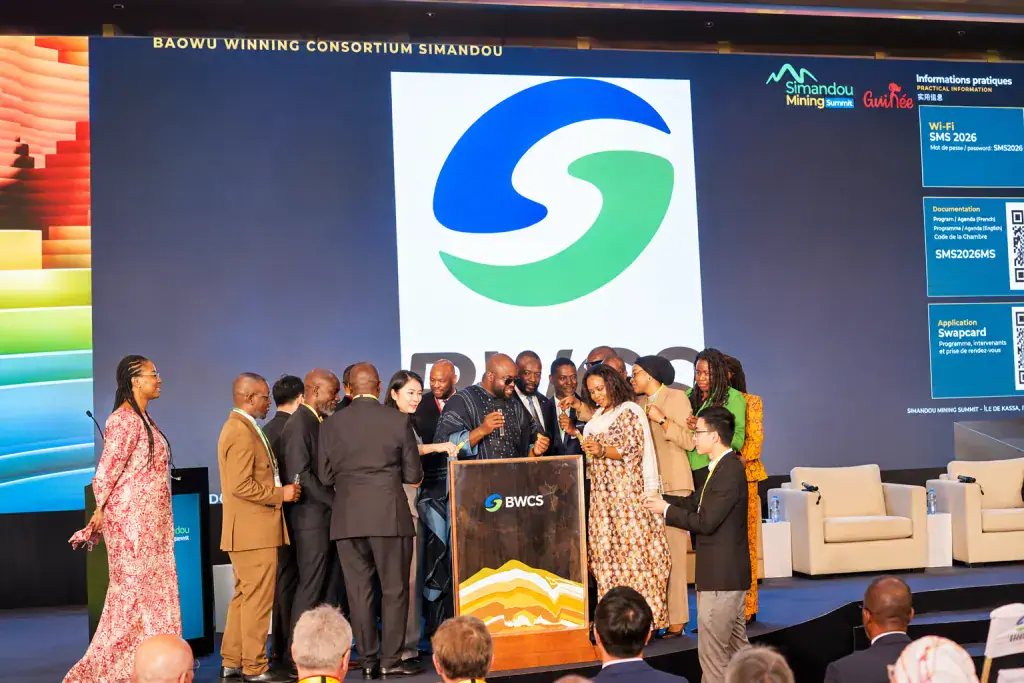
The recent Simandou Mining Summit 2026 in Conakry, Guinea, has sparked optimism in the country's mining sector, with 94% of participants expressing confidence in the Simandou 2040 plan. According to a survey by the Perceptis Foundation, seven out of ten participants have complete trust in the plan. This confidence is significant, especially considering that 83% of participants who described the business climate as challenging still believe in the plan's success.
The survey, which polled 411 participants, also revealed a positive perception of Guinea's business climate, with 88% of respondents describing it as favorable. A significant 57% of participants rated it as very favorable. This perception is consistent among participants residing in Guinea and those from abroad, with 89% and 88% respectively viewing the climate as favorable. This is crucial for Guinea, which seeks to attract more investments and strengthen its position in the international mining industry.
Despite the optimism, participants identified significant challenges to the sector's development. Energy and financing emerged as the primary concerns, with 32% and 29% of responses respectively. The survey highlights that having vast mineral resources is not enough; Guinea needs the necessary energy capacity, infrastructure, and financial resources to exploit and transform these resources. The issue of energy is particularly pressing for public institutions, with 48% citing it as the main obstacle.
The survey also revealed differences in perception between public institutions and mining companies. While public institutions prioritize energy, mining companies are more concerned about administrative procedures, cited by 24% of respondents. This disparity reflects the unique challenges faced by each group, with public institutions focused on infrastructure and mining companies concerned about investment conditions.
The issue of local content is another critical concern, with participants identifying two priorities: training and certification of skills, cited by 35% of respondents, and financing for small and medium-sized enterprises (SMEs), with 31%. For suppliers and service providers, training is the top priority, with 48% of responses. This highlights the need for Guinea to ensure that its workforce and businesses can participate in the mining sector's value chain.
The success of Guinea's mining sector will depend on its ability to address these challenges. Participants at the summit expressed a mix of optimism and expectation, with eight out of ten describing the event as excellent, an opportunity, or a source of hope. However, they also emphasized the need for concrete results, with one in seven respondents expressing concerns about the implementation of announced plans.
Ultimately, the Simandou Mining Summit 2026 has highlighted the need for Guinea to translate its mining wealth into economic development. The country's authorities and economic actors have a responsibility to build on the trust and optimism expressed by participants. This will require investments in energy infrastructure, accessible financing, efficient administrative procedures, and the integration of Guinean businesses into major projects.
Key points
- 94% of participants trust Guinea's Simandou 2040 plan despite concerns about energy and financing.
- Energy and financing are the main challenges to Guinea's mining sector development.
- Local content is a critical concern, with a focus on training and financing for SMEs.