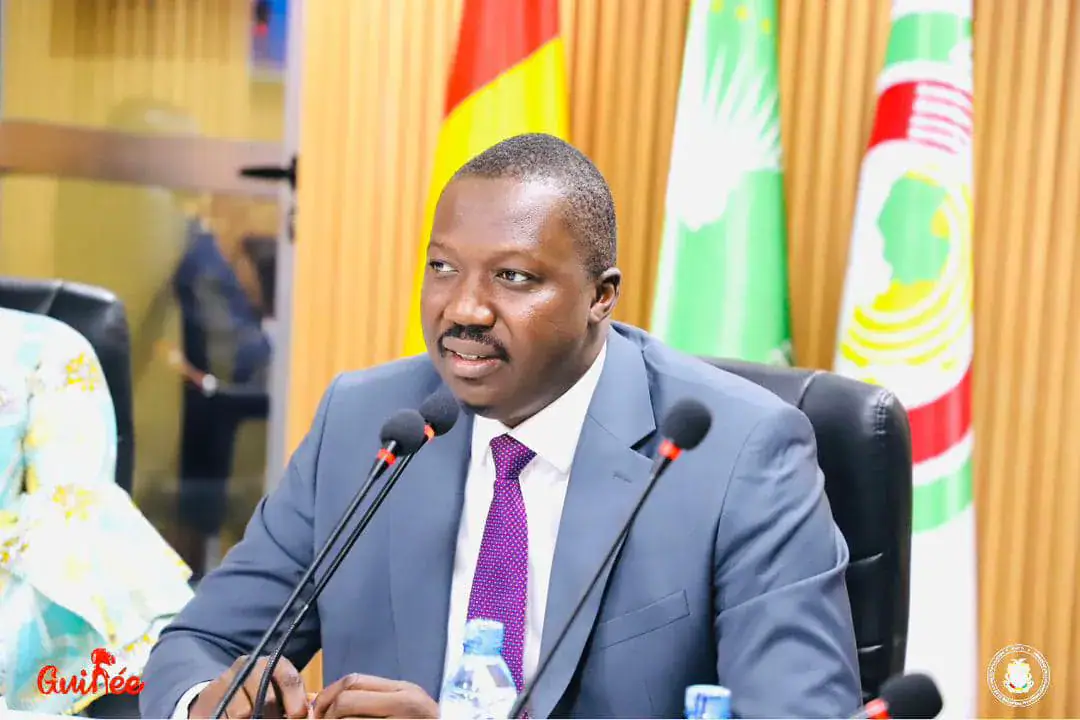
In a recent statement, Mamoudou Nagnalen Barry, Principal Coordinator General of the Transitional Committee of Guinea (CTG), addressed concerns over the country's energy export, monetary governance, and the Simandou project. Barry emphasized that the export of electricity by Guinea is not a paradox, but rather a rational economic decision. During the rainy season, the country's hydroelectric dams produce excess energy, which must be either consumed domestically or exported to neighboring countries.
The export of electricity is based on a technical study of the production-consumption gap, national supply, and demand. This decision is not automatic and occurs only when there is a surplus of energy. The lack of electricity is often linked to issues of power outages, maintenance, and transportation, rather than production. Barry highlighted that previous governments had not made significant efforts to develop the country's electricity transmission infrastructure, but the current administration, led by President Mamadi Doumbouya, is working to address this issue.
The connection of different regions of the country to the national grid and to neighboring countries is part of a broader effort to create a regional energy market. The forest region is now connected to Côte d'Ivoire, and the Middle Guinea region is connected to Senegal. This integration allows Guinea to export its surplus energy and import electricity when needed. The country's hydroelectric potential makes it a significant player in the regional energy market.
The issue of banknote availability was also addressed by Barry. He explained that the problem is not related to extra-budgetary spending, but rather to the country's strong economic growth, which has led to an increased demand for cash. The authorities had to adapt the quantity of physical currency available to meet the new needs of the economy. This adjustment was necessary due to the country's rapid economic growth, driven in part by large projects like Simandou.
The debate over the state's participation in the Simandou project was also clarified by Barry. He emphasized that the focus on the state's 15% stake in the project overlooks the various revenues that the Guinean government will receive, including taxes, fees, and royalties. Before the distribution of dividends, the state has already collected several hundred million dollars from the project.
Barry stressed that economic debates require a nuanced understanding of the mechanisms of macroeconomic governance. He called for a more informed discussion, based on facts and data, rather than simplifications and misinformation. The clarification provided by Barry aims to contribute to a more informed public debate on these critical issues.
In conclusion, the CTG's PCA emphasized that Guinea's energy export, monetary governance, and Simandou project are all part of a broader effort to promote economic development and regional integration. The country's strong economic growth and hydroelectric potential make it an important player in the regional energy market. A more informed public debate is necessary to ensure that the country's economic policies are based on facts and data.
Key points
- - Guinea's energy export is a rational economic decision based on surplus production. - The country's strong economic growth has led to an increased demand for cash. - The state's participation in the Simandou project includes various revenues beyond dividends.