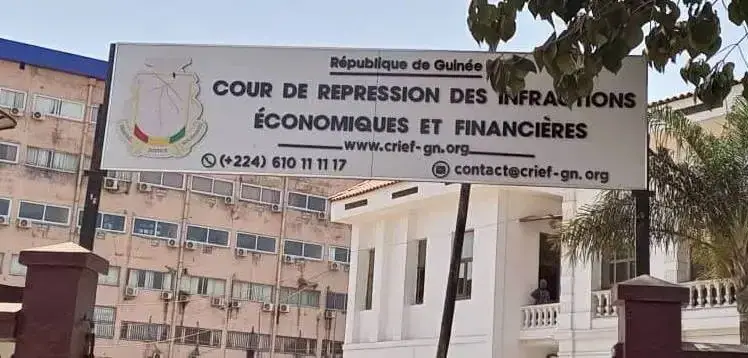
In recent months, Guinea's politico-judicial scene has been marked by a series of procedures targeting strategic officials in public administration and state-owned enterprises. The Cour de répression des infractions économiques et financières (CRIEF) has emerged as a central actor in the public governance debate. Several high-profile cases have been opened, including those involving the Direction générale des impôts, Douanes, Pharmacie centrale de Guinée, and Fonds national pour l’insertion des jeunes.
The CRIEF court's investigations have led to the detention of several high-ranking officials, including Mory Camara, former director general of the Direction générale des impôts, and general Moussa Camara, former director general of Douanes. Although some have been released under judicial supervision, the cases have raised questions about control mechanisms, public resource management, and accountability among top officials. The cases also highlight the complexities of Guinea's governance landscape.
The most recent case involves the Pharmacie centrale de Guinée (PCG-SA), where director general Labilé Sagno and several other officials were detained in October 2026. The case has shed light on multiple levels of responsibility within a state-owned enterprise critical to the national healthcare system. Those implicated include senior officials responsible for human capital, public markets, accounting, and pharmaceutical supplies.
Another case involves Abdourahmane Baldé, director general of the Fonds national pour l’insertion des jeunes (FONIJ), who was detained on November 10, 2026, amid an investigation into the fund's management since its inception. Three former officials are also under investigation and have been banned from leaving the country. Additionally, Mathurin Bangoura, a former minister and ex-governor of Conakry, was detained in a separate case related to the Réma Tip Top Guinea SARL affair.
These cases raise fundamental questions about the establishment of a new culture of accountability in Guinea's public administration. The issue at hand is whether the judicial action is an intensification of efforts targeting certain categories of public officials or a gradual installation of a culture of accountability. The answer lies in understanding that responsibility among officials should not depend solely on judicial procedures but be integrated into the normal functioning of institutions.
The cases also underscore the need for structural reforms to prevent similar difficulties from recurring. Questions have been raised about the effectiveness of internal control mechanisms and financial inspections in detecting irregularities early on. The role of supervisory bodies in monitoring public establishments and the need for reforms to ensure accountability and transparency are also critical issues that need to be addressed.
Ultimately, Guinea faces a significant challenge in building an administration where public office is not merely a political or administrative recognition but an acceptance of measurable responsibility to the public. The proper use of public resources requires transparency, efficiency, and adherence to the general interest. The CRIEF court's investigations are a step toward promoting accountability, but sustained efforts are needed to establish a culture of responsibility within Guinea's public administration.
Key points
- The CRIEF court's investigations aim to promote accountability and transparency in Guinea's public administration.
- Several high-ranking officials have been detained or are under investigation for alleged financial crimes.
- The cases have raised questions about control mechanisms, public resource management, and accountability among top officials.