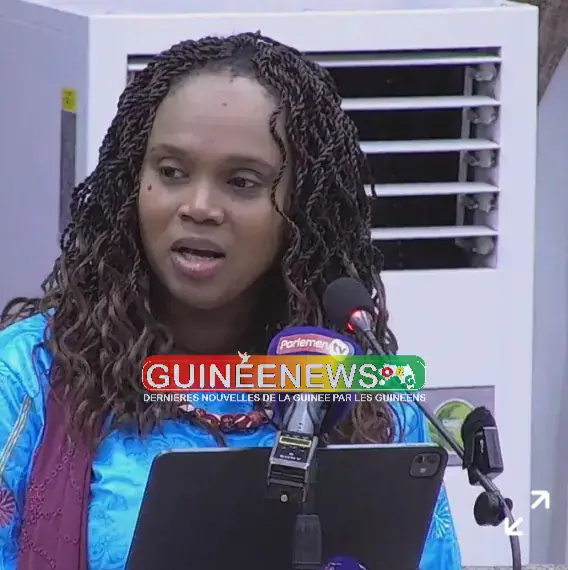
The Guinean National Assembly has adopted the 2026 revised finance bill, marking a significant step in the country's public finances. The Minister of Economy, Finance, and Budget, Mariama Ciré Sylla, hailed the adoption, citing the synergy between legislative oversight and government action in the interest of the general public. The bill aims to revalue the country's financial ambitions, with state revenue projections increased to 60,000 billion Guinean francs, up 7.53% from the initial budget.
The increased revenue projections are attributed to the efforts of financial authorities, including the acceleration of digitalization, anti-fraud measures, and improved tax equity. A review of over 15 ministries will also formalize and secure the direct transfer of non-fiscal or informal revenues to the Treasury. The Ministry of Finance is finalizing a review of tax exemptions to ensure the mining sector contributes equitably to the national budget.
To address concerns about the impact of tax exemptions, the Ministry of Finance is revising tax expenditures to ensure the mining sector contributes fairly to the national budget. New customs control equipment has been deployed, and additional equipment has been ordered to scientifically verify the volume and quality of exported minerals. The Minister emphasized the need for effective administrative action, announcing targeted inspections and a strict schedule to address project implementation delays.
The 2026 revised finance bill includes measures to address social and economic challenges. A provision of 913 billion Guinean francs has been allocated to stabilize fuel prices and protect household purchasing power against external shocks. The bill also includes sustained support for the private sector and a forthcoming review of the price list to regulate public market costs.
The Minister highlighted the importance of improving administrative efficiency, citing the need for a "tolerance zero" approach towards administrative inefficiency. She announced targeted inspections on the ground, accompanied by a strict schedule for lifting blockages. Particular attention is being paid to the Autonomous Port of Conakry, with a plan to clarify port fees and deploy sustainable measures to reduce congestion.
The Ministry of Finance is also implementing measures to improve internal governance. The Treasury's computerized tool will be generalized to process invoices within 48 hours and track their progress to the Central Bank. The operationalization of the "file clinic" will enable regular meetings with sectoral departments to unblock outstanding payments.
The Minister reaffirmed her commitment to maintaining a permanent and transparent dialogue with the National Assembly throughout the budget execution. She pledged to provide written, documented responses to remaining technical questions, ensuring a collaborative approach to budget implementation. The adoption of the 2026 revised finance bill marks a significant step towards fiscal discipline and budgetary sovereignty in Guinea.
Key points
- The 2026 revised finance bill includes increased revenue projections and measures to stabilize prices and support the private sector.
- The Ministry of Finance is implementing measures to improve administrative efficiency and reduce congestion at the Autonomous Port of Conakry.
- The government has allocated 913 billion Guinean francs to stabilize fuel prices and protect household purchasing power against external shocks.