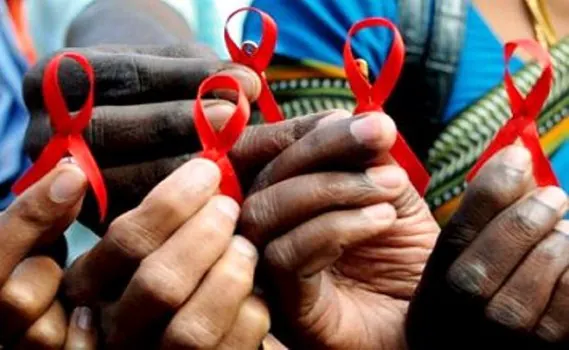
Guinea's national response to the HIV epidemic has made significant progress, but financial constraints pose a major threat to sustaining the gains. According to the 2025 report by the National Committee for the Fight Against AIDS (CNLS), the country's HIV prevalence among adults aged 15-49 has stabilized at 1.28%. However, this average hides disparities, particularly among women, who are more than twice as likely to be infected as men.
The report highlights that the HIV prevalence among women is 1.73%, compared to 0.82% among men. Young girls aged 15-24 are also disproportionately affected, with a prevalence of 0.71%, compared to 0.30% among boys of the same age. The country has approximately 131,810 people living with HIV, including 120,402 adults and 11,408 children. Despite these challenges, the report notes that new infections have decreased by 42% over the past decade, and AIDS-related deaths have declined by 63%.
The CNLS report also points to significant progress in treatment and care. In 2025, over 105,498 people were receiving antiretroviral therapy (ART), with 98% of those on treatment achieving viral suppression. The country has also made strides in preventing mother-to-child transmission, with 92.1% of pregnant women receiving HIV testing. However, the report notes that early infant diagnosis remains a challenge, with only 48% of exposed children receiving testing.
A major breakthrough in 2025 was the enactment of a new law (L/2024/001/CNT) that guarantees free healthcare for people living with HIV and protects their rights. The law aims to eliminate stigma and discrimination and ensure that vulnerable populations have access to care. However, despite these advances, the report highlights significant funding gaps, with only 46.7% of the required budget of $49.3 million mobilized.
The country's reliance on external funding is a major concern, with the Global Fund providing 49% of the response, MSF-Belgium 27%, and Solthis 8%. The Guinean government's contribution is only 3%. The report warns that a reduction in funding from the Global Fund and the planned withdrawal of MSF-Belgium by 2027 pose a critical threat to the care of over 14,000 patients.
The report also identifies other challenges, including sporadic shortages of essential supplies, persistent indirect costs for patients, and inadequate coverage of mobile populations, such as truck drivers, miners, and fishermen. To address these challenges, experts are calling for increased domestic funding, improved logistics, and greater involvement of the private sector in financing the national response.
To achieve the goal of eliminating HIV as a public health threat by 2030, the report recommends that the government take bold steps, including substantially increasing domestic funding for health and HIV, renewing the response fleet, and ensuring free biological monitoring for patients. The report also emphasizes the need for greater involvement of the private sector in diversifying national funding sources to sustain the response.
Key points
- - Despite progress, Guinea's HIV response is threatened by funding shortages. - Women and young girls are disproportionately affected by the epidemic. - The country aims to eliminate HIV as a public health threat by 2030.