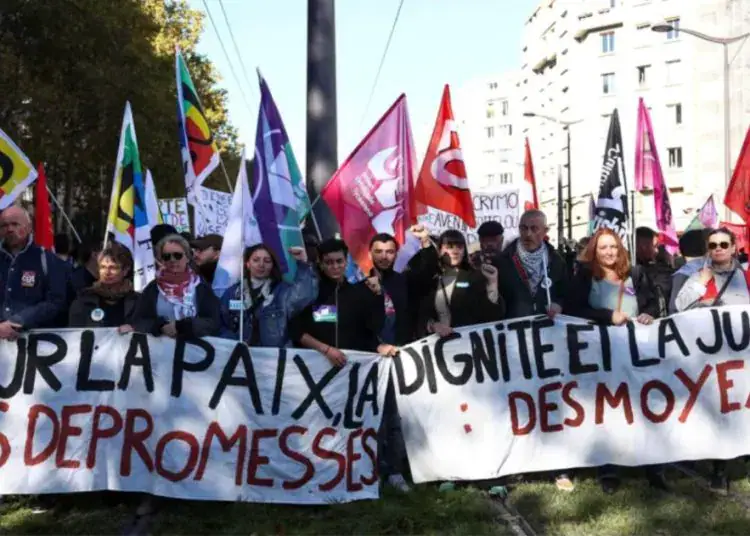
French education unions have called for a new strike on November 10, as they continue to press the government for improved working conditions, higher pay, and increased access to higher education. The strike, which is supported by an inter-union coalition including the CGT, FSU, Force Ouvrière, and SUD unions, will see teachers, students, and high school pupils participate in strikes, rallies, and gatherings across the country. The unions are demanding that the government address their concerns, which include the need for additional pay measures, increased funding for higher education, and improved staffing levels.
The unions are seeking significant changes to the education system, including the introduction of additional pay measures without conditions, and the creation of 150,000 more higher-education places. They also want the government to unfreeze the public-sector salary index and provide funding for 15,000 permanent jobs in higher education and research. Furthermore, the unions are calling for a national pay scale for educational assistants, and the establishment of a civil-service body for disability support assistants.
The French government has recently announced measures aimed at addressing some of the unions' concerns, including the creation of 15,000 additional higher-education places between 2027 and 2028, and the introduction of 500 additional teaching positions. However, the unions say that these measures do not go far enough, particularly in terms of university access and staffing. They argue that the government's plans do not address the root causes of the problems facing the education system.
The strike call follows a social conference scheduled by Prime Minister Sébastien Lecornu for November 9, at which wages and purchasing power will be discussed with unions and employers. However, public-sector unions will not be participating in the meeting, and the government has announced that separate talks will be held with public-service representatives. The unions have filed strike notices for the coming weeks and plan to meet on the evening of November 10 to discuss further action.
The previous mobilization on Thursday saw 575,000 people participate in 193 public demonstrations across France, including 65,000 in Paris. The CGT put the national turnout at 1.573 million, while the SNES-FSU teachers' union reported that 52% of secondary-school staff joined the strike. The Education Ministry reported a 12.77% strike rate among all education staff. The unions are seeking to build on this momentum and to pressure the government into making concessions.
The unions' demands are focused on improving working conditions, increasing access to higher education, and addressing the staffing shortages that are affecting the education system. They argue that the government's measures do not address the scale of the problems facing the sector, and that more needs to be done to support teachers, students, and education staff. The strike on November 10 is seen as a critical moment in the unions' campaign to pressure the government into action.
The outcome of the strike and the subsequent talks between the government and the unions remains to be seen. However, it is clear that the education sector is facing significant challenges, and that the unions are determined to press for improvements. The government's response to the unions' demands will be closely watched, as it seeks to balance the need to address the sector's challenges with the need to manage public finances.
Key points
- The French education unions are demanding higher pay, more staff, and wider access to higher education.
- The government has announced measures aimed at addressing some of the unions' concerns, but the unions say that these do not go far enough.
- The strike on November 10 is seen as a critical moment in the unions' campaign to pressure the government into action.
Reporting sources
- Read article: France Education Unions Call New Strike for November 10 · Morocco World News