In Guinea, a new project has made significant strides in reducing plastic waste and promoting women's empowerment. FEMME.CI, which stands for Women Engaged for Mobilization, Ecology, and Inclusive Citizenship, was launched in 2026 and implemented in three Conakry neighborhoods: Kissosso, Entag Marché, and Sangoyah. The initiative, funded by the European Union, aimed to strengthen women's roles in community life, promote their rights, and contribute to social and ecological transformation.
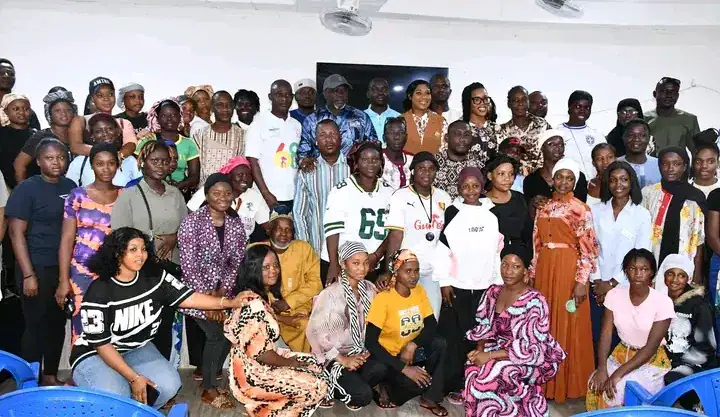
The project's closing workshop, held in Matoto commune, brought together local authorities, technical and financial partners, and sanitation stakeholders to review achievements and discuss future prospects. FEMME.CI focused on participatory and community-based approaches, placing women and young people at the forefront of change through leadership, citizenship, and plastic waste valorization. According to Tenimba Oulen Diawara, president of the NGO Épanouissement des Mères et Enfants de Guinée, the project addressed gender-based violence, inequality, and waste management challenges.
The project's impact was significant, with notable advancements in plastic waste collection and valorization. Dia Plastiques, a West African company specializing in plastic waste management, partnered with FEMME.CI, which enabled the collection of high-quality raw materials. Mamadou Barry, Dia Plastiques' operations coordinator, emphasized the importance of source separation, stating that a single ton of plastic waste can be sold for $300-400, compared to $30-40 for a ton of bauxite.
Local authorities have welcomed the project's achievements, with Matoto Mayor Moussa Diallo expressing hope that the initiative will be extended to other neighborhoods and eventually throughout Conakry. The project's focus on ecology and capacity building for women and young people aligns with the mayor's vision for sustainable development. Albert Fara Sandouno, responsible for monitoring and evaluation at SOCIDYP, expressed satisfaction with the project's closure and capitalization.
The FEMME.CI project was implemented by the CODD-SAC-EMEG consortium, with support from Catholic Relief Services, Enfants du Globe, and the Réseau Afrique Jeunesse de Guinée. The project's success demonstrates the potential for community-led initiatives to drive positive change in Guinea. By engaging women and young people in eco-friendly practices, FEMME.CI has created a model for sustainable development.
The project's outcomes have far-reaching implications for Guinea's environmental and social landscape. By promoting source separation and plastic waste valorization, FEMME.CI has contributed to a reduction in waste-related health risks and environmental pollution. The project's focus on women's empowerment has also helped to address gender-based violence and inequality.
As the project comes to a close, stakeholders are exploring ways to sustain and replicate its achievements. With the support of local authorities and partners, FEMME.CI's legacy is expected to continue, inspiring further initiatives to promote eco-friendly practices and women's empowerment in Guinea.
Key points
- The FEMME.CI project has made significant strides in reducing plastic waste and promoting women's empowerment in Conakry, Guinea.
- The initiative focused on participatory and community-based approaches, engaging women and young people in eco-friendly practices and leadership.
- Local authorities have welcomed the project's achievements, with plans to extend the initiative to other neighborhoods and eventually throughout Conakry.