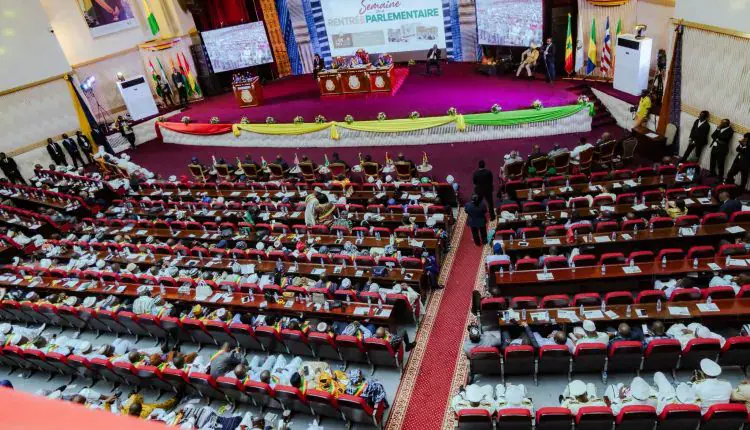
The Guinea parliament has adopted a law creating a sovereign fund with an initial endowment of $1 billion, which will be mobilized over five years. The fund will be financed by 30% of public revenue from the Simandou project and 5% of public revenue from extractive projects that enter operation after the law comes into effect. This development aims to support Guinea's economic growth and provide a financial safety net.
The sovereign fund will have a 99-year lifespan, renewable in accordance with OHADA law, and will be managed by a nine-member board, seven of whom will be independent. The fund's primary objectives are to finance investments, help stabilize the economy in times of crisis, and constitute savings for future generations. The law was adopted by the National Assembly on November 25, 2026, with 30% of the fund's resources allocated to development, 20% to economic stabilization, and at least 20% to savings for future generations.
To achieve the initial $1 billion endowment, the commission proposes that the state make minimum payments of $150 million per year for the first two years, $200 million per year for the next three years, covering $900 million, with the remaining $100 million to be paid by the end of the fifth year. The fund will be fully owned by the state, and its operations will be subject to parliamentary and Court of Accounts oversight, with annual external audits and publication of financial statements.
The fund's resources will be allocated to three main areas: development, economic stabilization, and savings for future generations. At least 40% of the fund's resources will be dedicated to development, including financing investments in strategic sectors alongside private partners. A minimum of 20% will be allocated to economic stabilization, while 20% will be set aside for future generations. The board of directors will decide annually on the allocation of remaining resources.
In times of crisis, the state can only make withdrawals from the stabilization reserve, subject to authorization by a finance law. Such withdrawals will be capped at 30% of the reserve's assets per year, for a maximum of two consecutive years. The savings allocated for future generations will be protected from withdrawals by the state. The commission also recommends that the fund's operations prioritize local mining revenue and social spending.
The fund's operations will be transparent, with quarterly publication of investments made, ongoing investments, and abandoned projects. The public will have access to this information, ensuring accountability and oversight. The Ministry of Budget will also be required to publish annual reports on the fund's financial performance.
The creation of the sovereign fund is seen as a strategic move to ensure Guinea's economic stability and growth. By allocating a significant portion of its revenue to the fund, the government aims to create a financial safety net that will protect the country's economy from shocks and support long-term development. The fund's effectiveness will depend on its governance and management structures.
Key points
- The Guinea parliament has adopted a law creating a sovereign fund with an initial $1 billion endowment.
- The fund will be financed by 30% of public revenue from the Simandou project and 5% of public revenue from extractive projects.
- The fund's primary objectives are to finance investments, help stabilize the economy in times of crisis, and constitute savings for future generations.