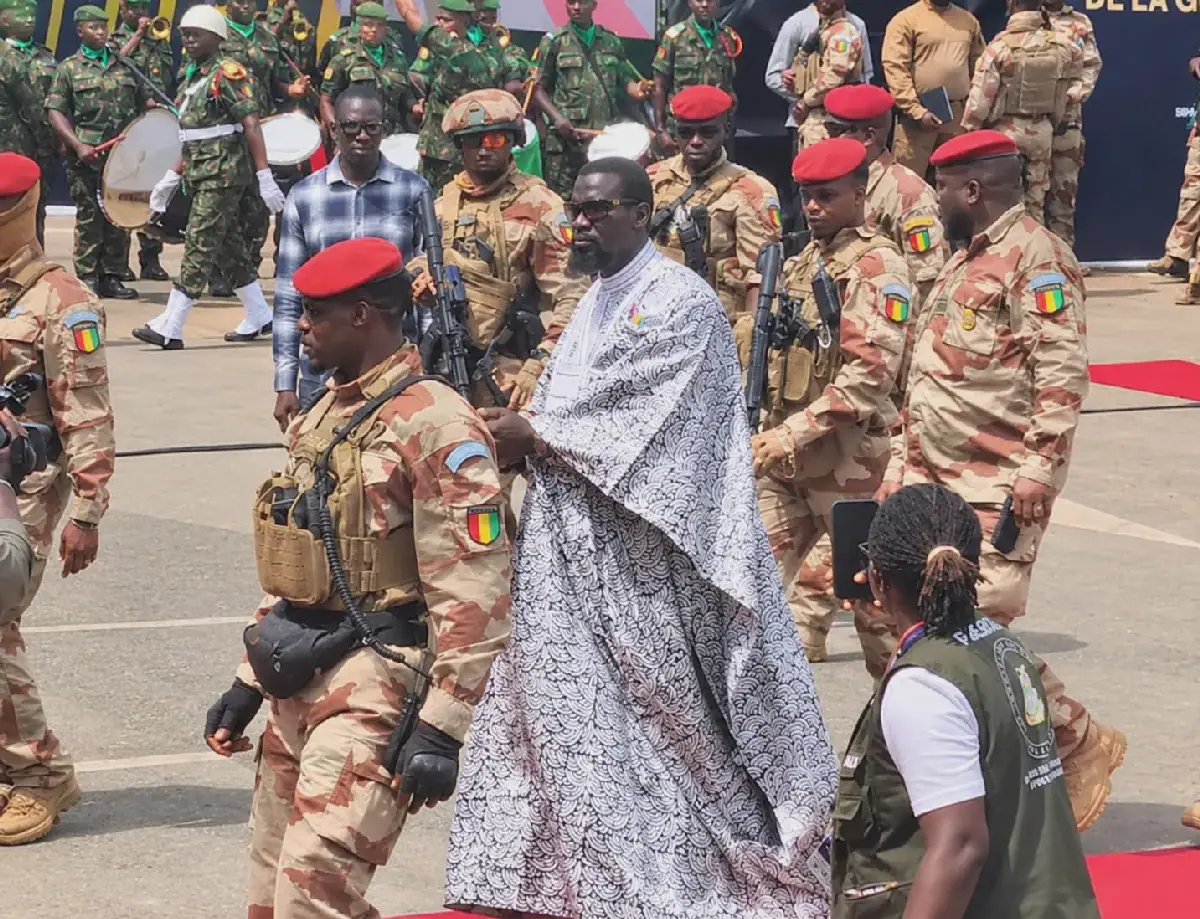
Guinea has taken a significant step towards increasing its local gold processing capabilities with the inauguration of the Nimba Gold Refinery in Conakry. President Mamadi Doumbouya officially opened the refinery on November 1, 2026, in the presence of several high-ranking officials, including Prime Minister Amadou Oury Bah and Mining and Geology Minister Bouna Sylla. The refinery, located in the Gbessia commune, is expected to play a crucial role in transforming Guinea's gold resources into a more valuable economic asset.
The Nimba Gold Refinery aims to capitalize on Guinea's rich gold deposits and provide a platform for local gold processing. For years, Guinea has been exporting its gold in its raw form, missing out on significant economic benefits that could be generated through refining. Mining and Geology Minister Bouna Sylla highlighted the importance of this new infrastructure, stating that it marks a major milestone for Guinea's gold industry. The minister emphasized that the refinery will contribute to the country's economic growth by creating jobs, developing national skills, and increasing revenue from gold exploitation.
The refinery has an annual capacity of 733 tonnes of gold, with the potential to generate an estimated $4.5 billion in annual revenue, even at 50% capacity utilization. Nimba Gold Refinery's representative, Moussa Magassouba, expressed his satisfaction with the inauguration, emphasizing the strategic importance of this project for Guinea's industrial development. He noted that the country's rich mineral resources must be transformed locally to ensure sustainable prosperity. The refinery is expected to create qualified and durable jobs for Guineans, transfer technical skills to the youth, and develop strong partnerships.
The Guinean government has been actively promoting the development of its mining sector, with a focus on local value addition. The inauguration of the Nimba Gold Refinery aligns with the government's Simandou 2040 program, which aims to transform Guinea into a regional hub for mining resource processing. Minister Bouna Sylla announced that the state plans to acquire up to 30% of the production from industrial and semi-industrial gold mining companies, in accordance with existing regulations, to strengthen the country's foreign exchange reserves.
The Nimba Gold Refinery is expected to become a reference point for gold refining in Africa, with a strong focus on international standards and best practices. Moussa Magassouba assured that the company will prioritize transparency, traceability, and accountability in its operations. The refinery's success will depend on its ability to create sustainable jobs, develop local skills, and contribute to Guinea's economic growth.
The inauguration of the Nimba Gold Refinery marks a significant milestone in Guinea's efforts to increase local gold processing and maximize the economic benefits of its gold resources. The project is expected to have a positive impact on the country's economy, creating new opportunities for growth and development. As Guinea continues to develop its mining sector, the Nimba Gold Refinery is poised to play a key role in shaping the country's economic future.
The development of the Nimba Gold Refinery is a significant achievement for the Guinean government, which has been working to promote local value addition in the mining sector. The project demonstrates the government's commitment to transforming Guinea's natural resources into a sustainable economic asset. With the refinery now operational, Guinea is well-positioned to increase its gold production and maximize the economic benefits of its rich mineral resources.
Key points
- The Nimba Gold Refinery has an annual capacity of 733 tonnes of gold.
- The refinery is expected to generate an estimated $4.5 billion in annual revenue.
- The project aims to create qualified and durable jobs for Guineans and transfer technical skills to the youth.