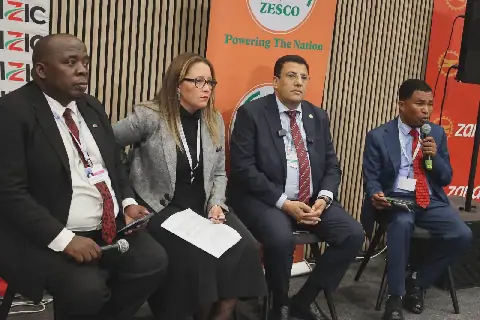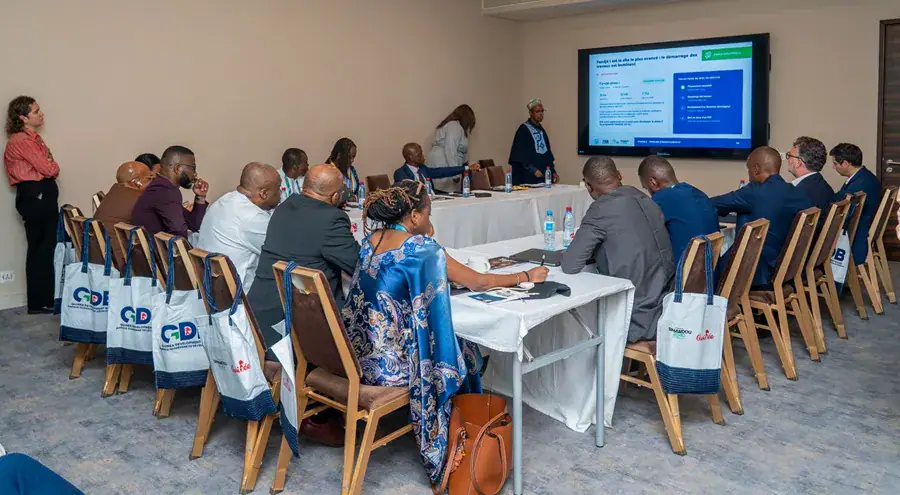
The Simandou Mining Summit has emerged as a platform for Guinea's economic diversification, featuring "Deal Rooms" facilitated by the Guinean Development Agency (GDB). The summit showcases several land portfolios for future special economic zones and industrial parks through public-private partnerships. These hubs represent nearly $1 billion in investment potential and promise to generate up to 85,000 direct and indirect jobs along the Simandou growth corridor.
Guinea's industrialization plan is backed by a massive $3 billion energy modernization plan led by the Ministry of Energy. The plan includes five key projects: the Fomi multipurpose dam ($460 million), a 500 MW gas-fired power plant ($550 million), a 225 kV high-voltage line connecting Linsan to N'Zérékoré ($400 million), electrification of 256 localities ($200 million), and a medium-term rural electrification program ($1.483 billion).
The country aims to address the paradox of abundant water resources, with 226 billion cubic meters of renewable resources annually, but only 23% of the population connected to the national grid. The "Compact Eau Guinée 2026-2040" plan, valued at $3.48 billion, aims to provide improved access to clean water for over 17 million people and reduce technical losses in the network from 44-48% to 28%.
The Ministry of Livestock presented a roadmap to reduce Guinea's dependence on frozen chicken imports. Based on a national flock of 25.2 million poultry, the strategy involves creating 10 territorial production hubs and 10 regional integrated slaughter and processing complexes. This aims to establish a competitive local value chain and create rural jobs.
The development of the digital economy is central to Guinea's attractiveness, with the GUILAB presenting international and regional infrastructure projects, MEDUSA Africa and VIA AFRICA. The $100 million MEDUSA cable project aims to significantly increase bandwidth, resilience, and quality of Guinean connectivity.
With these projects, Guinea confirms its desire to convert the momentum of the Simandou megaproject into a lever for global transformation. By presenting mature projects, backed by precise sectoral reforms and reinforced institutional support, the country seeks to transform the interest of donors and private operators into firm financial commitments by 2027.
However, only 11% of the financing is currently secured, making 2027 a crucial year for securing financial backing and implementing the tariff reform of the State-owned Electricity Company (SEG). The country's efforts to attract investment and drive economic growth will be closely watched in the coming year.
Key points
- Guinea presents $7.5 billion in strategic projects at the Simandou Mining Summit to drive economic diversification and growth.
- The country aims to generate up to 85,000 jobs and increase access to clean water and electricity through its investment plans.
- Guinea seeks to secure financial commitments for its projects by 2027 to drive economic transformation.