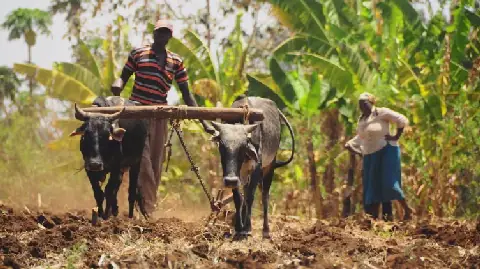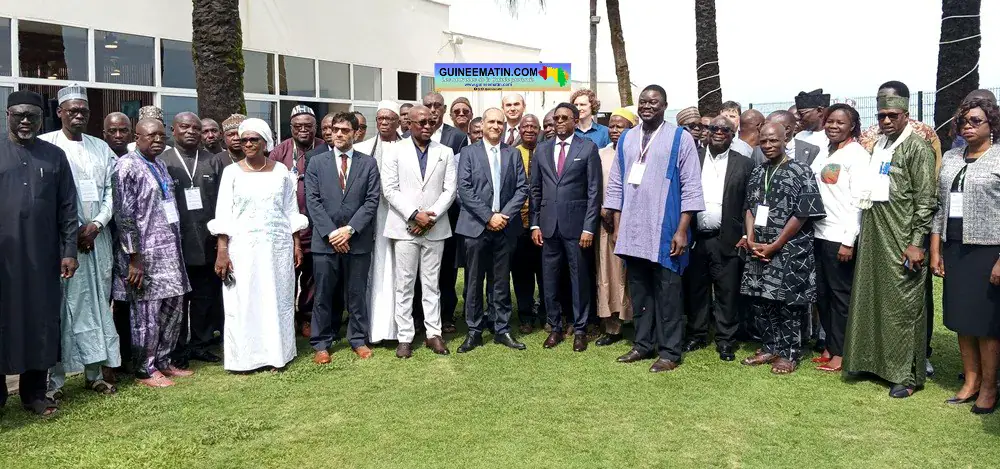
The Republic of Guinea is hosting the first session of the regional steering committee for the Regional Program to Support Livestock and Pastoralism Development in West Africa and the Sahel (PRADEP-AOS). The meeting, which took place on November 10, 2026, in Conakry, brought together stakeholders from West Africa and the Sahel to discuss the program's orientations and priorities. The program aims to support the development of livestock and pastoralism in the region, which is a strategic sector for the economies of West African and Sahelian countries.
The livestock sector contributes significantly to the agricultural GDP of Sahelian countries, at 36%, and coastal countries, at 15%. However, the sector faces several challenges, including the effects of climate change, land pressure, limited access to water and pasture, transboundary animal diseases, and conflicts related to pastoral mobility. According to Guinea's Minister of Livestock, Alpha Bacar Barry, regional cooperation is essential to addressing these challenges, which transcend national borders.
The PRADEP-AOS program was launched on July 9, 2026, in Lomé and is financed by the European Union to the tune of €60 million for the period 2025-2030. The program covers 13 African countries and is coordinated regionally by the Permanent Inter-State Committee for Drought Control in the Sahel (CILSS). In the West African region, the program is implemented by Enabel, which is responsible for its component in the West African corridor.
The European Union's cooperation officer in Guinea, Gianpiero Borzillo, emphasized that the first session of the regional steering committee is taking place at a crucial moment for the program. After the establishment of its structures, the realization of the first diagnostics, and the launch of the structuring works, it is now time to consolidate its implementation. Borzillo stressed that the program's regional dimension must be preserved to avoid a dispersion of interventions in favor of national actions without overall coherence.
Borzillo identified three key areas of focus for the program: clarifying governance and responsibilities between different stakeholders, strengthening accountability in monitoring activities and results, and making concrete decisions to accelerate implementation. He also emphasized the need to guarantee the feasibility, security, and durability of future investments. For 2027, the European Union's cooperation officer in Guinea identified two regional priorities: concerted management of constraints related to pastoral mobility and clarification of the roadmap for result 4.
Said Karmaoui, Enabel's country director in Guinea, highlighted the conditions necessary for the program's success. According to him, the program's regional character must be reflected in a genuine circulation of experiences and harmonization of tools and interventions between different territories. Karmaoui emphasized that the program will only be truly regional if lessons learned are shared, essential tools are compatible, and responses take into account interactions between departure, transit, and reception territories.
The stakeholders hope that the session will allow progress to be made on issues that directly affect the program's effectiveness. The committee's role is central to providing political guidance, strengthening regional coherence, clarifying responsibilities between different levels of intervention, and ensuring collective accountability for expected results. The program aims to strengthen the governance of pastoral resources, improve animal health, secure transboundary mobility, and develop more competitive and inclusive value chains.
Key points
- The program aims to support the development of livestock and pastoralism in West Africa and the Sahel.
- The program is financed by the European Union to the tune of €60 million for the period 2025-2030.
- The program covers 13 African countries and is coordinated regionally by the Permanent Inter-State Committee for Drought Control in the Sahel (CILSS).