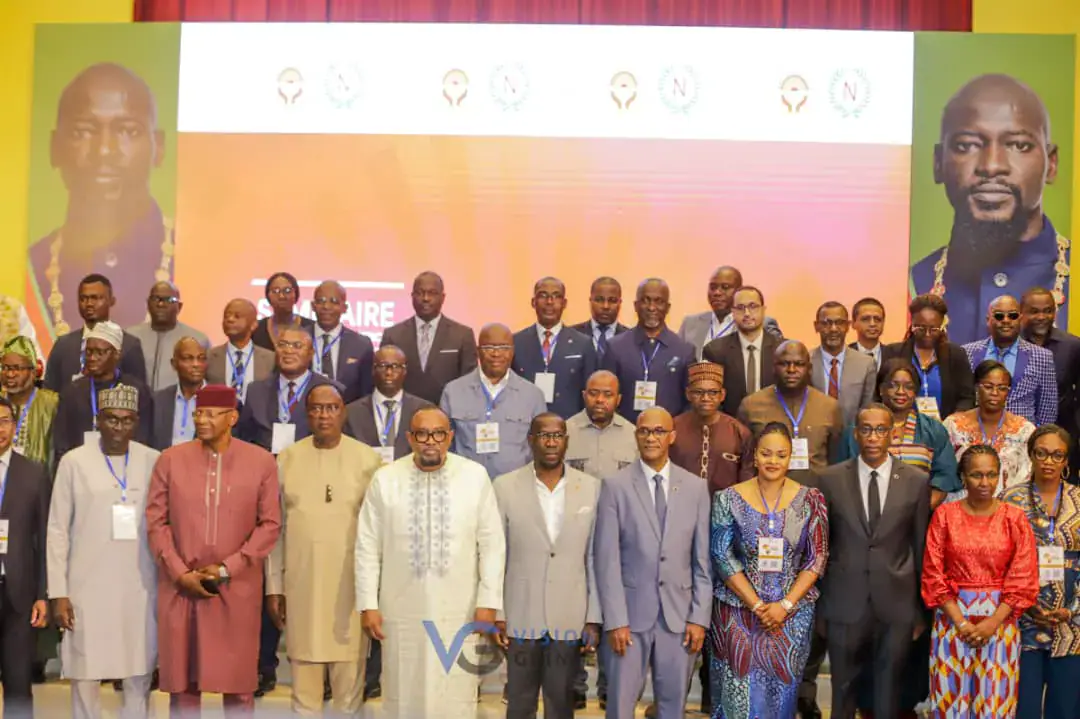
A four-day seminar organized by the Conférence des Institutions de Prévoyance Sociale (CIPRES) has concluded in Conakry, Guinea, with major recommendations to strengthen social protection for informal sector workers. The seminar, attended by 54 participants from nine countries and several international institutions, aimed to share experiences and identify best practices in extending social coverage. The closing ceremony was presided over by Moustapha Diané, Secretary General of the Ministry of Employment, Labour and Social Protection.
The CIPRES seminar highlighted the need to integrate the informal sector into social protection systems. According to Marco Andriamanalina, head of the CIPRES support unit, the current social coverage in the CIPRES zone, which has approximately 372 million inhabitants, is concerning, with only 8.39% of the active population covered. The informal sector dominates the job market, accounting for 93 out of 100 jobs, and self-employment represents 80.15% of employed individuals. The seminar identified key elements for extending social coverage, including a strong political will, adapted legal frameworks, and precise knowledge of target populations.
The seminar featured two panels and two practical workshops, which discussed experiences from various countries, including Guinea, Morocco, Côte d'Ivoire, and Guinea-Bissau. The discussions emphasized the importance of flexible and proportional contributions, digitalization, and proximity channels. The groups also recommended a mandatory basic regime with adapted contributions. Four key recommendations were formulated, including the need to disseminate best practices, encourage finance ministries to engage in social protection discussions, and strengthen the capacities of actors involved in designing and implementing projects.
The participants recommended operationalizing a community of practice on extending social coverage in the CIPRES zone. They also emphasized the need for a strong political commitment to extend social protection to informal sector workers. The Guinean government has expressed its commitment to implementing the recommendations. The CIPRES seminar was attended by representatives from eight member states, including the Congo, Côte d'Ivoire, Gabon, Guinea, Guinea-Bissau, Madagascar, the Democratic Republic of Congo, and Senegal, as well as Morocco.
The closing ceremony was marked by expressions of gratitude to the Guinean government for hosting the seminar. The participants thanked President Mamadi Doumbouya for accepting to host the seminar and the government for its support. The Director General of the Caisse nationale de sécurité sociale (CNSS) was also commended for the warm welcome and attention provided to the participants during their stay in Guinea.
In his closing remarks, Moustapha Diané emphasized the importance of extending social protection to informal sector workers. He noted that with only around 10% of the CIPRES zone population covered by social security devices, there is still a long way to go. Diané stressed that the populations contribute to national wealth creation and deserve protection against life risks. He highlighted the need for mixed regimes based on actuarial studies and rigorous analysis of their sustainability.
The CIPRES seminar concluded with a commitment from the Guinean government to implement the recommendations. The government aims to strengthen social protection for informal sector workers and improve the overall social coverage in the country. The recommendations will be taken into consideration by the CIPRES member states to improve social protection in the region.
Key points
- The CIPRES seminar made four key recommendations to strengthen social protection for informal sector workers.
- The Guinean government has expressed its commitment to implementing the recommendations.
- The seminar highlighted the need for a strong political commitment to extend social protection to informal sector workers.