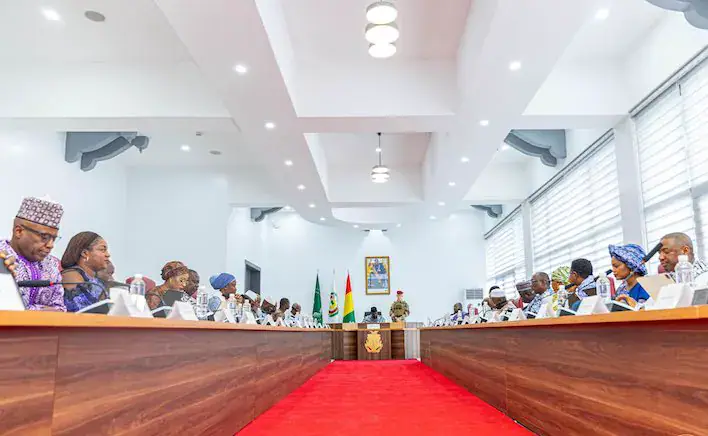
The Guinean government recently organized a two-day forum on sanitation in Conakry to identify sustainable financing mechanisms and effective methods for cleaning the capital and other cities. The Minister of Sanitation, Hydraulics, and Hydrocarbons, Aboubacar Camara, provided detailed information on the costs involved. He revealed that until the closure of the Dar Es Salam landfill, Conakry's local authorities collected between 3 billion and 3.5 billion Guinean francs monthly.
According to Minister Camara, dividing this amount by 13 communes results in approximately 200 million francs per commune, which translates to around 7 million francs per day. This budget was set when sanitation was just a national department. The minister noted that people often react strongly to large sums, saying it seems expensive. The Prime Minister announced a new monthly allocation of 15 billion Guinean francs for the communes of Greater Conakry.
Minister Camara explained that the actual monthly cost of sanitation for Conakry is 23 billion francs, while the national figure is 109 billion francs. This increase was approved after the closure of the Dar Es Salam landfill in October. He credited discussions and advocacy by himself, Minister Faya François Bourouno, and others for the budget increase. The new allocation has not yet been disbursed, but the government is awaiting payment for this month.
The government has a structured plan for the long term, according to Minister Faya François Bourouno, who is also the government spokesperson. A "polluter-pays" tax will be introduced in the 2027 finance law, following discussions with private sector stakeholders in the waste management industry. This tax aims to hold polluters accountable for their activities that contribute to environmental degradation.
Minister Bourouno stated that the process will continue to cover other dimensions beyond the initial tax introduction. He emphasized that the government now has a clear understanding of the costs involved in sanitation, thanks to the policy implemented by the Minister of Sanitation. While the allocated funds do not cover all needs, the government has mobilized some financing.
The 15 billion Guinean francs allocated monthly to local authorities and waste collection operators highlights the need to organize the entire value chain. Minister Bourouno stressed the importance of structuring waste management and sanitation sectors in Guinea. The Ministry of Sanitation now has precise cost elements to demonstrate the need for a healthy living environment for Guineans.
The government's plan includes making Conakry a clean city by the end of the year, with a focus on effective waste management and sanitation. The introduction of the "polluter-pays" tax is expected to contribute to this goal. The government aims to provide a healthy environment for its citizens through a comprehensive approach to sanitation and waste management.
Key points
- The Guinean government has announced a monthly allocation of 15 billion Guinean francs for sanitation in Conakry.
- A "polluter-pays" tax will be introduced in the 2027 finance law to hold polluters accountable.
- The actual monthly cost of sanitation in Conakry is 23 billion Guinean francs, while the national figure is 109 billion francs.