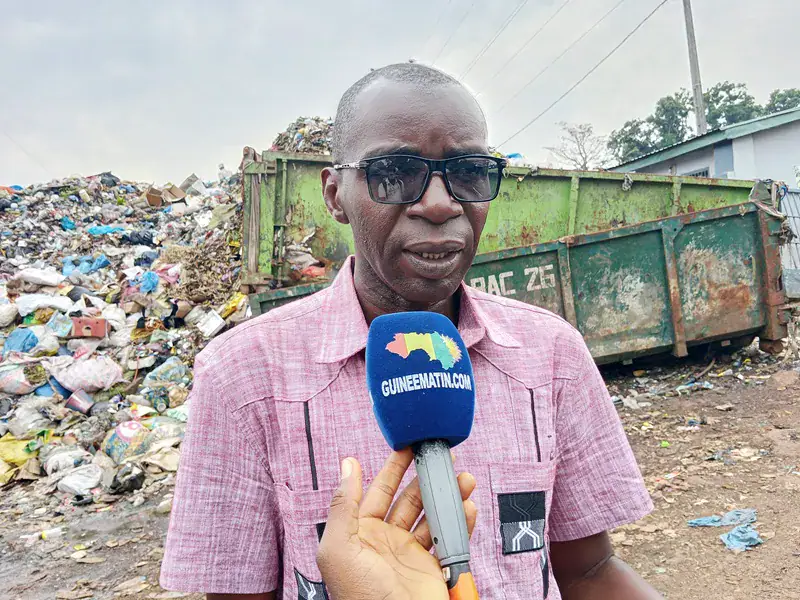
The issue of waste management remains a significant challenge in Guinea, particularly in Conakry, where garbage accumulates in several neighborhoods and temporary transit zones (ZTTs). These areas are saturated, exposing nearby residents to foul odors and health risks. In response, the Ministry of Sanitation, Hydraulics, and Hydrocarbons organized a national sanitation forum on November 25-26, 2026, to find sustainable solutions to Guinea's waste problems.
The forum resulted in the government announcing a $15 billion monthly allocation to support communes in waste management. However, this announcement has not convinced all stakeholders, with some professionals believing the amount is too low to effectively address Conakry's waste issues. Sékou Keita, president of the National Coordination of Sanitation Actors in Guinea (CONAAG), expressed concerns that the allocated amount is insufficient compared to the country's needs.
Keita cited examples from other countries, noting that Senegal's government allocates around $700 billion annually for sanitation, while Côte d'Ivoire allocates $900 billion and Benin allocates $600 billion. He emphasized that Guinea's $15 billion monthly allocation, which translates to $180 billion annually, is relatively low. Keita also highlighted another significant problem in the waste management chain: the transfer of waste from ZTTs to the Baritodé landfill, approximately 80 kilometers from Conakry.
Keita stressed the need for better control and management of ZTTs to facilitate the work of private sector companies involved in waste collection. He suggested that the Ministry of Sanitation should establish monitoring systems in ZTTs and at the Baritodé landfill to ensure efficient waste transfer. Additionally, Keita emphasized that small and medium-sized enterprises (SMEs) responsible for waste collection are often unfairly blamed for inefficiencies in the waste management process.
Nhour Gassim Bangoura, sanitation advisor to the Matoto mayor, welcomed the government's announcement and expressed hope that it would lead to significant improvements in waste management. Bangoura emphasized the importance of involving SMEs in the waste management process and ensuring they are valued and respected. He also noted that the forum demonstrated a growing awareness among authorities of the need to address Guinea's sanitation challenges.
Bangoura suggested that if the government can effectively decentralize waste management and involve SMEs in the process, Conakry could become a cleaner city within two months. He emphasized the need for concrete actions on the ground, rather than just announcements. The government's commitment to addressing Guinea's waste challenges is seen as a positive step, but experts and stakeholders stress that effective implementation will be crucial to achieving meaningful results.
The national sanitation forum has sparked renewed discussions about Guinea's waste management challenges and potential solutions. While the government's allocation of $15 billion monthly is seen as a step in the right direction, stakeholders emphasize that more needs to be done to address the country's deep-seated sanitation issues. As Guinea continues to grapple with waste management, experts and residents alike are watching closely to see if the government's efforts will yield tangible results.
Key points
- The government of Guinea has allocated $15 billion monthly for waste management, but experts say it's insufficient to tackle the country's waste challenges.
- Stakeholders emphasize the need for effective implementation and involvement of SMEs in the waste management process.
- Guinea's waste management challenges are significant, with accumulated garbage in several neighborhoods and temporary transit zones posing health risks to nearby residents.