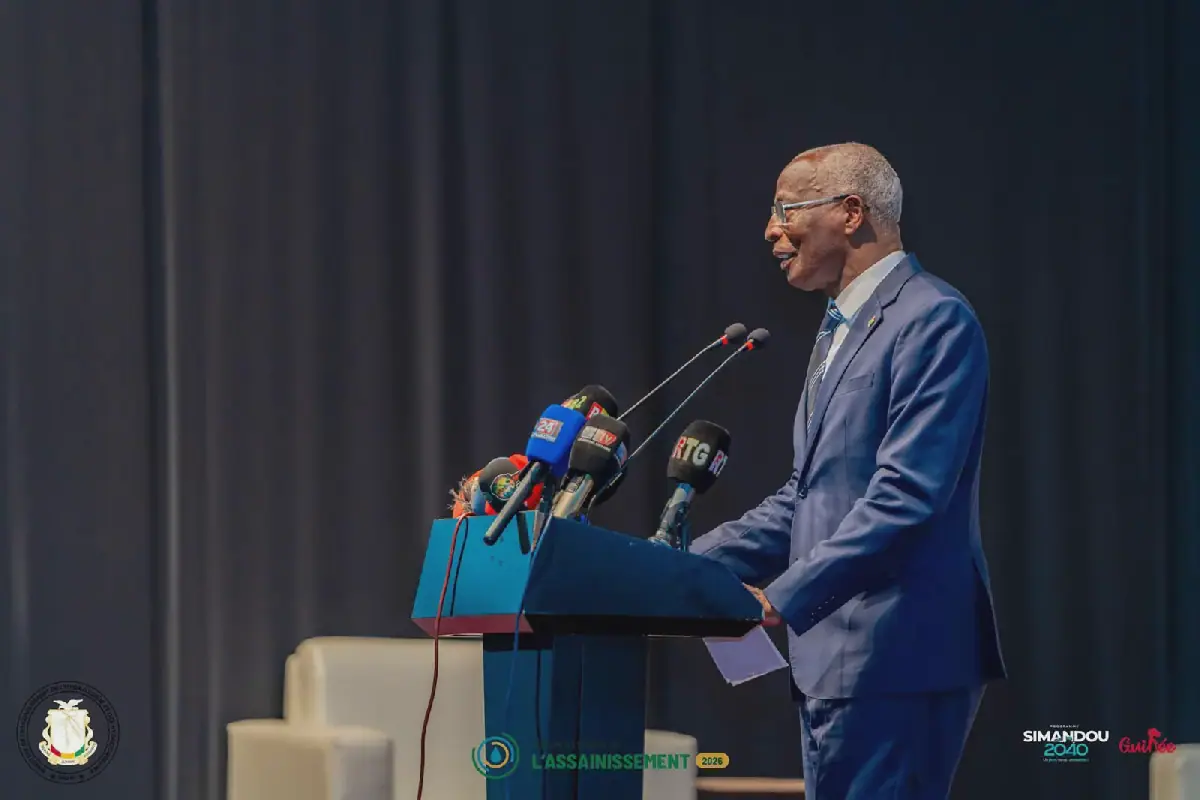
The Guinean government has launched a major initiative to improve sanitation in Conakry, with a monthly allocation of 15 billion GNF. The program aims to address the city's significant waste management challenges, with Conakry producing nearly 3,000 tons of waste daily. The initiative was announced during the National Sanitation Forum, which brought together government officials, local authorities, private sector representatives, and citizens to discuss the country's sanitation challenges.
The government's plan involves a multi-faceted approach to improve sanitation in Conakry. The Prime Minister, Amadou Oury Bah, has announced that several measures have already been implemented, including the closure of the Dar-es-Salam landfill, which was previously a major eyesore in the city. The site is being transformed into a urban park, and negotiations with a private operator to collect waste in the city's zones have been completed.
The government is also investing in new equipment to transport waste from transit zones to a temporary landfill in Baritoudi. Additionally, a waste valorization unit is set to be installed, which will help to create new economic opportunities and jobs in the sanitation sector. The Prime Minister has emphasized the importance of involving local authorities and private sector players in the sanitation effort, citing the potential for job creation and economic growth.
The Minister of Sanitation, Aboubacar Camara, has called for a fundamental shift in the way Guineans perceive sanitation. He emphasized that sanitation is a collective responsibility, and that every individual, organization, and government agency has a role to play in keeping the city clean. The Minister also highlighted the need for a coordinated approach to sanitation, involving the state, local authorities, businesses, and households.
The government has estimated that the first phase of its national sanitation policy, covering 2026-2030, will require approximately 5,460 billion GNF in funding. To address this challenge, the Minister has proposed the creation of a Sanitation Fund, which will be financed through a combination of government allocations, eco-contributions, and private sector investments.
The Sanitation Fund is expected to provide regular resources for sanitation infrastructure development, operation, and maintenance. The Minister has also emphasized the need for better recognition of sanitation workers, including improved working conditions, social benefits, and training opportunities. This, he believes, is essential for ensuring the dignity of sanitation workers and the overall cleanliness of the city.
International partners, including the UNICEF, have welcomed the Guinean government's efforts to improve sanitation in Conakry. The organization's regional director, Gilles Fagninou, has emphasized that sanitation is a critical aspect of human development, with far-reaching implications for health, education, and economic growth. He has expressed support for the government's initiatives and pledged to continue working with Guinea to address its sanitation challenges.
Key points
- The Guinean government has allocated 15 billion GNF monthly to improve sanitation in Conakry.
- The government aims to make Conakry a clean city by December.
- The sanitation effort involves a multi-faceted approach, including infrastructure development, private sector investment, and community engagement.