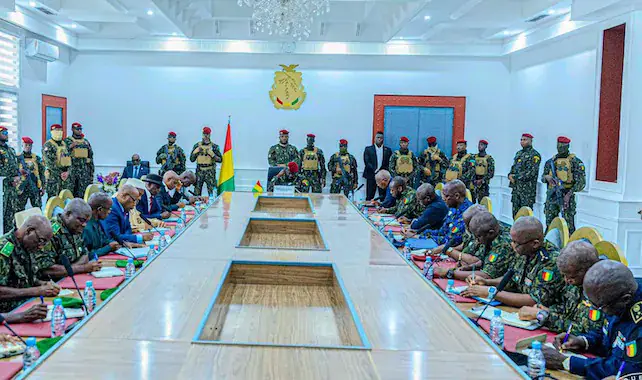
The government of Guinea has taken a firm stance against illegal gold mining, extending its ban on the activity to the entire nation. This move is part of a broader effort to combat the exploitation of the country's natural resources. According to a joint communiqué issued by six government ministers, the decision aims to protect the environment, ensure the free circulation of people and goods, and safeguard human rights.
The ban on illegal gold mining, known as orpaillage, was initially implemented in certain regions but has now been expanded nationwide. The government has warned that anyone found engaging in this activity, whether Guinean or foreign, will face arrest and prosecution. The authorities have emphasized their commitment to enforcing the law while respecting human rights and the environment.
The government's decision was announced by General Mamadou Aliou Sow, who read out the communiqué on behalf of the ministers. The ministers responsible for the communiqué include the Garde des Sceaux, ministre de la Justice et des Droits de l'Homme, Ibrahima Sory II Tounkara, and the ministre délégué auprès du Président de la République, chargé de la Défense nationale, Ibrahima Kalil Condé, among others.
To ensure the effective implementation of the ban, local authorities have been instructed to provide support to the defense and security forces deployed to combat illegal mining. This includes governors, prefects, sub-prefects, mayors, and other administrative officials. The government has made it clear that it will not tolerate any form of illegal activity that threatens the country's natural resources and environment.
The extension of the ban on illegal gold mining is part of a larger effort to promote sustainable and responsible mining practices in Guinea. The country's mining sector is a significant contributor to its economy, but it has also been plagued by environmental and social concerns. By cracking down on illegal mining, the government aims to protect the environment and ensure that the country's natural resources are exploited in a responsible and sustainable manner.
The government's commitment to enforcing the ban has been welcomed by many Guineans who have long been concerned about the impact of illegal mining on the environment and local communities. However, some have expressed concerns about the potential economic impacts of the ban, particularly on small-scale miners who rely on this activity for their livelihood.
The ban on illegal gold mining is a significant step towards promoting sustainable and responsible mining practices in Guinea. The government's efforts to combat illegal mining and protect the environment are crucial for the country's long-term economic and environmental sustainability. The authorities have urged all stakeholders to cooperate with the defense and security forces to ensure the success of this initiative.
Key points
- The ban on illegal gold mining has been extended to the entire country, with violators facing arrest and prosecution.