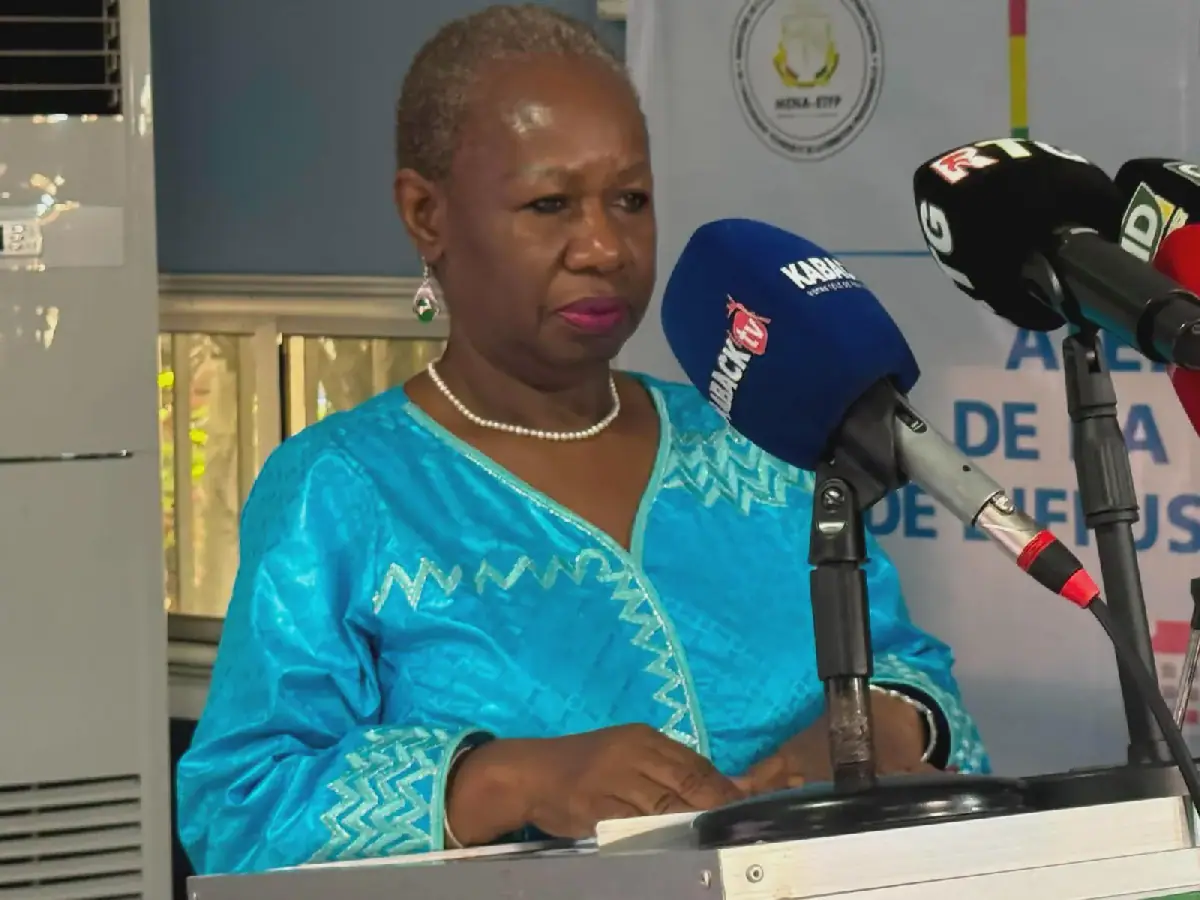
The Ministry of National Education and Literacy, Technical Education and Vocational Training in Guinea has organized a workshop to validate the country's strategy for producing and disseminating free educational resources. The workshop, held at the National Institute of Pedagogical Research and Action (INRAP), aims to share the results of work done so far, gather observations and contributions from stakeholders, and validate the document. The strategy seeks to improve access to quality educational resources for students and teachers across the country.
The initiative is a response to the persistent shortcomings in basic education in Guinea, highlighted in a 2019 assessment. The project aims to provide learners and teachers with diverse, relevant, and quality educational resources that can be accessed offline. The strategy is expected to benefit students and teachers in both public and private schools, as well as those in rural and disadvantaged areas. The Ministry of Education has been working with technical and financial partners, including UNICEF, the French Development Agency (AFD), and UNESCO.
Mohamed Ansa Diawara, Director of the Documentary Resources Center and spokesperson for the Ministry, highlighted the positive impact of the project on the country's education system. He mentioned that the project has provided a digital library, alphabetized wall charts, pedagogical kits, and training for librarians. The strategy will enable teachers, private schools, and other stakeholders to produce and share educational content nationwide and with partner countries.
According to Diawara, the validation of the strategy will pave the way for producing free educational resources, allowing teachers and private individuals to contribute to content creation. This will facilitate the sharing of experiences and best practices among teachers and improve the quality of education. The strategy also provides an opportunity for Guinea to collaborate with other countries participating in the project.
Maddelena Bertolotti, Resident Representative of UNICEF in Guinea, emphasized the significance of the initiative in the context of ongoing reforms and reconfigurations in the education sector. She noted that nearly 83% of 10-year-old children in Guinea struggle to read and understand a simple text, highlighting the need for quality educational materials. Bertolotti stressed that free educational resources have the potential to transform the learning experience, particularly for students from disadvantaged backgrounds and those living in remote areas.
Bertolotti also highlighted UNICEF's support for the Ministry of Education in deploying the Learning Passport platform, which provides thousands of educational content conforming to the national curriculum. She emphasized the importance of adapting digital tools to local realities, particularly in areas with limited access to technology. The platform is expected to facilitate the dissemination of educational resources and improve learning outcomes.
The validation workshop brings together a wide range of stakeholders, including directors of communal education, regional education inspectors, prefectural education directors, and representatives from UNICEF, AFD, and UNESCO. The Ministry of Education aims to finalize the strategy and begin implementing it in the coming days, with the goal of improving access to quality education for all students in Guinea.
Key points
- The Ministry of Education in Guinea is working to validate a national strategy for producing and disseminating free educational resources to improve access to quality education.
- The strategy aims to provide learners and teachers with diverse, relevant, and quality educational resources that can be accessed offline.
- The initiative has the potential to transform the learning experience, particularly for students from disadvantaged backgrounds and those living in remote areas.