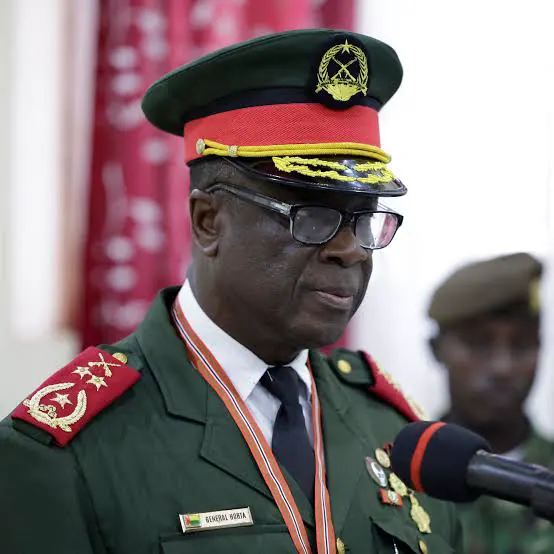
The transitional government of Guinea-Bissau has announced that it will not be able to hold presidential elections on December 6 as previously planned. According to the country's First Minister, Iuliu Vera, the conditions are not favorable for the elections to take place on the scheduled date. Vera made the announcement after a meeting with the transitional president, General Umaro Sissoco Embaló, and members of the government and electoral commission.
Vera stated that several political parties have not held their conferences to renew their leadership, which is a major obstacle to organizing the elections. He also noted that the deadline for submitting candidatures has passed, and therefore, it is not possible to hold the elections on December 6. The government has promised to announce a new date for the elections in the coming days.
The announcement by Vera was corroborated by the spokesperson for the electoral commission, who stated that it is not technically possible to hold the elections on the scheduled date. The opposition has also expressed concerns about the situation, with former Prime Minister and parliament speaker, Domingos Simões Pereira, stating that the conditions for free and fair elections are not in place.
Pereira criticized the current situation in Guinea-Bissau, citing restrictions on freedoms and the obstruction of political activities by opposition parties. He called on the international community to intervene and pressure the authorities to take steps towards restoring normalcy and preparing for free and fair elections.
The country has been in a transitional phase since November 2023, following a military coup that ousted President Umaro Sissoco Embaló. Embaló had announced his intention to return to the country and run in the presidential elections, but the military authorities have stated that the conditions are not favorable for his return.
In a related development, the head of the military council and transitional president, General Umaro Sissoco Embaló, has warned elements of the special forces attached to the presidential guard to disarm and join the military. The special forces, known as the "Guinea-Bissau Resistance," were created by Embaló after a failed coup attempt in 2022.
The decision to disarm the special forces is seen as an attempt to reduce the influence of Embaló, who is believed to be behind the coup that ousted him. The opposition, however, believes that Embaló is still trying to return to power and that the postponement of the elections is a reflection of the tensions between him and the current authorities.
Key points
- The presidential election in Guinea-Bissau has been postponed due to unfavorable conditions.
- The opposition has expressed concerns about the situation, citing restrictions on freedoms and the obstruction of political activities.
- The international community has been called upon to intervene and pressure the authorities to take steps towards restoring normalcy and preparing for free and fair elections.