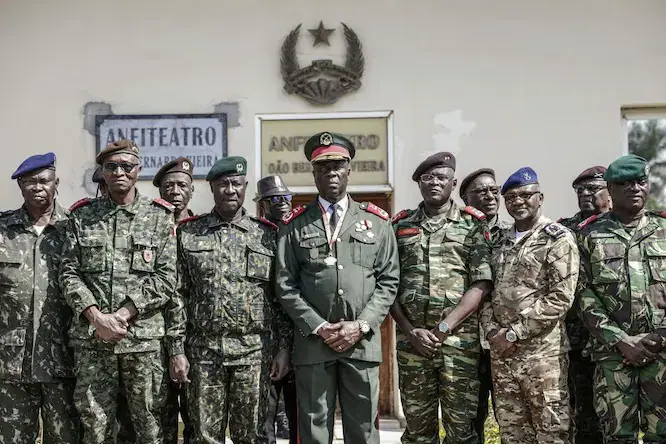
On November 5, 2026, Guinea-Bissau's High Military Command, the central body of the country's transition, announced a partial easing of restrictions on political activities. The move comes two days before the first anniversary of the military coup that ousted President Umaro Sissoco Embaló on November 26, 2025. According to the military authorities, the decision is part of the High Command's deliberations and in line with the country's transitional charter and national legislation.
The new measures, set to take effect on November 24, allow internal meetings, coordination meetings, assemblies, and congresses of legally constituted political parties. However, these events must take place in pre-defined locations and after notification to the competent authorities. The military authorities emphasize that this easing of restrictions does not apply to public marches, demonstrations, parades, or any other public initiative that could compromise national security, social tranquility, or public order.
Despite the partial lifting of restrictions, previously established measures remain in force, in accordance with applicable legal texts. The military authorities stress that political parties and their leaders must ensure strict respect for legal provisions, directives from competent authorities, and security conditions for authorized activities. They must also refrain from any act that could incite violence, tribalism, or confrontation, or disrupt social peace and stability.
The High Military Command warns that any violation of legal provisions or measures established by competent authorities may result in intervention by responsible entities, with offenders being held individually responsible in accordance with the law. This decision is seen as a partial and progressive easing of previously adopted restrictions, rather than a revocation of other security measures that remain in force.
The announcement comes amid uncertainty and tension in Guinea-Bissau, marked by controversy over the ban on the return of former President Umaro Sissoco Embaló and other decisions by the transitional authorities. The move may be seen as a victory for Senegalese mediation efforts, as President Bassirou Diomaye Faye, current chair of the ECOWAS, had called for the lifting of restrictions on political and civil activities to foster a more serene preparation of electoral consultations.
The easing of restrictions may pave the way for a more stable and peaceful political environment in Guinea-Bissau, which has been marked by turmoil in recent times. However, the country's electoral process remains uncertain, with the general elections initially scheduled for the end of the year now seemingly postponed. The international community will be watching closely to see how the situation unfolds in the coming weeks and months.
The decision by Guinea-Bissau's military rulers has been cautiously welcomed by some as a step towards restoring normalcy and stability in the country. Nevertheless, the road ahead remains fraught with challenges, and it remains to be seen whether this partial easing of restrictions will lead to a more inclusive and peaceful political process in Guinea-Bissau.
Key points
- The Guinea-Bissau military has partially lifted a ban on political activities, allowing internal meetings and gatherings of political parties.