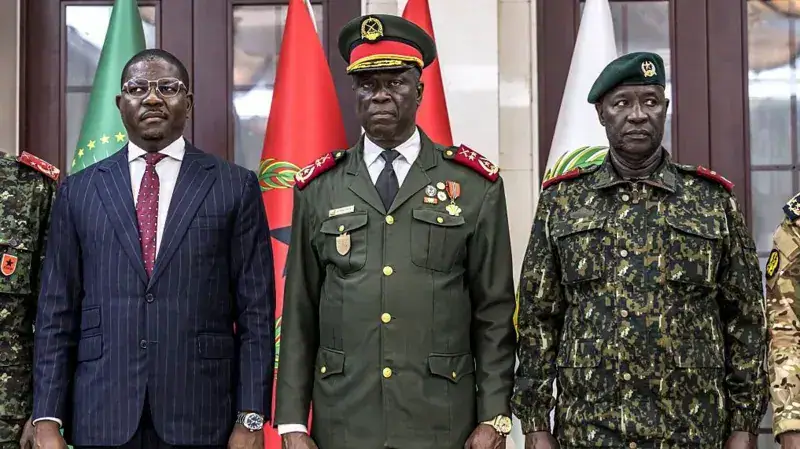
Guinea-Bissau's military leaders have postponed the country's return to civilian rule, delaying presidential and parliamentary elections until November 26, 2028. The elections were originally scheduled for December 6, 2026. General Horta N'Tam, the Transitional President, announced the postponement in a decree issued on November 27, 2026, exactly one year after the military seized power.
The military government cited insufficient technical, material, and financial resources needed to organise credible elections as the reason for the postponement. The additional time will enable the authorities to ensure a transparent, inclusive, and credible electoral process, with all candidates given equal opportunities. This move extends the military-led rule beyond the initial one-year transition period promised by the junta.
The postponement comes amid concerns over Guinea-Bissau's political stability and calls by the Economic Community of West African States (ECOWAS) for a structured and transparent return to democratic governance. The country has experienced several coups and attempted coups since gaining independence from Portugal in 1974, making the latest delay another setback in its efforts to establish lasting democratic stability.
General N'Tam was sworn in as transitional president on November 27, 2025, a day after the military takeover that disrupted the country's electoral process. The coup occurred three days after presidential and parliamentary elections and a day before provisional results were expected to be announced. Both President Umaro Sissoco Embaló and his main challenger, Fernando Dias, had claimed victory in the disputed election.
President Embaló, who is currently living in exile in Morocco, was reportedly barred from returning to Guinea-Bissau last month despite expressing interest in contesting the postponed elections. The military government also reaffirmed its commitment to conducting Guinea-Bissau's first-ever local government elections but did not announce a date for the exercise.
The decision to postpone the elections has been met with concerns over the country's political stability. ECOWAS has been calling for a structured and transparent return to democratic governance in Guinea-Bissau. The country's history of coups and attempted coups has made it challenging to establish lasting democratic stability.
The postponement of the elections is a significant development in Guinea-Bissau's transition to civilian rule. The country's military leaders have promised to restore civilian government, but the delay has raised concerns over their commitment to democratic governance. The international community, including ECOWAS, will be watching closely as Guinea-Bissau moves forward with its transition.
Key points
- The postponement of the elections extends the military-led rule in Guinea-Bissau beyond the initial one-year transition period.
- The decision cites insufficient resources needed to organise credible elections.
- The country has experienced several coups and attempted coups since gaining independence from Portugal in 1974.