Relations between Guinea and Burkina Faso have entered a delicate phase, shifting from a dispute over mining regulations and border control to a broader political and media confrontation. The initial issue concerned Guinea's efforts to curb unauthorized gold mining in the Siguiri region, which led to the involvement of foreign nationals, including Burkinabè citizens. Guinea's actions were justified as necessary to protect its natural resources and environment.
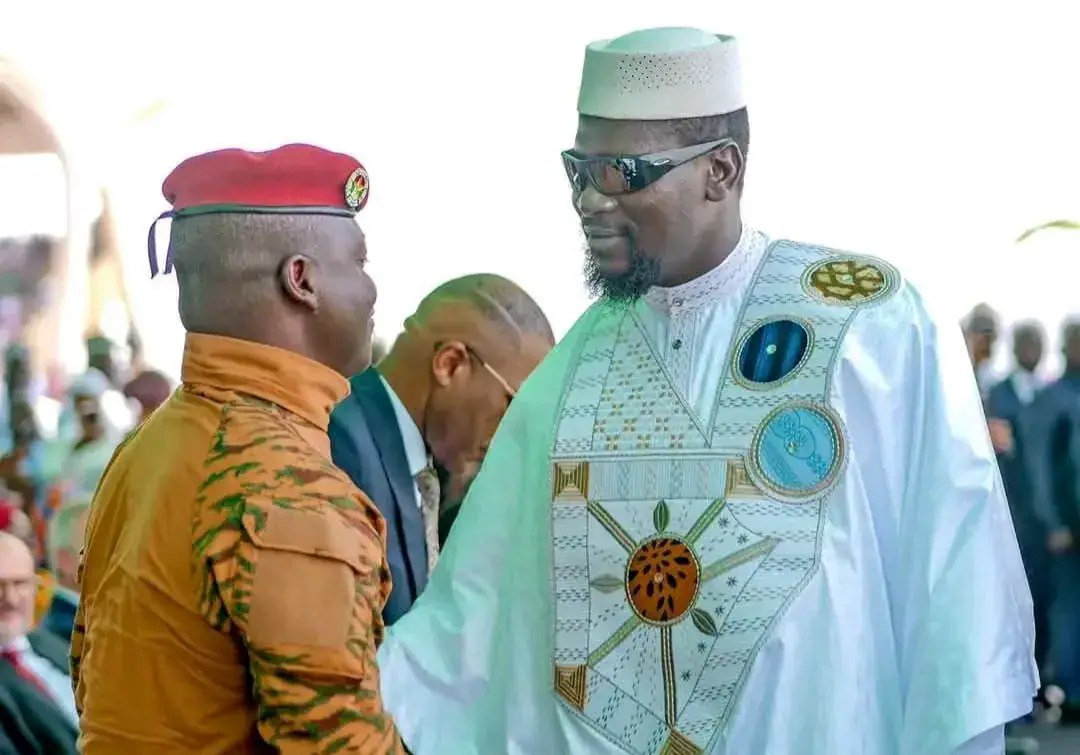
The mining dispute has evolved into a political and media standoff, with both countries exchanging official statements and reactions. Burkina Faso expressed concerns over the conditions under which its citizens left Guinean territory, while Guinea reaffirmed its commitment to enforcing national laws. The situation escalated when Burkinabè media aired an editorial and a caricature targeting Guinean President Mamadi Doumbouya, prompting a critical response from Guinean authorities.
The Guinean government responded to the media offensive by banning the broadcast of Radio Television du Burkina (RTB) on its territory. This move highlights the role of public media in international relations, which can contribute to deteriorating diplomatic climates when used as instruments of confrontation. The use of caricatures and critical commentary on public media raises questions about the limits of free expression and the potential for offense.
The controversy has sparked concerns about the responsibility of political actors and social media users, who have contributed to the tensions with excessive interpretations, hostile messages, and calls for reprisal. The Burkinabè government has urged its citizens to avoid hate speech and vengeful reactions, emphasizing the need to preserve cohesion between the two nations.
A key aspect of the diplomatic row is the distinction between legitimate regulatory actions and reactions driven by politics. The decision by Guinea's High Authority of Communication to ban RTB raises questions about the boundary between regulating audiovisual content and reacting to perceived offenses. Effective regulation must be grounded in clear, proportionate, and transparent legal frameworks.
The diplomatic tensions between Guinea and Burkina Faso should be understood within the context of their historical relations, which include cooperation agreements and people-to-people exchanges. The two countries have signed 22 cooperation agreements in various areas, underscoring the need to maintain a collaborative relationship despite current disagreements.
The situation highlights the risks of misinformation and manipulation in diplomatic crises, where statements can be taken out of context and spread rapidly on social media. Verification of information has become a critical responsibility for both political actors and citizens, particularly in an environment where narratives can be easily distorted.
Key points
- The diplomatic row between Guinea and Burkina Faso centers on mining regulations, media exchanges, and border control.
- The controversy has sparked concerns about the responsibility of political actors and social media users in fueling tensions.
- Effective regulation of audiovisual content must be grounded in clear, proportionate, and transparent legal frameworks.