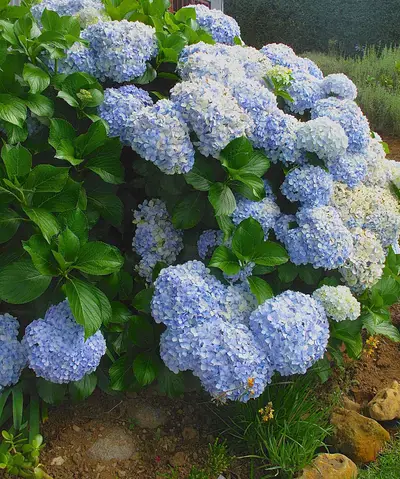
Hydrangeas, commonly known as the Christmas flower, start blooming around December, bringing vibrant colours to South African gardens throughout summer and autumn. These beautiful flowers thrive in various environments, from seaside cottages to manicured suburban homes. To grow spectacular hydrangeas, it is essential to understand their requirements, including the right spot, soil conditions, and proper care. By replicating the conditions found in their natural habitat, gardeners can enjoy stunning hydrangea blooms.
When selecting a location for hydrangeas, it is crucial to find a site with morning sun and afternoon shade. The area should be sheltered from strong winds and have well-composted soil. Hydrangeas prefer moist, fertile soil that is rich in compost. Extreme conditions, such as deep shade or intense heat against a wall, can be detrimental to their growth. In coastal areas, plantings should be in sheltered positions with deep watering at the soil level to prevent leaf burn and red spider mites.
Soil chemistry plays a significant role in determining the colour of hydrangea flowers. Acidic soils with low pH and high aluminium content produce blue flowers, while alkaline soils with low aluminium content yield pink blooms. This unique characteristic makes hydrangeas a fascinating addition to gardens. The Hogsback Garden Show in South Africa features blue-coloured hydrangea flowers growing wild in the forests, where the soil is naturally acidic.
There are various types of hydrangeas, each with its unique characteristics. Bigleaf hydrangeas (Hydrangea macrophylla) are commonly known as hortensia or Christmas flower, producing rounded ball clusters or flat clusters with small central florets and larger outer petals. Mountain hydrangeas (Hydrangea serrata) are compact and hardy, with delicate lace cap blooms that respond to soil pH. Panicle hydrangeas (Hydrangea paniculata) bear cone-shaped flower heads that open to creamy white and tolerate more sun and cold winters.
To ensure optimal growth, hydrangeas require consistent moisture. Deep watering at the soil level and mulching to a depth of 5-8 cm around the plant help keep their roots cool. In coastal areas, it is essential to protect hydrangeas from strong winds and salt spray, which can cause leaf burn. Planting them in protected spots or behind wind-filtering shrubs can help mitigate these effects.
Pruning hydrangeas is a crucial aspect of their care. Different types of hydrangeas have varying pruning needs. Panicle hydrangeas (Hydrangea paniculata) can be pruned harder on new wood in late winter, while bigleaf macrophylla varieties require gentle trimming to preserve old flowering wood. Pruning involves removing dead, weak, or crossing branches, reducing height, and shaping the plant to maintain an open centre for good airflow.
For gardeners looking to influence the colour of their hydrangea flowers, specially formulated acidic fertilisers are available. These fertilisers can be applied from late winter until the end of autumn to achieve the desired colour. By understanding the specific needs of hydrangeas and providing the right conditions, gardeners in South Africa can enjoy stunning blooms throughout the summer and autumn months.
Key points
- Soil pH affects the colour of hydrangea flowers, with acidic soils producing blue flowers and alkaline soils yielding pink blooms.
- Hydrangeas require morning sun, afternoon shade, moist and compost-rich soil, and protection from drying winds to thrive.
- Different types of hydrangeas have varying pruning needs, and proper pruning techniques are essential for optimal growth and flowering.
Reporting sources
- IN THE GARDEN | The secret to growing spectacular hydrangeas · Daily Dispatch