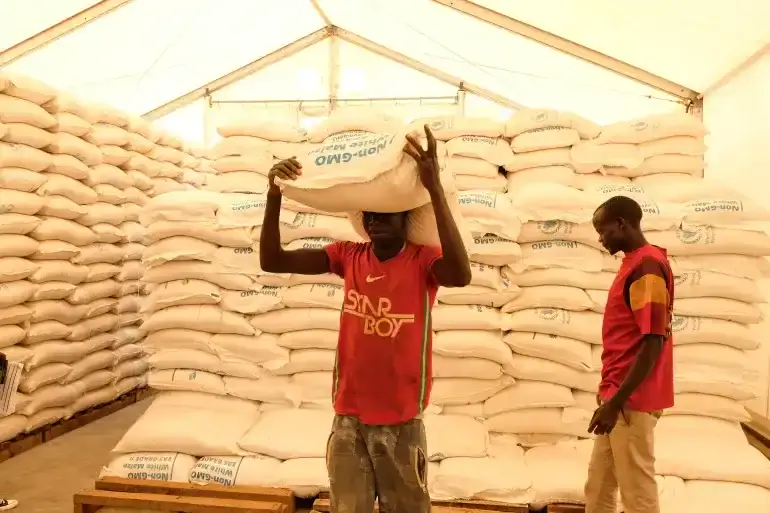
The United Nations Food and Agriculture Organization (FAO) and World Food Programme (WFP) have warned that hunger is set to worsen significantly in 16 global hotspots over the coming six months. This is mainly due to armed conflict and extreme climate events. The hotspots, identified in a report released twice a year through the Global Network Against Food Crises, include Sudan, South Sudan, Somalia, northern Nigeria, and Yemen. These countries face the gravest threats of famine, driven by violence, displacement, economic hardship, and extreme weather.
El Nino, a major driver behind three of the four newly identified hotspots, is expected to intensify to exceptional levels in the coming months. According to the World Meteorological Organization (WMO), El Nino is affecting Southern Africa, the Central American Dry Corridor, and northeastern Uganda. The report also noted that armed conflict and violence were driving hunger in 12 of the 16 hotspots, as soaring food, energy, and transport costs erode people's ability to feed themselves.
The list of hotspots has risen from 13 in June, with Chad, Uganda, and parts of both Southern Africa and Central America added, while Lebanon was removed. The report covers the period from December 2026 to May 2027 and warns that shrinking humanitarian funding is affecting efforts to avert catastrophe. In the five countries most at risk, humanitarian assistance has declined by nearly two-thirds over the 2022-2025 period, from $5.1 billion to $2 billion.
The FAO and WFP noted that while past humanitarian assistance helped avert famine, the gains proved fragile and of limited duration. Severe acute food insecurity risks, including the risk of famine, re-emerged within a few years. In Sudan, famine remains a risk in 13 areas of North Darfur and South Kordofan through January 2027, as fighting disrupts food production, markets, and aid deliveries.
The agencies also identified famine risks in parts of Somalia and South Sudan, where escalating violence has compounded an already desperate humanitarian situation. Afghanistan, Haiti, the Democratic Republic of the Congo, and Gaza were also classified as areas of very great concern. Gaza was downgraded from the highest level of concern after small improvements in food security following the October 2025 ceasefire.
However, agencies warned that conditions remained fragile in Gaza, while in the occupied West Bank, acute food insecurity is expected to worsen. The report emphasized that declining humanitarian resources have reduced the capacity to sustain gains and mitigate worsening conditions. The FAO and WFP called for urgent attention to address the growing hunger crisis in these hotspots.
The situation demands immediate action to prevent further deterioration of food security in these regions. The FAO and WFP are working to provide humanitarian assistance to those affected, but more support is needed to address the root causes of hunger and prevent famine.
Key points
- The number of global hotspots has risen from 13 to 16, with Chad, Uganda, and parts of Southern Africa and Central America added to the list.
- Humanitarian assistance has declined by nearly two-thirds over the 2022-2025 period, from $5.1 billion to $2 billion.
- El Nino is expected to intensify to exceptional levels in the coming months, affecting Southern Africa, the Central American Dry Corridor, and northeastern Uganda.