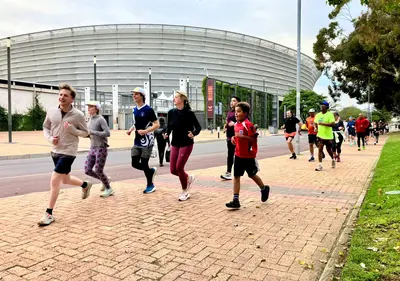
Green Point, a suburb situated between Cape Town's CBD and Sea Point, has undergone significant transformations over the past three centuries. From its early days as a cattle post and burial ground, to its current status as a prime address on the Atlantic Seaboard, the suburb has continually evolved. Today, Green Point is a popular destination for the parkrun crowd, families, and sports enthusiasts, with its leafy paths, stadium, and luxury flats.
The suburb's rich history dates back to the early days of European settlement, when the Dutch East India Company established a refreshment station and used the land as a cattle grazing station. The area, known as De Waterplaats, was also a burial ground for slaves, sailors, soldiers, and indigenous people. In 2003, the discovery of a burial ground during the construction of a mixed-use development halted the project for 14 months, while the archaeological and heritage process took place.
Green Point has played a significant role in the history of horse racing in South Africa. The first recorded horse race meeting took place on Green Point Common in 1797, and the area became a hub for social life in the colony. The naturalist William Burchell described the scene in 1811, noting that vehicles of every description came out to enjoy the sport, and a lot of money changed hands on betting.
The suburb has also been home to several notable landmarks, including the Green Point Lighthouse, which was first lit in 1824 and is the oldest lighthouse in South Africa. The lighthouse, affectionately known as "Moaning Minnie" due to its foghorn, has been an important aid to navigation for ships along the coastline. In 1818, Dr Samuel Bailey opened Cape Town's first civilian hospital in Green Point, which later became the New Somerset Hospital.
During the South African War, Green Point Common served as an encampment for British troops and a camp for Boer prisoners of war. In 1923, the City of Cape Town took ownership of the land for public recreation and sport. Today, the area is home to the 12.5 hectare Green Point Urban Park, which features walking paths, cycling routes, and indigenous gardens.
The suburb's proximity to the city and the sea has made it an attractive location for property developers and investors. According to Property24, prices in Green Point have more than doubled in five years, with premium flats trading at R45 000/m2 to R55 000/m2. Developer Blok has launched its second residential development in Green Point, TWELVEONB, which features 50 pet-friendly homes and a rooftop pool.
Green Point's transformation over the centuries has been shaped by its unique location and history. From its early days as a cattle post and burial ground to its current status as a luxury suburb, Green Point continues to evolve. With its vibrant community, rich history, and prime location, Green Point is a suburb that offers something for everyone.
Key points
- Green Point's history dates back over 1,000 years, with evidence of Khoi-San herders grazing cattle in the area.
- The suburb has been home to several notable landmarks, including the Green Point Lighthouse and the New Somerset Hospital.
- Green Point has seen significant growth in property prices, with a 31% increase in achieved flat prices per square metre in the first half of 2026.