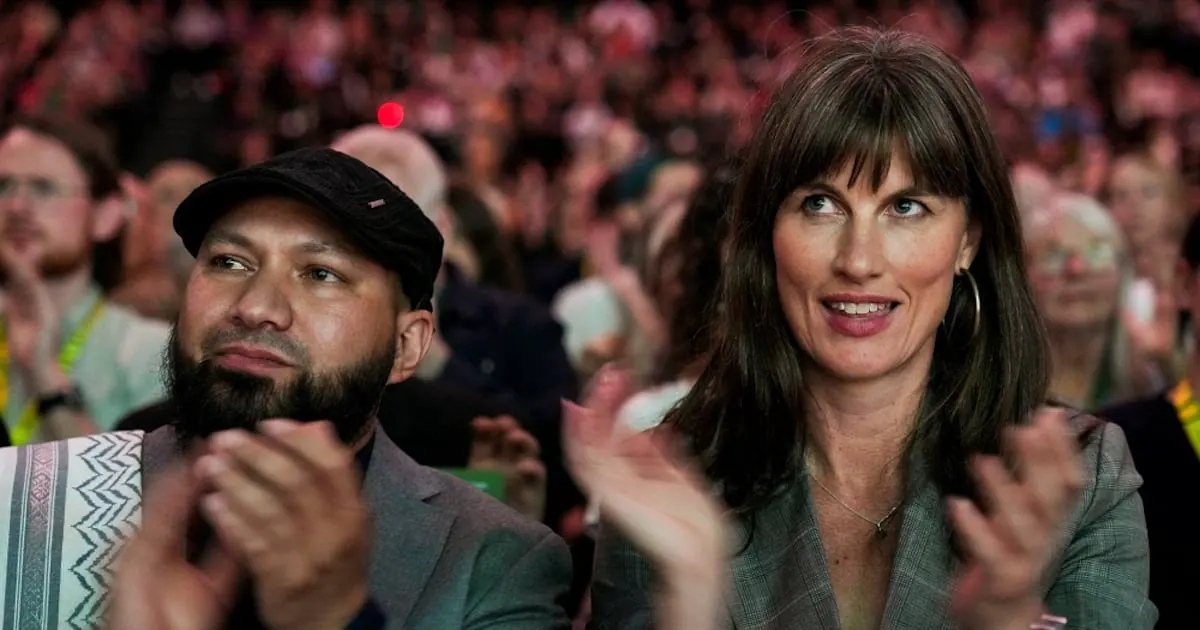
The Green Party of Britain has voted to classify Zionism as a form of racism, sparking widespread criticism from British Jewish groups and the Israeli government. The party, which received 6% of the vote in the 2024 national elections, passed the motion by a majority of 1,022 to 813. The motion defines Zionism as "an ethnonationalist political project" and reiterates the party's call for the UK government to end all arms trade with Israel.
The Green Party's stance on Zionism has been met with fierce opposition from Jewish groups, who argue that it amounts to antisemitism. The Movement for Progressive Judaism condemned the motion, stating that the party has made antisemitism a part of its policy and become a racist party. Despite some Jewish individuals supporting the motion, the group argued that it would still be used to discriminate against others.
Mothin Ali, deputy leader of the Green Party and a supporter of the motion, explained that the heavy Palestinian death toll in Israel's conflict with Hamas was a key context for the vote. Ali stated that the motion defines Zionism as an ethnonationalist movement, ethnic cleansing, and genocide. However, the UK government views Israeli settlers' actions in the West Bank as amounting to ethnic cleansing but has said that courts must decide if other Israeli actions qualify as genocide.
The Israeli government has rejected claims of genocide and responded strongly to the Green Party's vote. Israel called on other British political parties to condemn the Green Party's stance, stating that it has adopted the ideology of Hamas, which seeks to eliminate the State of Israel through armed struggle. The Israeli government now views the Green Party as "a body that gives legitimacy to terrorism".
Green Party leader Zack Polanski, who is seeking election to Parliament, did not vote on the motion. Despite opposition from senior figures, Polanski and other party leaders stated that they would continue to call out the "heinous crimes of the Netanyahu government" and emphasized that there is no conflict between supporting the rights of Palestinians and the rights of Jewish people.
The Green Party's motion also restates its backing for the right to self-determination and calls for the establishment of a single democratic state throughout historic Palestine. This stance has been contentious, with Jewish groups sometimes defining Zionism as a right to Jewish self-determination. The definition of Zionism and its implications for the rights of non-Jews in Israel and neighboring territory remain a highly debated topic.
The Green Party's vote has significant implications for British politics, with the party seeking to capitalize on public discontent with the current government. As the party continues to promote its stance on Zionism, it remains to be seen how this will affect its popularity and relationships with other political parties. The controversy surrounding the Green Party's stance is likely to continue, with both supporters and critics closely watching the party's next moves.
Key points
- The Green Party's vote to classify Zionism as a form of racism has sparked widespread criticism from Jewish groups and the Israeli government.
- The party's stance has been met with opposition from senior figures, including leader Zack Polanski, who did not vote on the motion.
- The Green Party's motion defines Zionism as "an ethnonationalist political project" and reiterates the party's call for the UK government to end all arms trade with Israel.