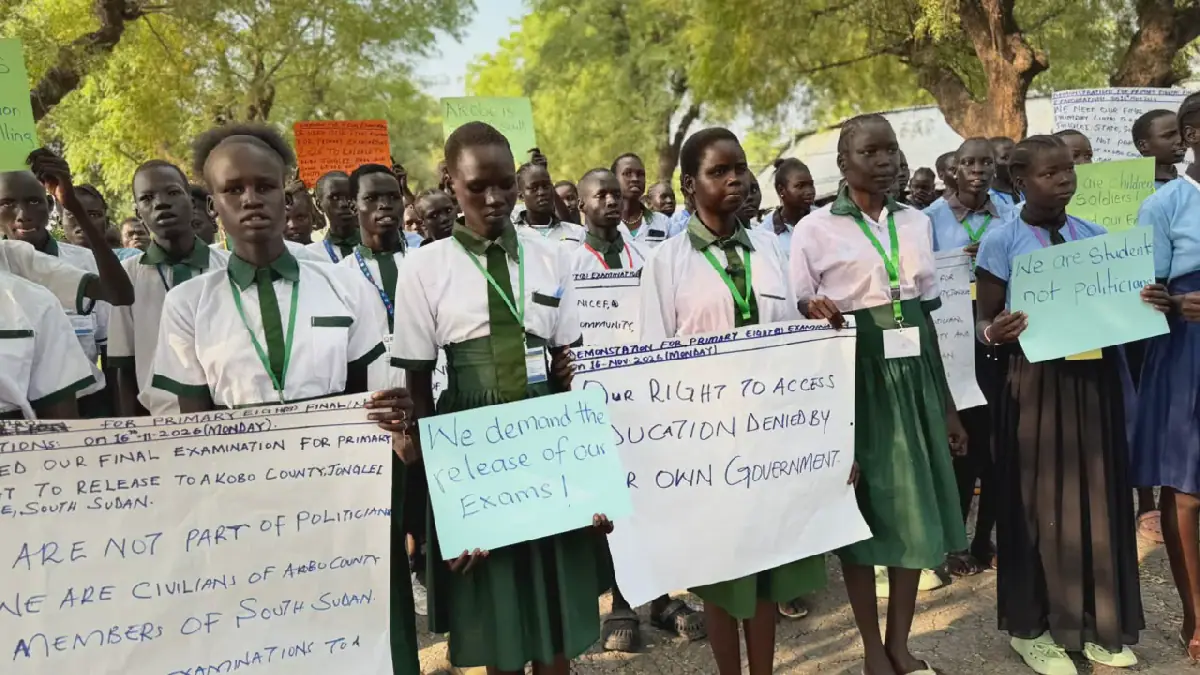
The recent student protests in Akobo over delayed examination papers have highlighted the need for a broader conversation about the region's prolonged armed conflict and its impact on education and essential services. The protests, which were sparked by the late delivery of examination materials, are a symptom of a larger problem that requires a more comprehensive solution. The students' demands for their right to education are justified, but the underlying conditions that have disrupted education, healthcare, and government administration must be addressed.
Community leaders from Greater Lou and Gawar, including Hon. Dr. Marial Benjamin and Hon. Denay Chagor, have been commended for their efforts to deliver examination materials to Akobo despite the security challenges. Their willingness to take risks and prioritize education deserves recognition, but it should not stop at just delivering examination papers. These leaders have the influence and moral responsibility to engage with their sons and daughters in the opposition movement and encourage them to disengage from military confrontations and participate in peaceful politics.
The SPLA-IO leadership has been urged to recognize that controlling territory is not the same as governing a population. The leadership must prioritize civilian protection, facilitate the restoration of civilian administration, and allow humanitarian access. The SPLA-IO commanders and political leaders are being called upon to pursue peaceful disengagement, protect education, and facilitate humanitarian access. This includes refraining from using civilian towns and institutions for military purposes and creating opportunities for dialogue and reconciliation.
Young people in the region, including the White Army and armed youth, are being encouraged to prioritize their education and future over military confrontation. They have a responsibility to protect their communities, but this should not justify endless mobilization or participation in destructive conflicts. Instead, they should be acquiring knowledge, developing professional skills, and building livelihoods. The message to the youth is clear: do not exchange your textbooks for ammunition and do not surrender your future to the political ambitions of competing leaders.
A sustained peace and development initiative is being proposed, which would bring together stakeholders from Greater Lou and Gawar, elected representatives, traditional authorities, and youth representatives. The initiative would pursue three immediate priorities: political engagement, youth disengagement, and the restoration of essential services. This would involve convening structured dialogue with SPLA-IO representatives, encouraging young people to abandon armed mobilization, and developing practical arrangements with governments and humanitarian partners to restore education and healthcare.
The communities in Northern Jonglei have experienced enough military confrontation, and the next generation deserves a different inheritance. Greater Akobo, Lou, and Gawar deserve more than emergency interventions and repeated appeals for humanitarian assistance. The region needs functioning institutions, educated children, healthy populations, economic opportunities, and sustainable development. Community leaders, armed opposition commanders, and young people must work together to ensure that tomorrow's children will not need political negotiations and security risks simply to access their classrooms.
The goal is to break the cycle of insecurity, isolation, and chronic emergency in the region. The time has come for community leaders to exercise responsibility, armed opposition commanders to reconsider their priorities, and young people to reclaim their future. The region needs education, peace, security, and development, not permanent military confrontation. The war against illiteracy must be won before another generation is lost to war.
Key points
- Community leaders and armed opposition groups must prioritize education and peace over military confrontation in Greater Akobo.
- The SPLA-IO leadership must prioritize civilian protection and facilitate the restoration of civilian administration.
- Young people in the region must prioritize their education and future over military confrontation.