Garissa Governor Nathif Jama has raised concerns over the growing human trafficking networks in the county, locally known as Magafe. These networks are targeting young people with promises of job opportunities abroad, only for them to end up in the hands of traffickers. Jama stated that his office has received numerous reports of young people from the county falling victim to recruiters who present overseas travel as a pathway to prosperity.
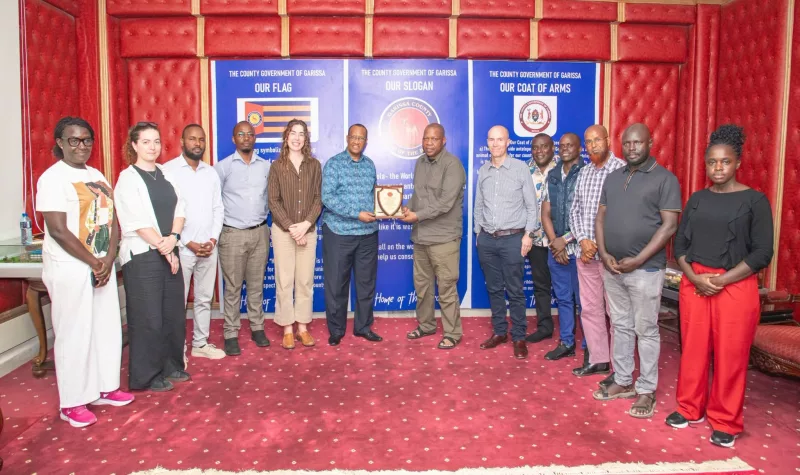
The governor made these remarks during a meeting with a team from the United Kingdom's Foreign, Commonwealth and Development Office (FCDO), led by Ben Fisher, Head of the UK's Integrated Security Fund. The meeting focused on the Border Security Programme (BSP), aimed at addressing the issue of human trafficking and irregular migration. Jama emphasized the need for closer cooperation between national and county governments, security agencies, and development partners to tackle the problem.
According to Jama, the scale and sophistication of the networks mean that no single institution can tackle the problem alone. He welcomed the Border Security Programme, saying it will help address the factors driving young people to risk dangerous journeys, including unemployment, poverty, and limited opportunities. The governor also chairs the Council of Governors' committee representing Arid and Semi-Arid Lands (ASAL) counties.
The crisis has not spared school-going children, with three Grade 10 girls from Iftin Comprehensive School in Garissa reportedly disappearing in June. Distressing videos allegedly showing them in captivity circulated on social media, and their families were reportedly asked to raise money for their release. This case has heightened fears among parents, teachers, and community leaders that traffickers are increasingly exploiting the aspirations and economic vulnerability of young people.
Security agencies have warned that recruiters operate through seemingly ordinary conversations, including on social media, before convincing their targets to undertake journeys in search of jobs or opportunities in South Sudan, Libya, and eventually Europe. Investigations have identified several routes allegedly used to move victims from Dadaab and Garissa through Kenya and neighbouring countries towards Libya.
Once in Libya, victims can face detention, forced labour, torture, extortion, and other forms of abuse, with families back home sometimes pressured to pay millions of shillings for their release. The situation has transformed what was once largely viewed as an issue of irregular migration into a wider child-protection, organised-crime, and security concern. Community leaders and child-protection officials have urged parents to monitor their children's movements, friendships, and online interactions.
The UK-backed programme, implemented by Prosper Global, will continue working with Kenyan government agencies and local partners to strengthen prevention, protection, and efforts to disrupt criminal networks facilitating human trafficking and irregular migration. Ben Fisher assured the county of continued partnership in efforts to disrupt trafficking networks, strengthen community awareness, and improve protection of vulnerable people.
Key points
- Garissa Governor Nathif Jama has raised concerns over growing human trafficking networks in the county.
- The crisis has not spared school-going children, with several cases reported recently.
- The UK-backed programme aims to strengthen prevention, protection, and efforts to disrupt criminal networks facilitating human trafficking and irregular migration.