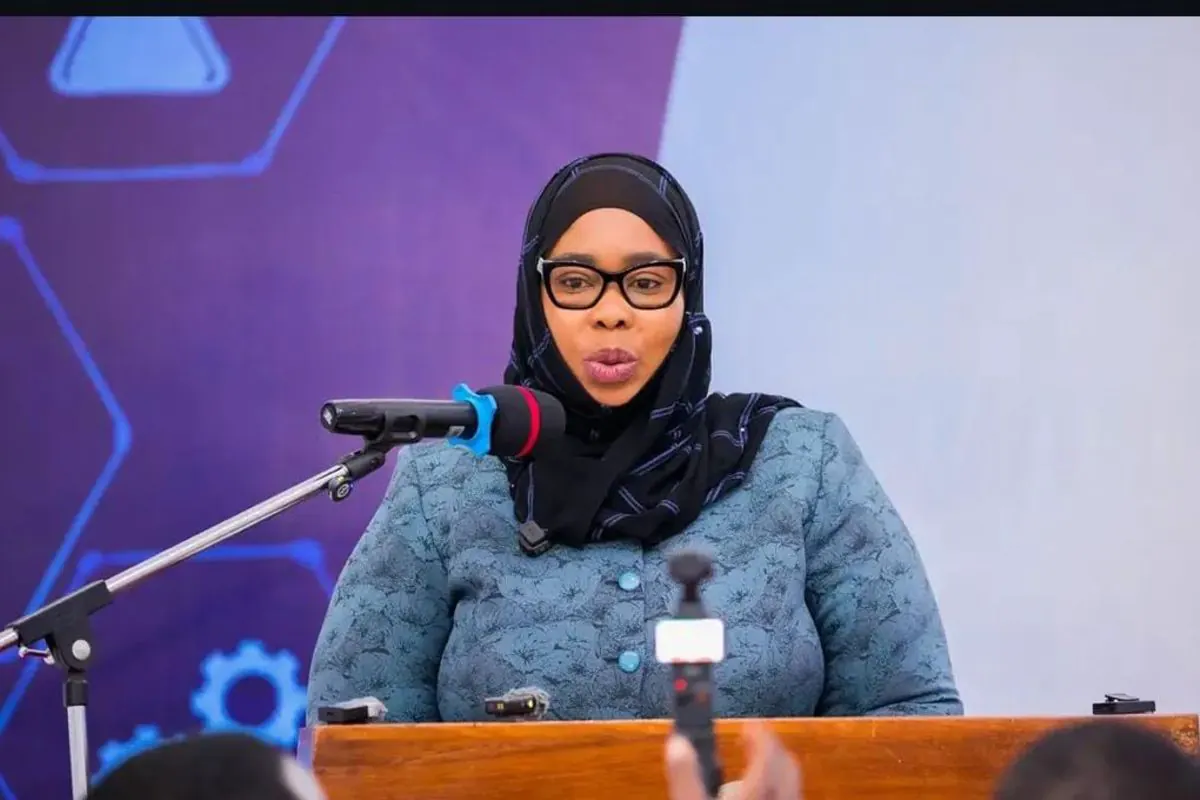
The Tanzanian government has emphasized the need for scientific research and innovation to be translated into practical solutions to help communities cope with the growing impacts of climate change. Deputy Minister for Education, Science and Technology Wanu Hafidh Ameir made the remarks while opening the Third Five University Consortium Conference at the Nelson Mandela African Institution of Science and Technology in Arusha on September 23, 2026.
Ameir stressed that research should go beyond laboratories, academic journals, and reports, and be transformed into solutions addressing challenges in agriculture, water, health, infrastructure, and other economic activities. Climate change is not only an environmental issue but also a development challenge affecting food production, water availability, health, infrastructure, people's livelihoods, and economic activities.
The Deputy Minister urged universities and research institutions to involve researchers, communities, and policymakers from the early stages of research. The private sector should also be brought in to help turn research-based innovations into marketable products and services. Communities should not be viewed merely as beneficiaries of research but as partners in identifying challenges and developing solutions.
Ameir emphasized the need to strengthen collaboration between researchers and policymakers so that scientific findings can inform government decisions. Researchers should present their findings in ways that policymakers can understand and apply, while policymakers should communicate practical challenges requiring scientific solutions to researchers.
The Deputy Minister also discussed the use of artificial intelligence in higher education, noting that guidelines governing its use should keep pace with rapid technological developments. Discussions on AI should not focus solely on what the technology can do but also on how institutions, policies, and society should respond to its development.
The Third Five University Consortium Conference brought together five universities, including the Nelson Mandela African Institution of Science and Technology, Simon Fraser University in Canada, the University of Dar es Salaam, Sokoine University of Agriculture, and Aga Khan University. The partnership aims to pool resources, expertise, infrastructure, and networks to improve research, innovation, and technology transfer.
The partnership has created opportunities for Tanzanian researchers and students to travel to Canada to gain new knowledge and technologies. The institutions are also collaborating on research projects and supervising postgraduate students, with a focus on producing new technologies and taking them to the market. The goal is to improve agricultural productivity, address low production, and reduce post-harvest losses.
Key points
- The Tanzanian government is calling for research to be translated into practical solutions to address climate change impacts.
- The government is urging universities and research institutions to involve researchers, communities, and policymakers from the early stages of research.
- The partnership between the five universities aims to improve research, innovation, and technology transfer to address climate change and development challenges.