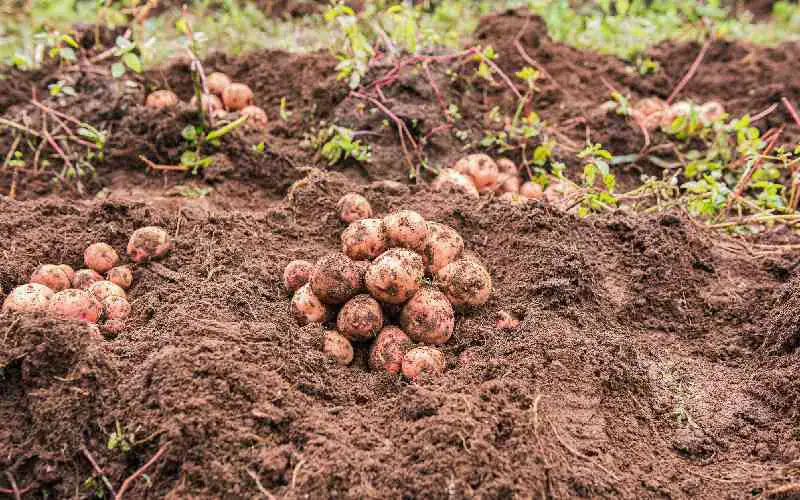
The Kenyan government has set a target to increase potato production from three million metric tonnes to six million metric tonnes over the next three years. This move aims to meet growing demand in the region and for export. Kenya is currently one of the leading producers of potatoes in sub-Saharan Africa and the leading consumer in East Africa.
Agriculture Cabinet Secretary Mutahi Kagwe announced that the increased production will be achieved through the adoption of modern technology, greater market access, and improved variety value chains. Speaking at the Potato Congress in Naivasha, Kagwe emphasized the importance of the potato sector, which currently contributes USD 400 million (Sh52 billion) to the country's economy and employs 3.5 million people directly and indirectly.
The government has designated potatoes as a strategic food crop and a high-impact agricultural value chain under its Bottom-Up Economic Transformation Agenda (BETA). As part of this initiative, the State provides subsidized farm inputs to support agricultural production, with over 7.2 million farmers registered in a digital database. Additionally, geo-mapping of farms across key agricultural value chains is underway.
To improve market access and youth-led digital agricultural extension services, the government is constructing County Aggregation and Industrial Parks (CAIPs). These parks are expected to accelerate local value addition and stimulate private-sector-led industrial development in the potato subsector. The government is also seeking to comply with international standards and promote favorable trade agreements.
The Potato Congress, themed 'Global Potato Partnerships for Enhanced Food Systems, Nutrition Security and Trade,' brought together over 1,000 delegates to discuss developments in the industry. Kagwe noted that the congress would provide policymakers with an opportunity to take stock of numerous developments in the industry and inform strategies for growth.
However, the implementation of the existing Crops (Irish potato regulations) has sparked controversy. Nyandarua Governor Kiarie Badilisha expressed concerns that his county was the only one implementing the regulations, which capped the maximum packaging per unit at 50kg. This, he argued, exposed county farmers to losses and urged either full implementation in potato-growing counties or suspension of the regulations across the board.
The government's efforts to increase potato production aim to improve food security, increase smallholder incomes, and stimulate private-sector-led industrial development in the potato subsector. With the right strategies and investments, Kenya is poised to become a major player in the global potato market. Key initiatives, including the adoption of modern technology and improved market access, will be crucial in achieving this goal.
Key points
- The Kenyan government aims to increase potato production from 3 million to 6 million metric tonnes in three years.
- The potato sector currently contributes USD 400 million (Sh52 billion) to Kenya's economy and employs 3.5 million people.
- The government has designated potatoes as a strategic food crop and a high-impact agricultural value chain under its Bottom-Up Economic Transformation Agenda (BETA).